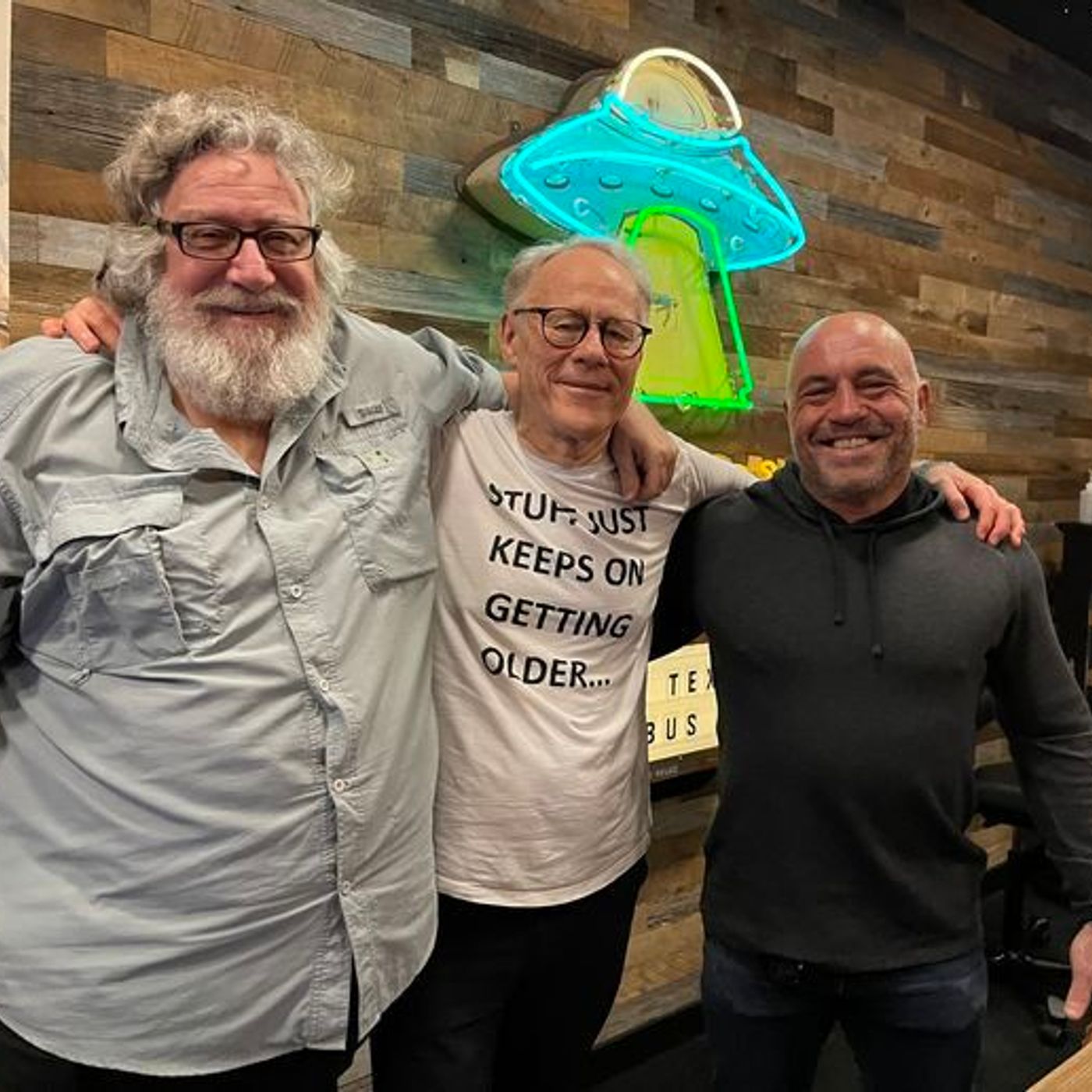
Graham Hancock & Randall Carlson- Ancient Apocalypse- SPECIAL PRESENTATION With Joe Rogan
SPECIAL PRESENTATION
Become a supporter of this podcast: https://www.spreaker.com/podcast/total-disclosure-podcast--5975113/support.
CONTACT TDP DIRECTLY For Collaboration, Use of Segments/clips, or any other media produced by “TDP” —[email protected]
Special Thank you to all of our PODCAST/YouTube Channel Members for your continued support, and dedication to seeking the truth, together. We can’t do this WITHOUT YOU!
-COPYRIGHT-2020-
Copyright Disclaimer: Under Section 107 of the Copyright Act 1976, allowance is made for "fair use" for purposes such as criticism, commenting, news reporting, teaching, scholarship, and research. Fair use is a use permitted by copyright statute that might otherwise be infringing. Non-profit, educational or personal use tips the balance in favor of fair use. Total Disclosure Podcast Copyright 2020 and … segments, early access to interviews, and a yearly gift autographed by yours truly!thank you in advance now, Let's explore the unknown together!
Speaker 1: Real good experience during my day.
Speaker 2: Joe Roggy podcast by night, all day and we're live, gentlemen,
Speaker 2: here we go again. What's happening back in the room.
Speaker 2: A pleasure to see you guys. As always, this is
Speaker 2: one of my favorite podcasts that we ever do. And
Speaker 2: this is very timely because, first of all, the big
Speaker 2: New York Times article about the possibility of a comet
Speaker 2: hitting Los Angeles, the preparations for what they would do
Speaker 2: if a comet hit Los Angeles, and the comet known
Speaker 2: as Donald Trump that's hit the United States and he's
Speaker 2: even got the hair, just the whole things. I mean,
Speaker 2: if the end of the world was coming. Boy, it's
Speaker 2: all on the wall. You know, the writing's all there.
Speaker 2: It's kind of crazy. So what's the latest and the greatest.
Speaker 1: Well, the latest and the latest and the greatest is
Speaker 1: I mean last year when we sat down with you,
Speaker 1: I think it was last November.
Speaker 2: Yeah, it was almost a year.
Speaker 1: Got floated in the discussion the idea that this really
Speaker 1: important comet research that's going on, which is just changing
Speaker 1: our whole view of history and prehistory.
Speaker 3: And of the future of humanity.
Speaker 1: But it would be good to make a film about
Speaker 1: this and crowdfunded. I actually mentioned that to the scientists
Speaker 1: and they said, what we really need is more funding
Speaker 1: for our research. And so they've inspired by basically by
Speaker 1: your show. They have put out a crowdfunding campaign which
Speaker 1: is linked on my website. It's the Comet Research Group
Speaker 1: and it's a big story right now.
Speaker 2: So how can people find it really quickly? It's indieg
Speaker 2: go well research.
Speaker 3: Much quicker way.
Speaker 1: Just go to my website, Oh, Grahamhancock dot com and
Speaker 1: there's a revolving banner which is the Comet Research Group.
Speaker 3: Click on that and you're in.
Speaker 2: This beautiful okay Graham Hancock dot com. And then crowdfunding
Speaker 2: for Commet Research And so what are they trying to
Speaker 2: put together?
Speaker 3: Well, they're wanting to see.
Speaker 1: The thing is these guys have actually not had any
Speaker 1: official funding. This is a group of major, highly credential
Speaker 1: scientists who for the last decade have been investigating the
Speaker 1: extraordinary story of a massive comet series of comet impacts
Speaker 1: on the North American ice cap twelve eight hundred years ago.
Speaker 1: That is the global cataclysm that wipes out a whole
Speaker 1: civilization from prehistory. So that's why it's of interest to me.
Speaker 1: They're not coming at it from that point of view.
Speaker 1: They're coming at it from rediscovering something that we've lost
Speaker 1: about ourselves. Something is really important to understand the role
Speaker 1: of cataclysms in the story of the Earth, and they
Speaker 1: need to do much more research. So they need to
Speaker 1: go back to Greenland and look for the nano diamonds
Speaker 1: in the Greenland ice cores. There's an ancient city which
Speaker 1: they're not revealing the name of which they're pretty certain
Speaker 1: was wiped out by a comet impact about four and
Speaker 1: a half thousand years ago. They want to go there
Speaker 1: and investigate that. So there's a lot of field work
Speaker 1: they need to do to drive home this hypothesis and
Speaker 1: to frankly put down the opposition, because there's been so
Speaker 1: much opposition to this idea from people with vested interest
Speaker 1: in other theories that and that's why these guys have
Speaker 1: not got funding. So the only place they're going to
Speaker 1: get funding to do this further research is from members
Speaker 1: of the general public, and that's what we're hoping that
Speaker 1: will happen. It's called the Comet Research Group. There's a
Speaker 1: banner on my site and all the links out there
Speaker 1: to their crowdfunding, to their website, which is full of
Speaker 1: masses of scientific information, and to their Facebook page as well.
Speaker 2: It is a very unusual thing, the fact that we
Speaker 2: know that comets and all sorts of various large objects
Speaker 2: have impacted the Earth. We see the craters, we know
Speaker 2: they exist, but it's so rarely discussed. It's so strange.
Speaker 2: If it wasn't for this article in the New York Times,
Speaker 2: I can't remember one of the last time and it
Speaker 2: even came up.
Speaker 4: And it's such a huge issue.
Speaker 1: It's a massive issue. It's a massive issue. Both Randal
Speaker 1: and I have really given a great deal of thought
Speaker 1: to this, and I think Randal the point is that
Speaker 1: catastrophes are the untold story of our past.
Speaker 4: We were given a little we were giving a little
Speaker 4: hint of it. February of twenty thirteen, Chaliabe, Siberia.
Speaker 2: Remember the event, Yeah, yeah, Now that was just a.
Speaker 4: Little cosmic spec came in. It was about fifty feet
Speaker 4: in diameter, which is about and it came in at
Speaker 4: a fairly low angle. It blew up nearly eighteen.
Speaker 2: Get that thing right in front of you, right in
Speaker 2: front of me like this. Yeah, if you have flatted out,
Speaker 2: it's usually easier it's just better. Yeah, all right, there
Speaker 2: we go.
Speaker 4: So it came in. I think it exploded twelve miles
Speaker 4: about twenty kilometers up in the atmosphere, but it was
Speaker 4: still enough to damage thousands of buildings and injure fifteen
Speaker 4: hundred people. Another thing about that one is if it
Speaker 4: had been slightly larger, if it had come in at
Speaker 4: a slightly steeper angle, a little bit higher velocity, you
Speaker 4: could have had thousands of fatalities rather than just injuries,
Speaker 4: and that would have been major headline news at that point.
Speaker 4: As it was, it's already forgotten. But you do remember, yes,
Speaker 4: overs we may even talk have talked about. Believe we did.
Speaker 2: We did, Yeah, I think we even showed videos of it. Well,
Speaker 2: what's fascinating is Russia has so many of those trail
Speaker 2: camp not sure dash photo cameras, that's right, because they
Speaker 2: have so much insurance fraud apparently over there, and people
Speaker 2: slam into each other all the time and they want
Speaker 2: to record it. So we're fortunate enough to have so
Speaker 2: many of those videos because of that.
Speaker 1: Which puts it on the record, whereas other otherwise it
Speaker 1: would it would not be I think people don't they
Speaker 1: don't like to talk about cataclysms and catastrophes.
Speaker 3: And actually, nor do I.
Speaker 1: Nobody wants a horrible cataclysm to occur. But this is
Speaker 1: the point, which is that the prospect of a comet
Speaker 1: or asteroid cataclysm on the Earth is actually much higher
Speaker 1: than has been told to us up till now, and
Speaker 1: something can be done about it. It doesn't have to
Speaker 1: be the end of the world. We don't have to,
Speaker 1: you know, say okay, it's all over, forget about it.
Speaker 1: Quite the contrary, This is, this is just something that
Speaker 1: would be prudent and rational for the human species to do,
Speaker 1: and amongst many other imprudent and irrational things that we
Speaker 1: focus on, instead, we should be focusing on a bit
Speaker 1: on this.
Speaker 2: Well, at least just to heighten awareness of it and
Speaker 2: also the possibility that we've been nailed a bunch of
Speaker 2: times and we've forgotten about it. And this is this
Speaker 2: is the big thing that you've been dealing with your
Speaker 2: entire career, this skepticism about past civilizations. I mean, I
Speaker 2: got into it with Michael Shermer, who's a friend of mine,
Speaker 2: who's a very famous skeptic. I got into him with
Speaker 2: it yesterday because I posted that you were going to
Speaker 2: be on and he started chirping something about civilizations twelve
Speaker 2: thousand years ago, where's the evidence. I'm like, dude, you
Speaker 2: don't even you're saying this and you don't even know
Speaker 2: about go Beckley Teppy. So I sent him go Beckley Tepping.
Speaker 2: Literally like five hours later he wrote something claiming that well,
Speaker 2: that was made by hunter gatherers. It was all just
Speaker 2: really to sort of suit his narrative, so he doesn't
Speaker 2: know that. No one knows.
Speaker 1: Nobody knows that they're so determined to keep the existing model,
Speaker 1: and when new evidence comes in which can't be explained
Speaker 1: by the existing model, they just tried to explain away
Speaker 1: the new evidence and not think maybe it's time to
Speaker 1: change our theory. You know, this is this is the
Speaker 1: unfortunate thing. But a global cataclysm, the massive event that
Speaker 1: happened twelve thousand, eight hundred years ago, the Younger Dryass impacts,
Speaker 1: which were a series of comet impacts on the North
Speaker 1: American ice cap. This accounts for why we don't have
Speaker 1: a lot of evidence, hot evidence of a twelve thousand
Speaker 1: plus year old civilization because it went down in that catastrophe.
Speaker 3: It was wiped out.
Speaker 4: I've been trying to amass the evidence. Actually that compliments
Speaker 4: what Graham is doing, and it really answers that question
Speaker 4: that Shermer brought up, And it's a legitimate question, where's
Speaker 4: the evidence? But I'm quite sure that Shermer is not
Speaker 4: really educated in the extreme events that have really taken
Speaker 4: place on this planet in the last ten to twenty
Speaker 4: thousand years and what that would do to any kind
Speaker 4: of evidence. And maybe while we have some time here today,
Speaker 4: I have brought a few things to try to convey
Speaker 4: some sense of how extreme some of these changes have
Speaker 4: been and how one would actually be quite shocked to
Speaker 4: find anything existing in the aftermath of these events.
Speaker 2: Well, Michael a brilliant guy. I don't mean to shit
Speaker 2: on him, but what is disturbing to me is that
Speaker 2: his knee jerk reaction to this without having any research
Speaker 2: at all in the subject, not knowing at all about.
Speaker 4: Go Beckley Teppe, which was discovered.
Speaker 2: In what the nineties. Yeah, I mean, so this is
Speaker 2: to me, this is something that I've looked at because
Speaker 2: of you guys in great depth. When I read your book,
Speaker 2: I was just completely enthralled with this idea of history
Speaker 2: having some sort of rise and fall and civilization having
Speaker 2: these researchs. So I've been absorbed in it for a
Speaker 2: long time. But what's fascinating to me is people that
Speaker 2: consider themselves to be skeptical or you know, or I mean,
Speaker 2: he's a skeptic professionally, sure, but many people who question
Speaker 2: anything that's outside of what they've been told. As soon
Speaker 2: as they hear any sort of a theory outside of
Speaker 2: what they've been told, the immediately call quackery of the
Speaker 2: nyting this. But it's a weird, knee jerk reaction to something,
Speaker 2: especially when you talk about asteroids that is a very
Speaker 2: real part of our past. We have a ton of evidence.
Speaker 2: I mean, there's actual craters that you can look at
Speaker 2: on Earth. The Moon, which has no atmosphere, is littered
Speaker 2: with them. And if we look at the Moon as
Speaker 2: a model for what could possibly have happened to Earth
Speaker 2: or at least you know, some of them. Obviously, with
Speaker 2: the Moon having no atmosphere, it's going to get hit
Speaker 2: a lot more than we are. But still, I mean,
Speaker 2: this is a very real situation that this solar system,
Speaker 2: you know, at least as far as we know, the
Speaker 2: only solar system, has to deal with this. But we
Speaker 2: know this is a real issue. I mean, we've seen impacts.
Speaker 4: Well, it's like you just said. On the one hand,
Speaker 4: you have Earth scientists looking at the Earth and what
Speaker 4: they're realizing is that the Earth is pock marked with scars,
Speaker 4: and each of these scars represents a tremendously powerful catastrophe
Speaker 4: that's happened in the history of the Earth. Now, that's
Speaker 4: accepted by mainstream science that major catastrophes have happened in
Speaker 4: the history of the Earth. But where this thing now
Speaker 4: is about to come full circle is the recognition that
Speaker 4: these kinds of catastrophes have also influenced the rise and
Speaker 4: fall of civilization and a lot more, a lot more
Speaker 4: extremely than has been recognized up to this point. And
Speaker 4: while geologists and earth scientists are looking at the surface
Speaker 4: of the Earth and realizing that etched into the surface
Speaker 4: of the Earth are imprinted into the surface of the
Speaker 4: Earth are hundreds of scars, of which undoubtedly are only
Speaker 4: a small percentage of the total that exist, at the
Speaker 4: same time, astronomers are looking out into nearer space and
Speaker 4: discovering that we cohabit space with a lot of stuff.
Speaker 4: It's not as empty as we thought. And just within
Speaker 4: the last six or seven weeks, we've had two close flybys.
Speaker 3: Of previously undiscovered asteroid.
Speaker 4: Of previously undiscovered asteroids.
Speaker 1: This is the point because NASA keeps saying, well, there's
Speaker 1: you know, we've counted one six hundred and fifty asteroids
Speaker 1: and none of them are going to hit the Earth
Speaker 1: in the next hundred years. Well yeah, that's true, But
Speaker 1: what about all the ones they haven't counted, which are
Speaker 1: estimated to run into hundreds of thousands, and which haven't
Speaker 1: been seen yet. And what happens is we see them
Speaker 1: roughly ten days before they've passed the Earth. That is
Speaker 1: not enough time to do anything about them. But we
Speaker 1: have time, if we're prepared to be rational and reasonable
Speaker 1: as a civilization to take care of this issue.
Speaker 2: Now, when you're dealing with hundreds of thousands of near
Speaker 2: Earth objects that are flying around, what what are the
Speaker 2: things that could be done to protect Earth.
Speaker 1: You can paint it's low tech. Actually, you can paint
Speaker 1: one side of the asteroid affect its albedo so that
Speaker 1: the Sun's rays push differentially on one side rather than
Speaker 1: the other.
Speaker 3: That will shift its orbit slightly. It has to be calculated.
Speaker 1: You can give it a little knock with with with
Speaker 1: a rocket.
Speaker 3: Basically, you don't want to blow it up.
Speaker 1: You don't want to turn you know, your one big
Speaker 1: piece of artillery shell into buckshot. You don't want to
Speaker 1: do that. You want to you want to move it
Speaker 1: into a safer orbit. You can mount jets on it.
Speaker 1: People are looking now to mining asteroids. Of course, our
Speaker 1: society always goes, our civilization always goes for the where
Speaker 1: the where the money is to be made. But if
Speaker 1: we can mine asteroids, we can move asteroids, and the
Speaker 1: technology is there.
Speaker 4: And ironically, the most dangerous asteroids are going to be
Speaker 4: the ones that are the closest to the Earth, which
Speaker 4: are the most accessible. And the asteroids pretty much have
Speaker 4: have unbelievable amounts of resources on them. I mean pretty
Speaker 4: much everything that is being mined on the Earth can
Speaker 4: be found in asteroids, from the hydrocarbons to precious metals,
Speaker 4: to all of these things. And we're not that far
Speaker 4: away from technologically being able to actually, you know, mount
Speaker 4: expeditions to asteroids and mine them. And that's that's the
Speaker 4: the you know, that's the solution I kind of prefer
Speaker 4: because again, these things are tremendous sources of of of
Speaker 4: of all kinds of things that would be usable to
Speaker 4: and expanding civilization, and we could feasibly within a decade
Speaker 4: or two be mining asteroids. And again, the ones that
Speaker 4: are the easiest to access are also going to be
Speaker 4: the ones that are more dangerous because they're the ones
Speaker 4: that are coming the closest to the Earth.
Speaker 1: So another point here is that there is one specific danger.
Speaker 1: There's one specific, if you like, region of the sky
Speaker 1: that really needs to be looked at, and this is
Speaker 1: this is the region of the sky. This is why
Speaker 1: I wrote Magicians of the Gods because of this discovery
Speaker 1: that there's a thing called the torrid Metia Stream, which
Speaker 1: is thirty million kilometers wide and which envelops the Solar System,
Speaker 1: and the Earth on its orbit around the Sun passes
Speaker 1: through the torrid Media Stream twice a year. Turns out,
Speaker 1: the torrid Metia.
Speaker 3: Stream is the debris of a.
Speaker 1: Giant comet that came into the inner Solar System about
Speaker 1: twenty thousand years ago. That thing was at least one
Speaker 1: hundred kilometers in diameter according to their calculations, it may
Speaker 1: have been more so. And then like other comets like
Speaker 1: Shoemaker Levy nine, which spectacularly hit Jupiter in nineteen ninety four.
Speaker 1: It began to break up into multiple fragments, and those
Speaker 1: carry on orbiting on the original path, which and as
Speaker 1: they break up more and more they degrade, and small
Speaker 1: bits and large bits break off, and it gradually fills
Speaker 1: up a kind of huge hoop of debris that the
Speaker 1: Earth is passing through twice a year. It takes us
Speaker 1: twelve days to pass through it. We do two and
Speaker 1: a half million kilometers a day on our orbital path
Speaker 1: twelve days to get through the torrid media stream. And
Speaker 1: the scientists of the Comet Research Group have made the
Speaker 1: point that a big object out of the Torrid media stream,
Speaker 1: multiple objects, as a matter of fact, was what hit
Speaker 1: the North American ice cap twelve eight hundred years ago.
Speaker 1: It looks like there was a second series of impacts
Speaker 1: eleven thousand, six hundred years ago from the same source.
Speaker 1: It looks like there were other impacts in the Bronze Age.
Speaker 1: The most recent almost definite impact out of the torrid
Speaker 1: media stream was Tunguska in Siberia back in nineteen hundred
Speaker 1: and eight. That hit on the thirtieth of June nineteen
Speaker 1: hundred and eight, and that's at the peak of the
Speaker 1: Torrid June Shower when we passed through the Tourids in
Speaker 1: June and in November. And what they're saying is we
Speaker 1: really need to focus on this tourid media stream. Their
Speaker 1: calculations are that there are hundreds and hundreds of massive
Speaker 1: objects in that tourid media stream. And you know, as
Speaker 1: a comet breaks up into bits, it becomes those bits
Speaker 1: become asteroids, and those asteroids are circling in the Torrid
Speaker 1: media stream. And I've likened it to strapping on a
Speaker 1: a blindfold and crossing an eight lane interstate twice a
Speaker 1: year and just hoping that we don't hit any heavy traffic.
Speaker 1: You know that we meet bicycles or motorcycles rather than
Speaker 1: rather than trucks, but the trucks are out there. And
Speaker 1: what the Comet Research Group scientists are saying is we
Speaker 1: need now to be in depth investigating the Torrid media
Speaker 1: stream because it appears to be the hidden hand in
Speaker 1: human civilization. It has wiped out episodes of our history
Speaker 1: in the past, and there's no reason to expect that
Speaker 1: it won't do so again unless we do something about it.
Speaker 1: Because the remnants of that original giant comet are still
Speaker 1: circling in the torrid media stream, and they are fucking dangerous.
Speaker 2: Now, how is this being received in mainstream science? I mean,
Speaker 2: is there any resistance to this, because it seems like
Speaker 2: this is all pretty straightforward and intraceable.
Speaker 3: Mostly being ignored, mostly being ignored.
Speaker 1: Why.
Speaker 3: I think that by scientists who have a.
Speaker 1: Vested interest in other ideas. First of all, there's a
Speaker 1: vested interest in not admitting that cataclysms are important at all.
Speaker 1: This goes right back to really to the nineteenth century
Speaker 1: when science began to take shape in the form that
Speaker 1: we know it now, and they wanted to separate themselves off,
Speaker 1: understandably from superstition. So I didn't want anything to do
Speaker 1: with something that sounds like the biblical flood, for example.
Speaker 1: They felt they would be contaminated by that, and they
Speaker 1: preferred to explain any cataclysmic evidence as a result of
Speaker 1: gradual processes.
Speaker 2: So you really think it's because of the reluctance to
Speaker 2: accept religion or religious ideas or to separate themselves.
Speaker 3: Now, I think that was that's where it starts. Wanted
Speaker 3: to separate themselves off from that.
Speaker 1: Now they've gone a long way from that, and many,
Speaker 1: many scientists have got a vested interest in what is
Speaker 1: called uniformitarianism or gradualism, and they don't like to hear
Speaker 1: about cataclysms having any major impact on the story of
Speaker 1: life on Earth.
Speaker 2: So is it sort of the momentum of these initial
Speaker 2: desires to escape religious influence that have sort of led
Speaker 2: them down this path.
Speaker 3: Yes.
Speaker 1: And then there are others who have a vested interest
Speaker 1: in current accounts of global warming, and there's others who
Speaker 1: have a vested interest in extinctions taking place now. They
Speaker 1: want to say that our ancestors were responsible for the
Speaker 1: extinction of all the mammoths and masto dons and so
Speaker 1: on and so forth, whereas the Comet Research Group scientists
Speaker 1: are saying, no, those huge megafauna of North America were
Speaker 1: wiped out as a result of the massive series of
Speaker 1: impacts on the North American ice cup.
Speaker 2: I'm reading a book right now by Dan Flores, a
Speaker 2: really interesting book called Coyote America. He's a wildlife historian,
Speaker 2: and he is really an expert on all the different
Speaker 2: forms of wildlife in North America, where they originated, where
Speaker 2: they migrated to. And one of the more fascinating things
Speaker 2: about it is he's talking about all these animals that
Speaker 2: went extinct, you know, ten thousand plus years ago, this
Speaker 2: mass extinction event, and never once does he bring up cataclysms.
Speaker 2: And there's all these different different ideas, and one of
Speaker 2: the big ones being that human beings with adele adults,
Speaker 2: which is like really a very weird sort of a
Speaker 2: spear throwing device wiped out the wooly mammoths and all
Speaker 2: these other animals. And to me it seems little posture.
Speaker 3: It's a lot lunatic idea.
Speaker 1: Also, if you have any contact with hunter gatherers today,
Speaker 1: you find the hunter gatherer peoples don't overkill their game.
Speaker 1: They hunt them respectfully, They take what they need, and
Speaker 1: they leave the rest because it's a renewable resource for them.
Speaker 1: So I don't think hunter gatherers wiped out the mammoths
Speaker 1: in North America.
Speaker 3: The evidence is compelling.
Speaker 2: It was the comment, well, the evidence that you brought
Speaker 2: up when you were here the first time, when you
Speaker 2: showed the images of all those mammoths that had been
Speaker 2: literally knocked over with broken legs from the impact of something,
Speaker 2: and mass burial grounds like these mass you know, not
Speaker 2: burial grounds obviously, but mass casualties mortality sites mortality. So
Speaker 2: it's good putting it.
Speaker 4: That's a good way of putting it. Yeah. In fact, Graham,
Speaker 4: I visited one up in South Dakota called Hot Springs,
Speaker 4: where there's just several dozen nobody knows how many are
Speaker 4: actually there, but there's at least several dozen two species
Speaker 4: William mammothson Columbian mammoths that have been entombed. And while
Speaker 4: we were there, I, interestingly, you know, the guide, the
Speaker 4: woman giving us the tour there was kind of giving
Speaker 4: the a gradualist explanation. Well, over long periods of time,
Speaker 4: these mammoths wandered into a sinkhole and were too dumb
Speaker 4: to get out, and so they became entombed. And I
Speaker 4: asked the question, well, what studies have been done on
Speaker 4: the sedimentary matrix in which their remains are being found,
Speaker 4: Because as I'm looking at this sedimentary matrix, I'm seeing
Speaker 4: a massive deposit that in other words, a deposit that
Speaker 4: was instantaneous, instantaneous. And when I brought that up, she
Speaker 4: actually got very irritated and oh yeah, dismissed my question.
Speaker 4: Didn't you know what, We've got it all worked out,
Speaker 4: you know, we know about that. Well, what is it. Well,
Speaker 4: you just we've got it all worked out, and then
Speaker 4: immediately went on with your narrative. But yet I had
Speaker 4: an article that was actually written by one of the
Speaker 4: original scientists that worked on the site, and he his
Speaker 4: description was, well it could have been that, but also
Speaker 4: as an alternative, and he was the term bloat and
Speaker 4: float that what you had was weally mammoths that had
Speaker 4: been caught in a flood, drowned, and their bloated carcasses
Speaker 4: floated into a depression in the landscape, and that's where
Speaker 4: they were entombed. And that makes a whole lot more
Speaker 4: sense to me than the fact that you know, individually,
Speaker 4: over several thousand years, these in these mammoths wandered into
Speaker 4: this sinkhole and then couldn't get out. But you got
Speaker 4: to bear in mind we're talking about you know, at
Speaker 4: the end of the last ice Age, one hundred and
Speaker 4: twenty roughly species of MegaFon that disappeared, which is about
Speaker 4: equivalent to the same number of megafaunal species that inhabits
Speaker 4: the Earth today.
Speaker 2: Was a short period of time, was something like sixty
Speaker 2: five percent of the North American mammals when extinct sive
Speaker 2: seventy percent. Very short period of time, right, very short.
Speaker 4: Period of time, pretty much totally coincident with that period
Speaker 4: called the Younger Dryest.
Speaker 2: And so there's nothing resembling what we're capable of doing
Speaker 2: today back then. I mean, when you look at human
Speaker 2: extinction events, human cause extinction events, what's very logical and
Speaker 2: what we're doing today with pollution and the expanse of
Speaker 2: civilization and then weapons are super sophisticated. If we wanted to,
Speaker 2: we could wipe out a lot of different species. But
Speaker 2: while we're out of the least case actually seeing is
Speaker 2: that at the end of what's called the bawling Allrod,
Speaker 2: which was the gradual warming at the end of the
Speaker 2: last ice Age that preceded the sudden catastrophic change at
Speaker 2: twelve eight hundred, was the Clovis culture that existed for
Speaker 2: three to five hundred years. I think, yes, somewhere, but
Speaker 2: they suddenly were gone right, exactly simultaneous with the mammoths.
Speaker 2: And then there are interesting studies that coming out now
Speaker 2: showing that at least continental wide, there was apparently a
Speaker 2: major human population crash exactly coincident with the megafonnal extinctions,
Speaker 2: because you had quarries that had been mined for centuries
Speaker 2: that are suddenly abandoned. You have camp sites that had
Speaker 2: been that had generations of debris and toolkits accumulating and
Speaker 2: so on, debris from the fluting of the spear points
Speaker 2: and so on, that are suddenly abandoned. Right, you know,
Speaker 2: the evidence actually suggests that the human population crashed, which
Speaker 2: would certainly imply that they would have been far less
Speaker 2: capable of wiping out all of these species of MegaFon. Also,
Speaker 2: the studies of their diet and their life ways suggest
Speaker 2: that they were very quite diverse. They were hunter gatherers,
Speaker 2: and they focused mostly on small game. They ate a
Speaker 2: lot of fish, a lot of shellfish. They gathered food.
Speaker 4: And why would they go after the biggest, most dangerous animal,
Speaker 4: you know, in the whole in the whole array.
Speaker 1: Of animals, and with an incredible efficiency hunt them to
Speaker 1: extinction in a hundred years.
Speaker 3: It doesn't make sense.
Speaker 4: No, it makes no sense. It seems pretty silly.
Speaker 2: I mean, and something.
Speaker 1: Else from that time, if I may say, Radall mentioned
Speaker 1: the Clovis culture. This is for a very long time really,
Speaker 1: until just a couple of years ago, all of the
Speaker 1: mainstream academics in the fields of archaeology and anthropology were
Speaker 1: saying there were no human beings in North America before
Speaker 1: let's say, thirteen thousand years ago, give or take five
Speaker 1: hundred years. They came across the Bearing Land Bridge. The
Speaker 1: Bearing Straight at that time was above water, sea level
Speaker 1: was lower. They entered the Americas. Then they weren't hit
Speaker 1: there before. Now, in the last two to three years,
Speaker 1: there's just been a whole raft of new scientific research,
Speaker 1: and no scientists today is prepared to defend the Clovist
Speaker 1: model anymore.
Speaker 3: It's accepted, of course, that.
Speaker 1: There've been human beings in America for fifty thousand, sixty
Speaker 1: thousand years, and there's weird genetic links, like, for example,
Speaker 1: there's a trace that connects Aboriginal Australians with North Americans
Speaker 1: they had.
Speaker 3: A common ancestor.
Speaker 1: It's a very peculiar thing that's going on. And so
Speaker 1: what happens is that actually these scientific models, which constrain
Speaker 1: and restrict research for so long, do get overthrown, and
Speaker 1: that Clovist model is being overthrown. And what the missing
Speaker 1: piece of the puzzle, I think for everybody working in
Speaker 1: this field is the cataclysm the comet what happened between
Speaker 1: twelve eight hundred and eleven thousand, six hundred years ago
Speaker 1: which changed everything?
Speaker 2: Is it a bizarre to you guys? Frustrating in any
Speaker 2: way that this is not a mainstream idea, this is
Speaker 2: this is very much French. But yet it's it's not
Speaker 2: something that we don't have any evidence.
Speaker 1: Whenever whenever I put out a book, I immediately there's
Speaker 1: this huge hostile reactions.
Speaker 4: Right with the Michael Shermer thing.
Speaker 3: Like the Michael Shermer thing.
Speaker 1: I mean, I would say Magicians of the Gods, which
Speaker 1: I published in twenty fifteen, which deals with this whole
Speaker 1: comed issue, is actually the most thoroughly documented, the most
Speaker 1: thoroughly referenced book that I've ever written. It's calm, it's measured.
Speaker 1: They actually don't read it. They just say, oh, Hancock's
Speaker 1: brought out another book. He's a pseudo scientist, that's what
Speaker 1: they always call me, or a pseudo archaeologist. And it's
Speaker 1: obviously rubbish because it disagrees with everything that we know. Well,
Speaker 1: that's the point of the heretic in society is to
Speaker 1: offer an alternative view and well documented evidence. But it
Speaker 1: seems that we're dealing with such a deeply ingrained mindset
Speaker 1: which is connected in curious ways to power structures in
Speaker 1: our society, that it's very difficult to change.
Speaker 4: It absolutely in it, like Green mentioned earlier, or there's
Speaker 4: kind of a it went from a religious motive I
Speaker 4: think in the nineteenth century and now it's more a
Speaker 4: political motive. And again the idea that every day you'll
Speaker 4: find something coming from various factions that we're destroying the Earth,
Speaker 4: and the Earth has never suffered this kind of you know,
Speaker 4: assault on it before, and you know, we're causing the
Speaker 4: sixth Great mass extinction, and we're going to cause catastrophic
Speaker 4: global warming if we pump another fifty or one hundred
Speaker 4: parts per million of carbon dioxide into the atmosphere. And
Speaker 4: so what that has done is like many, I won't
Speaker 4: say many, but several of the scientists now that have
Speaker 4: been in the forefront of criticizing the Younger Driest impact
Speaker 4: hypothesis are also very much involved in the global warming
Speaker 4: movement and the idea that we are now precipitating the
Speaker 4: sixth Great mass extinction. Having looked now at mass extinctions
Speaker 4: and been really an obsession of mind for about thirty
Speaker 4: years now I've looked at everything from the Cretaceous territory
Speaker 4: that the Permian Triassic, you know, right on down the
Speaker 4: line to the most recent one, which to me is
Speaker 4: really in some ways the most interesting because the most
Speaker 4: recent mass extinction that we're talking about is the one
Speaker 4: that took place while we humans were were part of
Speaker 4: the of the story.
Speaker 1: And between twelve eight hundred and eleven six hundred years
Speaker 1: ago the Younger Dryat.
Speaker 4: Yes, the Younger Dryat, which is still an unexplained climate
Speaker 4: anomaly that happened. And I mentioned this I think in
Speaker 4: previous broadcast. It's you know, what you had was you
Speaker 4: had this spasm of extreme warming followed by rapid shifting
Speaker 4: into extreme cold literally within a matter of a few years.
Speaker 4: And we're talking about climate changes that are up to
Speaker 4: fifteen degrees fahrenheit within perhaps one to five years, which
Speaker 4: utterly dwarfs anything that we've experienced in the last since
Speaker 4: the Industrial Revolution began, and we still don't really under
Speaker 4: and that's why this research is so important, because now
Speaker 4: we understand that there was something cosmic that happened. It's
Speaker 4: left its imprint in the landscape over what four continents,
Speaker 4: five continents.
Speaker 1: Y now over over fifty million square kilometers of the
Speaker 1: Earth's surface is a giant debris field of the stuff
Speaker 1: that is only produced by massive impacts. These things come
Speaker 1: in at seventy thousand miles an hour, and you know,
Speaker 1: if they have any diameter at all, they're if there
Speaker 1: are one hundred meters or more in diameter, they are
Speaker 1: going to hit the Earth really hard. They're not going
Speaker 1: to burn up in the atmosphere. And when they do,
Speaker 1: they pack a huge amount of kinetic energy, a huge
Speaker 1: amount of heat and shock, and that creates very definite
Speaker 1: chemical products, so nanodiamonds, so carbon speruels, so melt glass,
Speaker 1: that's like the trinotite that was produced in nuclear explosions.
Speaker 1: All of these when they're all found together in the
Speaker 1: same layer of soil, and when you can put a
Speaker 1: date on that layer of soil, and when it's all
Speaker 1: over the world, there's only one thing can explain them,
Speaker 1: a massive cosmic kid.
Speaker 2: I don't understand why this is controversial. I really don't.
Speaker 2: I mean, I do, I understand it because I know
Speaker 2: that once people start teaching things, and once people start
Speaker 2: doing lectures and giving speeches, they want to stick to
Speaker 2: their guns. And they want to somehow or another avoid
Speaker 2: anything that's going to contradict what they've been espousing.
Speaker 3: It's a this is a game changer. This information. It
Speaker 3: changes everything.
Speaker 1: It changes the way we've looked at our past, It
Speaker 1: changes the whole story of archaeology, and it changes the
Speaker 1: way we're going to look at the future.
Speaker 3: I think that people in.
Speaker 1: Academia are reluctant to embrace that change, and they're afraid
Speaker 1: of being called pseudoscientists because there's a whole lobby of
Speaker 1: skeptics who use this word pseudoscientist or pseudo archaeologist as
Speaker 1: an instant dismissal of other ideas. And those who are
Speaker 1: in the profession they don't want to get tard with
Speaker 1: that brush. They want to keep themselves clean.
Speaker 2: And I understand that. But you're talking about hard evidence. Yeah,
Speaker 2: you're talking about this nuclear glass, You're talking about nano diamonds,
Speaker 2: you're talking about core samples that show this massive shift
Speaker 2: when you do the ice core samples, massive shift in temperature,
Speaker 2: and you're talking about very clear evidence of impacts that
Speaker 2: we know exists. It's not like a comet's a theory. Now,
Speaker 2: it's not like it's Bigfoot or something like. You know,
Speaker 2: we're looking for the final piece of evidence it shows
Speaker 2: that common is a real thing exactly, It's real.
Speaker 3: It's total, it's totally it's totally real.
Speaker 1: But it's so difficult for those who are invested in
Speaker 1: other models to accept, and unfortunately they have the ear
Speaker 1: of the media.
Speaker 3: It's the it's there are.
Speaker 1: By the way, all the scientists in the Comic Research
Speaker 1: Group are absolutely mainstream scientists, and they have taken a
Speaker 1: lot of flak from their colleagues for even daring to
Speaker 1: investigate this area. That's why they've had no funding. They've
Speaker 1: had to fund themselves.
Speaker 2: Well, that is so crazy, because this is not a
Speaker 2: controversial thing. In my mind, should be, it should not be.
Speaker 4: This is not an airy fairy thing.
Speaker 2: We're not talking about psychics, we're not talking about UFOs.
Speaker 2: We're talking about something we know exists. Yeah, so to
Speaker 2: bury your head in the sand over something like this seems.
Speaker 3: To invested in PrePost tested interest.
Speaker 1: Right now, NASA is spending the equivalent of one attack
Speaker 1: helicopter a year on investigating the comet and asteroid danger.
Speaker 3: You know, fifty million dollars a year.
Speaker 2: That's not that much.
Speaker 3: It's peanuts. It's a tiny it's a minuscule sum.
Speaker 1: Hundreds of billions of dollars on massive sophisticated military equipment
Speaker 1: which we can use to slaughter one another in ever.
Speaker 3: More sophisticated ways.
Speaker 1: But just fifty million dollars a year on saving the
Speaker 1: Earth from a potential cataclysm that could put our civilization
Speaker 1: back into the Stone Age tomorrow.
Speaker 2: And I don't mean to keep harping on Michael Schrmer
Speaker 2: because I like Michael, but that he highlights this sort
Speaker 2: of natural inclination to poke fun at something that he
Speaker 2: has done no research on whatsoever. When I pointed out
Speaker 2: go Beckley Teppy and I sent him some articles from
Speaker 2: National Geographic, he went radio silent.
Speaker 1: I mean, he should know about it. It's astonishing the
Speaker 1: number of people without mocking it.
Speaker 2: Yeah, and if you're going to marck it, you should
Speaker 2: actually know what you're marketing.
Speaker 1: And to say that Go Beckley Teppy was created by
Speaker 1: Hunter Gather as well, I'm sorry, that's just a theory,
Speaker 1: that's not a fact. I mean, very have a sophisticated
Speaker 1: site with astronomical alignments, with hundreds and hundreds of megalithic
Speaker 1: pillars weighing up to twenty tons each, the world's first
Speaker 1: perfectly aligned north south building, which you can only do
Speaker 1: with astronomy. This is not enough to say, oh, they
Speaker 1: were just hunting gatherers. There was something extrawds.
Speaker 2: From a half a mile away. I mean there's some
Speaker 2: serious sophistication. I mean, how big were these stones?
Speaker 1: Well, the biggest one actually still in the quarry. They
Speaker 1: left it because it had a fault in it. They
Speaker 1: clearly intended to move it. Fifty tons. You're looking at
Speaker 1: twenty foot high objects. And then it's the it's the
Speaker 1: putting together of them. See here's the problem. Hunter gatherer
Speaker 1: societies are not the kinds of societies that produce large
Speaker 1: scale fixed monuments. Why because they don't generate a surplus.
Speaker 1: You can't pay for somebody to become an architect and
Speaker 1: of those times somebody to come and astronomer. You're busy
Speaker 1: hunting and gathering and that's what you do. Agriculture generates
Speaker 1: a surplus. And that is the problem at go Beckley Tepe.
Speaker 1: Because there is no background. This site just appears out
Speaker 1: of nowhere amidst what appears to be a hunter gatherer community.
Speaker 1: But what they're not considering is the possibility we're looking
Speaker 1: at a technology transfer that the survivors of a lost civilization,
Speaker 1: who already had all that knowledge, came to go Beckley
Speaker 1: Tepe and used that site as a center of initiation
Speaker 1: to teach the local hunter gatherers how to do agriculture.
Speaker 1: And that's now taken as the beginnings of civilization. I
Speaker 1: would say it is the reinvention or the remaking of civilization.
Speaker 2: So when we're looking back at sumer Any artifacts we
Speaker 2: find ancient Mesopotamia in that area Iraq, those are the
Speaker 2: people that are sort of reinventing and relearning.
Speaker 3: Well, that's sol that.
Speaker 1: Actually, when we talk of Mesopotamia, which means between two rivers,
Speaker 1: the Tigris and the Euphrates, go Beckley Teppe is sitting
Speaker 1: right there in the headwaters between the Tigris and the Euphrates,
Speaker 1: and we cannot separate that from the later cultures that
Speaker 1: enter history five thousand, six thousand years ago. They're part
Speaker 1: of the lineage that descended from Gobeckley Tepe times. And
Speaker 1: what's fascinating about go Beckley Teppe is the way it
Speaker 1: doesn't fit, the way there's no background to it that
Speaker 1: you would expect to see them practicing learning architectural skills.
Speaker 1: The oldest stuff should be the worst, and as they
Speaker 1: carry on it gets better. That site ran for a
Speaker 1: thousand years, the best stuff is the oldest.
Speaker 3: A thousand years.
Speaker 1: Later, what they were producing wasn't so good. This is
Speaker 1: a real anomaly and it needs to be investigated, not
Speaker 1: mocked by skeptics, but actually explored to consider.
Speaker 3: Maybe this does rock the whole paradigm.
Speaker 2: And it's kind of ironic that in their desire to
Speaker 2: get away from the ancient myths and tails in the Bible,
Speaker 2: they've ignored those ancient myths entails which all talk about cataclysms.
Speaker 4: Well, part of our modern psychology is to imagine that
Speaker 4: we are somehow so far advanced from our predecessors that
Speaker 4: we now represent the pinnacle of civilization, and anything that
Speaker 4: preceded us has to be looked upon almost as you know,
Speaker 4: as if the workings of children. It requires a major
Speaker 4: psychological shift to admit or accept that our ancestors may
Speaker 4: have been far far more sophisticated than we had imagined
Speaker 4: in our nineteenth century models, which basically still dominate thinking today.
Speaker 4: And you know, in Graham's book, he devotes several chapters
Speaker 4: to the story of one nineteenth or twentieth century heretic,
Speaker 4: Jay Harlan Brettz, and his story to me kind of
Speaker 4: encapsulates the whole process of forcing this paradigm shift. And
Speaker 4: for years he was out there exploring this evidence that
Speaker 4: there had been this tremendous flooding in Washington State, and
Speaker 4: all of his critics were dismissive without ever even going
Speaker 4: out and looking at the evidence firsthand in the field.
Speaker 4: But what he did was he stuck to his guns
Speaker 4: for three decades and continued to amass evidence to the
Speaker 4: point where they just couldn't they couldn't dismiss it anymore.
Speaker 4: And finally a group of them went out and began
Speaker 4: to explore the landscapes for themselves. And one of the leaders,
Speaker 4: I think you talked about it in your book, James Gluley,
Speaker 4: who was sort of the leader of the skeptic faction
Speaker 4: that had set out their sole purpose was to discredit
Speaker 4: and lay this whole flood heresy to rest once and
Speaker 4: for all. But he went out in the field and
Speaker 4: they spent about eight days in the field where he's
Speaker 4: seeing this evidence for himself over and over again. And
Speaker 4: when you look at just one piece of it, you
Speaker 4: might be able to say, Okay, there's other explanations for that.
Speaker 4: But what happens is when you get multiple lines of
Speaker 4: evidence all converging, and there's no way to individually explain
Speaker 4: away each one of those things other than just saying, oh,
Speaker 4: it's all coincidence. James Gluley was honest enough so that
Speaker 4: after a week out there, they were at a place
Speaker 4: called Police Falls in southern Washington, which was one of
Speaker 4: these areas where these tremendous inland tsunamis swept across the land.
Speaker 4: And I actually just visited there about eight weeks ago.
Speaker 4: I took a group of people out there and took
Speaker 4: them to Police Faults to show them right on the
Speaker 4: spot where James Gluley was standing when he finally had
Speaker 4: his epiphany. Do you have any images of that that
Speaker 4: you brought with us? I have images, I can dig
Speaker 4: them up here, yet, I sure do. Yeah, I've got
Speaker 4: some really interesting images to show you which relates because see,
Speaker 4: this flooding stuff relates directly to the idea of the impact.
Speaker 4: And we can get into a little bit of that
Speaker 4: explaining how how these parallel lines of evidence are now converging.
Speaker 4: But the interesting thing about but Galuley was that in
Speaker 4: the descriptions of the trip, he wandered off by himself
Speaker 4: for a long time, away from the group, and was
Speaker 4: standing there looking at this massive cataract with four hundred
Speaker 4: foot cliffs and this tiny ribbon of water flowing over
Speaker 4: it in this huge canyon below it, and these big boulders,
Speaker 4: and he had seen for a whole week, had been
Speaker 4: seeing this stuff, and it finally got to the point
Speaker 4: where it was undeniable. And he walked back to the
Speaker 4: group and the words out of his mouth verbatim, were
Speaker 4: how could I have been so wrong? And he finally admitted,
Speaker 4: and that was like a turning point and now and again.
Speaker 4: Graham describes this very effectively in the book, how in
Speaker 4: a way the flooding phenomena was hijacked and then placed
Speaker 4: within this more gradualistic context, really to avoid the fact
Speaker 4: that it was something so anomalous and such a departure
Speaker 4: from our modern experience that we had to look outside
Speaker 4: of our modern experience to find an explanation. What they
Speaker 4: wanted to do was find something within our modern experience.
Speaker 4: And this is the cornerstone of the uniformitarian approach is
Speaker 4: that we look for a modern example and then we
Speaker 4: extrapolate backwards from that. And so what they did was
Speaker 4: they saw, well, in the modern term, in the modern world,
Speaker 4: we have pro glacial lakes lake that form in front
Speaker 4: of glaciers. And sometimes these pro glacial lakes might be
Speaker 4: held in by an ice dam or another glacier. These
Speaker 4: ice dams will give away and they will cause pretty
Speaker 4: catastrophic flooding. They're very common up in Iceland because you've
Speaker 4: got several volcanoes under the Icelandic ice sheets, and up
Speaker 4: there they use the term yokolops to describe these outburst floods.
Speaker 4: But here's the thing. When you look at the modern
Speaker 4: versions of it, you basically are looking at floods that
Speaker 4: are less than one thousandth of one single flow from
Speaker 4: these floods we're talking about that happened, you know, twelve
Speaker 4: and thirteen thousand years ago, one thousandth less than a
Speaker 4: thousandth less than a thousandth the peak discharging in total volume,
Speaker 4: and so and it has been admitted in several places.
Speaker 4: I've extracted the quotes saying, well, we do admit that
Speaker 4: this is amazing. Your extrapolation upwards. But never mind, yeah,
Speaker 4: you know.
Speaker 2: Was in never mind is so disturbing me.
Speaker 3: See, Harlan Breath's for thirty.
Speaker 1: Years was walking the walk in the Channel scablands, and
Speaker 1: what he saw was evidence for as he called it,
Speaker 1: a humongous flood which which actually rose and for within
Speaker 1: fell within three weeks. And he went through decades of
Speaker 1: being put aside by his colleagues, insulted, they mocked him,
Speaker 1: they laughed at him, just as the skeptics do today.
Speaker 3: But gradually the evidence began to matter and.
Speaker 1: They couldn't deny it anymore that there had been there
Speaker 1: had been flooding. And actually eventually they gave Harlan Bretz,
Speaker 1: Halon Bretz, the Penrose Medal, which is the ultimate, you know,
Speaker 1: the ultimate bestowal of geology in America.
Speaker 3: He got the accolade.
Speaker 1: And he said at that he was more than ninety
Speaker 1: years old at that time, and he said, at that time,
Speaker 1: he said, all my enemies are dead, so I have.
Speaker 3: No one left a gloat over.
Speaker 1: But the point is, in a way, there was nothing
Speaker 1: to gloat about, because what they did was they they
Speaker 1: separated him from his central idea. Instead of accepting that
Speaker 1: there had been one huge flood and that was always
Speaker 1: his view. They said, oh, there must have been seventy
Speaker 1: or eighty floods that caused all this damage. And that's
Speaker 1: that's what we are seriously challenging right now.
Speaker 2: It's so ironic in a way that the human desire
Speaker 2: for knowledge is what has led us to where we
Speaker 2: are today. We have this insatiable desire for knowledge and
Speaker 2: for innovation. But that same human desire to achieve is
Speaker 2: also what's the egos responsible for that, And the ego
Speaker 2: blocks anything that's contrary to what you've already established as fact,
Speaker 2: exactly as soon as you see something that might throw
Speaker 2: a monkey wrench into the gears of what you've been
Speaker 2: teaching and practicing your whole life. And I know that
Speaker 2: you've gone through this with Egypt, your your whole issue
Speaker 2: with the Sphinx and with doctor Shock. And John Anthony West,
Speaker 2: who was on the podcast, was with you just recently. Yeah,
Speaker 2: he's amazing.
Speaker 1: By the way, I'm going to be doing an event
Speaker 1: in New York with John Anthony West on the twenty
Speaker 1: ninth of November where it's well, it's in it again.
Speaker 1: It's linked on my website. The details are on the
Speaker 1: talks and events pages in It's in some church somewhere.
Speaker 1: But I'm going to give a presentation and then I'm
Speaker 1: going to interview John live on live on stage, first
Speaker 1: time I've ever done that.
Speaker 3: I'm kind of podcasting.
Speaker 4: In a way.
Speaker 3: He's such a character, He's an amazing.
Speaker 4: I love that dude.
Speaker 2: And Magical Egypt is I think one of the most
Speaker 2: important things that anybody could ever watch. I think that
Speaker 2: DVD series is just insane. It's so spectacular, it's so fantastic,
Speaker 2: and next to going to Egypt with that, which I
Speaker 2: haven't done, I think that's probably the second best thing.
Speaker 3: Just you bet, you bet.
Speaker 1: And John is an example of why we need heretics.
Speaker 1: This is the this is the thing you see that
Speaker 1: the science today. Yes, you're right, we have this thirst
Speaker 1: for knowledge and the human characteristic, but also we get
Speaker 1: invested in particular positions, and when people criticize those positions,
Speaker 1: we take it as an existential threat and where we
Speaker 1: get all angry.
Speaker 3: And hot and bothered about it.
Speaker 1: If we allow that to happen too much, we don't
Speaker 1: keep a place for heretics in our society, then we're
Speaker 1: never going to do anything novel.
Speaker 3: We're gradually going to.
Speaker 1: Get locked down, ossified into the existing system.
Speaker 3: We need heretics.
Speaker 1: John has been the leading heretic on ancient Egypt for decades,
Speaker 1: pointing out that we should listen to what the ancient
Speaker 1: Egyptian said that their civilization was not a development, it
Speaker 1: was a legacy. It was a legacy from the time
Speaker 1: of the gods. And that cast me back again to
Speaker 1: this whole issue of a lost civilization.
Speaker 2: Now, when go Beckley Tappy was discovered, it vindicated you
Speaker 2: in so many ways. But what are the possibilities if
Speaker 2: any of more of these sites being explored and exposed
Speaker 2: a muge? Are there are there more that people are
Speaker 2: looking at right now? Are there any that are under
Speaker 2: the radar?
Speaker 1: Just a year ago at the bottom of the Sicily Channel,
Speaker 1: at a depth of more than one hundred and twenty feet,
Speaker 1: it's been underwater for at least nine thousand years. Is
Speaker 1: a huge megalithic site. Before the discovery of Go Beckley Teppe,
Speaker 1: that site could never have been explained. The dating is
Speaker 1: absolutely definite. The seas rose and covered it at least
Speaker 1: nine thousand years ago. We don't know how long it
Speaker 1: stood there before. It was by the rising seas, but
Speaker 1: there it sits underwater, and I think underwater discoveries, and
Speaker 1: I've had a part to play in this over the years,
Speaker 1: are one of the ways forward.
Speaker 3: We need to look at those areas.
Speaker 1: Because there was a four hundred foot rise in sea
Speaker 1: level at the end of the Ice Age. You're looking
Speaker 1: at the amount of land that would be put together
Speaker 1: in say Europe and China added together. That amount of
Speaker 1: land was swallowed by those rising seas, and archaeology has
Speaker 1: largely proceeded without taking.
Speaker 3: Account of those lost lands.
Speaker 1: I'm not saying they haven't looked at all, but they're
Speaker 1: primarily in marine archaeology, interested in shipwrecks.
Speaker 2: Now, this this megalithic site. Is there images of this
Speaker 2: that we could look at?
Speaker 3: There are here right now?
Speaker 1: Yeah, I can probably find it, just monolith at the
Speaker 1: bottom of the Sicily Channel.
Speaker 3: Try that, Try that search on that.
Speaker 4: Pull that up, Jamie.
Speaker 1: Yeah.
Speaker 4: So what does this look like?
Speaker 2: And has this been clearly established that this actually is
Speaker 2: the work of man? Is this not some sort of
Speaker 2: a yardang or something.
Speaker 1: Of course there's dispute, right, of course, but the mainstream
Speaker 1: is not going to just accept this overnight. But again
Speaker 1: it's mainstream scientists who found it. They're absolutely certain that
Speaker 1: they're dealing with a man made site. There are holes
Speaker 1: drilled through these megaliths. One of them is very very large.
Speaker 1: There's a series of other megaliths round about. It's not
Speaker 1: a natural thing.
Speaker 2: So here we're looking at some of it right now.
Speaker 1: So there's that big megalith broken into two parts right there.
Speaker 2: Oh wow.
Speaker 3: Yeah, And this we can.
Speaker 1: Say often with archaeological sites, the problem is dating them.
Speaker 1: You know, for example, there are incredible megalithic temples all
Speaker 1: over the island of Malta not far away from this place,
Speaker 1: incredible megalithic temples, but they can't date the stone directly.
Speaker 1: They have to date organic material associated with the stone,
Speaker 1: and that can give them misleadingly young dates. In a
Speaker 1: case of a site that's been covered by sea level rise,
Speaker 1: there can be no argument nobody went down there and
Speaker 1: built that nine thousand years ago.
Speaker 3: It had to be.
Speaker 1: Built before the seas rose, and that puts a minimum
Speaker 1: age on it thousand years.
Speaker 2: What are the best images that we can look at,
Speaker 2: because right now I'm just seeing rocks. It's very difficult
Speaker 2: because I'm looking at something.
Speaker 1: And I'm afraid that's all you're going to see. Are
Speaker 1: those are the best images of it that exist? But
Speaker 1: that's in Yonaguni, that's not in that's not in the
Speaker 1: Sicily Channel.
Speaker 2: So what are the biggest pieces down there?
Speaker 4: Is it this right here?
Speaker 2: Is this what you're hearing?
Speaker 4: Yeah?
Speaker 1: That big thing, big thing there, it's been thirty feet long,
Speaker 1: I think.
Speaker 2: And is it what leads you to believe that this
Speaker 2: is man made?
Speaker 1: The scientists who worked on it, the fact that there
Speaker 1: are holes drilled through the stone, the fact that you
Speaker 1: can go to neighboring areas like Armenia and find really
Speaker 1: very ancient megalithic sites where they have exactly the same
Speaker 1: kind of holes drilled through the stones, and the holes
Speaker 1: seem to have been used for astronomical sightings. Now, this
Speaker 1: site's a mess, it's been knocked over by the sea,
Speaker 1: it's fallen down. But we're seeing the same thing, big
Speaker 1: megaliths with holes drilled through them.
Speaker 2: And you're also dealing with nine thousand plus years of
Speaker 2: erosion and barnacle growth, all.
Speaker 1: Of that, and the ocean is a difficult place to work,
Speaker 1: you know, it's not easy visibility, can be bad.
Speaker 3: You're dealing with currents. There's all kinds of all kinds
Speaker 3: of problems.
Speaker 2: Jacob's camera and this crazy little submarine bring in James camera.
Speaker 1: Well, I spent seven years scuba diving all around the
Speaker 1: world looking at this stuff, and you know, it's pretty
Speaker 1: convincing in my view.
Speaker 2: Well, it is. It does make sense that if we
Speaker 2: do know for a fact, and we do that the
Speaker 2: sea level rose dramatically at the end of the Ice Age,
Speaker 2: it makes sense that some things would be buried under
Speaker 2: the water.
Speaker 4: Well, and during the Ice Age whatever, you know, you
Speaker 4: don't have to talk about advanced civilizations or anything, but
Speaker 4: during the Ice Age, living on the coastlines and establishing
Speaker 4: your villages, communities and everything on the coastlines would have
Speaker 4: been probably one of the most benign places to get,
Speaker 4: you know, because for one thing, you're you're down to
Speaker 4: your sea. The sea level, of the presence of the
Speaker 4: seas is going to you know, smooth out the climate
Speaker 4: and so forth. So you know, you're going to have
Speaker 4: probably most cultural development during the ice is going to
Speaker 4: be close to the sea. So it's going to be
Speaker 4: underwater now, just like Graham was talking about, and so
Speaker 4: this to me is probably the future of archaeology is
Speaker 4: marine archaeology, where a lot of discoveries are going to
Speaker 4: be made. And that particular thing, I mean, there's a
Speaker 4: lot of megalithic structures around the world that if you
Speaker 4: set that thing up like this and put those sighting
Speaker 4: holes through, it would look precisely like scrape the barnacles
Speaker 4: off of it, you know. And no one's saying, oh,
Speaker 4: it's proven, But what it is is we have to
Speaker 4: keep an open mind and say, well, there are some
Speaker 4: very strong similarities here, so let's investigate this thing further.
Speaker 4: And that's the whole point of all this is all
Speaker 4: of this stuff needs more research. It doesn't need some
Speaker 4: cavalier dismissal by somebody who's you know, protecting their own paradigm.
Speaker 4: It needs more research on all fronts. I mean, because
Speaker 4: I think that there's enough evidence that is now accumulated
Speaker 4: to suggest that there is a deep history to the
Speaker 4: human species on Earth, and we're just beginning to really
Speaker 4: appreciate how much deeper it really is than the conventional
Speaker 4: models of history. And rather than just waving an arm
Speaker 4: and dismissing this.
Speaker 3: With a skeptical sneer.
Speaker 4: With a skeptical sneer. Exactly.
Speaker 2: What's interesting is that there is accepted scientific models of
Speaker 2: humanity when you're talking about supervolcanoes, right, like the supervolcano
Speaker 2: of sixty seventy thousand years ago. Yeah, I mean they
Speaker 2: pretty much accept that that wiped out of the vast
Speaker 2: majority of human beings on Earth. And why is the
Speaker 2: supervolcano hypothesis so easily accepted, But yet the asteroidal impact.
Speaker 2: I mean, both of them are real events, both of
Speaker 2: them are historically documented. In fact, we really don't We've
Speaker 2: never watched a super volcano take over the world, but
Speaker 2: we've seen asteroids hit other planets. We've actually watched Shoemaker
Speaker 2: Levy like you were talking about before.
Speaker 3: We bombarding Jupiter unbelievable.
Speaker 2: Bigger impact than the planet Earth itself.
Speaker 3: Yeah, yeah, exactly, exactly.
Speaker 1: So yeah, and actually more than twenty impacts each, each
Speaker 1: one of them would have wiped out all life on
Speaker 1: Earth if that object had hit the Earth. Yeah, So
Speaker 1: you know, so it's very another thing to we were
Speaker 1: talking about underwater structures. But let's also consider the possibility,
Speaker 1: and again John Anthony West's work is important here.
Speaker 3: Let's also consider the possibility that.
Speaker 1: We have misidentified a number of structures that are standing
Speaker 1: in plain view, like the Great Sphinx Egyptology, read any
Speaker 1: egypt logical text, any encyclopedia. Actually they will tell you
Speaker 1: that thing was put there by a specific pharaoh, Pharaoh
Speaker 1: Cafre of the Fourth dynasty round about two five hundred BC.
Speaker 1: That is not a fact. That is an opinion, but
Speaker 1: it's presented as a fact. There is not a single
Speaker 1: inscription that relates the sphinx to that pharaoh, not a
Speaker 1: contemporary inscription, not one dating from twenty five hundred BC.
Speaker 3: In fact, there's nothing at all.
Speaker 1: It's just the assumption, because it's close to a pyramid,
Speaker 1: which they assume the same pharaoh built again on the
Speaker 1: absence of evidence, that the sphinx must have been built
Speaker 1: by them. But John Anthony West was the first to
Speaker 1: see that actually, when we look at the Sphinx, we're
Speaker 1: looking at a highly eroded stone object, and that erosion
Speaker 1: is very odd. And that's why he brought Professor Roberts Shock,
Speaker 1: professor of geology from Boston University, to Geezer in nineteen
Speaker 1: ninety two to look at the sphinx and say what
Speaker 1: actually caused this weathering on the Sphinx and shock immediately
Speaker 1: saw it. What caused it was exposure to a very
Speaker 1: long period of heavy, heavy, heavy rainfall, and no such
Speaker 1: rains have fallen in Egypt in the last five thousand years,
Speaker 1: but they did fall during the Younger Dryass. We had
Speaker 1: a prolonged rain out from this comet impact as that
Speaker 1: ice cap was pulverized and a massive amount of ice
Speaker 1: water was thrown up into the upper atmosphere, a prolonged rainow,
Speaker 1: which could have been the cause of the erosion on
Speaker 1: the Sphinx.
Speaker 2: Now, what has occurred new? What discoveries have been discovered
Speaker 2: in the last year, Like what is new that we
Speaker 2: can look at.
Speaker 1: That in terms of archaeology, there's not much new. Go Beckley,
Speaker 1: Tepe at the moment is in deep freeze. It's right
Speaker 1: thirty miles from the Syrian border. There's been massive unreft,
Speaker 1: unrest in shanli Ufa, which is the main town. Archaeology
Speaker 1: is very difficult for them to carry on there. It's
Speaker 1: basically just frozen where they just sort of stopped. They've
Speaker 1: just kind of stopped, you know. And in fact, there's
Speaker 1: an amazing number of these of these sites. Another site i've
Speaker 1: visited for Magicians of the Gods. Was Barbeck in the
Speaker 1: Lebanon absolutely stunning site, and again I'm convinced that that
Speaker 1: site is nuanced.
Speaker 3: It is.
Speaker 1: Yes, there is a Roman temple there, but they put
Speaker 1: that temple there because the site was sacred long before.
Speaker 3: And there's this incredible U.
Speaker 1: Shaped megalithic wall which surrounds Barbeck, which does not appear
Speaker 1: to have any connection to the Roman structure at all. Again,
Speaker 1: that's an area which is subject to tremendous unrest and difficulty,
Speaker 1: and it's difficult for archaeologists to proceed. But just in
Speaker 1: two thousand and fourteen they made a huge new discovery
Speaker 1: at Barbek of a buried block which weighs one thousand,
Speaker 1: four hundred and sixty tons, which was sitting there on
Speaker 1: the site. They've been working that site for one hundred years.
Speaker 1: They only found it in twenty fourteen.
Speaker 3: One thousand tons, four hundred and sixty Is that.
Speaker 2: Two million pounds?
Speaker 4: Is that? What that is?
Speaker 3: I don't know. Maybe it was almost math is better
Speaker 3: than mine and converting it.
Speaker 2: Into one.
Speaker 4: Pounds, yeah, two thousand pounds to a ton to an
Speaker 4: imperial ton, so whatever I had add three zeros on it,
Speaker 4: doubled it and add three zeros on it.
Speaker 3: It's a horrendous amount of pounds.
Speaker 1: Put that way, there's it's the single largest block of
Speaker 1: stone ever cut and quarried in the ancient world.
Speaker 2: And they found this just in twenty fourteen.
Speaker 3: They found it in twenty fourteen.
Speaker 1: Now there's another big one right beside it, which has
Speaker 1: been in plain view for about the last hundred years.
Speaker 1: And it's astonishing to me that this one, which is
Speaker 1: just below it was covered by sediment.
Speaker 2: That they have an actual calculator, you might be going
Speaker 2: personal less. I never go anywhere without my calculum, a
Speaker 2: real calculator. Nobody has one of those. We were just
Speaker 2: talking about that yesterday.
Speaker 4: At Last Guy to carry Wow.
Speaker 2: So ba Beck was also the site of I mean,
Speaker 2: there's many amount monolists that have been discovered there and
Speaker 2: it's a really fascinating sight that most many people have
Speaker 2: sort of overlooked when you talk about ancient structures.
Speaker 3: Absolutely, I have to resist.
Speaker 1: I've got nothing against aliens, but I don't need aliens
Speaker 1: to explain these things. I think a much much leaner
Speaker 1: and more elegant explanation for these huge archaeological anomalies.
Speaker 3: Is a lost human civilization much better.
Speaker 1: That's been the case that I've been making for twenty
Speaker 1: five years. I think that the alien thing is a
Speaker 1: bit of a distraction. But of course there's aliens. Of
Speaker 1: course the universe is full of life. But the ancient
Speaker 1: archaeological sites are not good evidence for that idea. They're
Speaker 1: very Unless you massage the evidence a lot, they're not
Speaker 1: good evidence. So I think we are dealing with a
Speaker 1: lost human civilization, and that babeck twenty feet above the ground.
Speaker 1: We have three blocks of stone join so closely together
Speaker 1: that you can't get an edge of a sheet of
Speaker 1: paper between them. Each one weighs more than nine hundred tons,
Speaker 1: and they are twenty feet.
Speaker 2: Above the ground.
Speaker 1: It's a stunning achievement. It's just absolutely astonishing.
Speaker 3: How on Earth did they do that?
Speaker 2: And how does mainstream archaeology deal with that?
Speaker 3: They say, are the Romans built it all?
Speaker 2: Are the Romans?
Speaker 3: Yeah, the Romans did it.
Speaker 2: The Romans did do some awesome stuff.
Speaker 1: They did do some awesome stuff. They absolutely did. But
Speaker 1: this site is separate from the Roman site. It surrounds it,
Speaker 1: but it's not part of it.
Speaker 4: In my view, in terms of your question, what's happened
Speaker 4: within the last year or two. I would think that
Speaker 4: probably the most significant thing, or certainly right up there
Speaker 4: would be the comet research and the discovery. I mean,
Speaker 4: like this article I have right here, which came out
Speaker 4: in twenty fourteen, So it's not that old. A nano
Speaker 4: diamond rich layer across three continents consistent with major cosmic
Speaker 4: impact at twelve thousand, eight hundred years ago, And it's
Speaker 4: something like twenty four twenty five highly pedigreed scientists.
Speaker 1: And these are the Comic Research Group. These are the
Speaker 1: scientists from the Comic Research Group who have funded all
Speaker 1: their research themselves. They came out with another paper in
Speaker 1: twenty fifteen.
Speaker 2: Where was this published? If anybody wants to read this.
Speaker 3: That's in the Journal of Geology.
Speaker 4: Yeah.
Speaker 1: But then there's the Proceedings of the National Academy of
Speaker 1: Sciences host a lot of their work as well, And
Speaker 1: the Proceedings of the National Academy of Sciences get into
Speaker 1: trouble for hosting their work, but they feel it's important,
Speaker 1: so they keep on hosting it.
Speaker 2: This is so spectacularly confusing to me, because that's rock
Speaker 2: solid science. I mean, this is evidence. This is actually
Speaker 2: you can weigh this stuff, you can measure it, you
Speaker 2: can you could run tests on it and find out
Speaker 2: what its components are. This to me is so baffling.
Speaker 3: Yeah, it's very baffling.
Speaker 1: They brought out another paper in twenty fifteen. I won't
Speaker 1: go into the some of the details are boring, but
Speaker 1: it's called a basic and chronological analysis, and basically what
Speaker 1: they were looking at is it They ask themselves, is
Speaker 1: it possible that this evidence, these nanodiamonds, these melt glass,
Speaker 1: that carbon's failures.
Speaker 3: Could that have been laid down gradually?
Speaker 1: And the chronological analysis that they've done absolutely answers that no,
Speaker 1: it was not laid down gradually. This whole thing unfolded
Speaker 1: in a period of about twenty four hours.
Speaker 4: WHOA one a night. Yeah. What had happened, Joe, was
Speaker 4: that for years archaeologists had recognized this black matte layer
Speaker 4: at about two dozen or more of the Clovis sites
Speaker 4: around North America, which there had been over fifty of
Speaker 4: them that had been studied. And it was see Vance
Speaker 4: Haynes who wrote an interesting paper saying that he was
Speaker 4: the one who noted that below this black matte layer,
Speaker 4: which is only two to three inches thick. In most sites,
Speaker 4: you found evidence of the Clovis culture. You found their
Speaker 4: tool kits and their spear points and so on. You
Speaker 4: found evidence of the extinct megafauna, but not above it.
Speaker 4: You would find this evidence of this cultural activity and
Speaker 4: the megafauna right up to the bottom of the of
Speaker 4: the black matt layer, but not above it. So what
Speaker 4: finally happened was in two thousand and seven Richard Firestone
Speaker 4: and Allen West and some of their colleagues, and it
Speaker 4: was just basically a small group at that point took
Speaker 4: a look at this closer look and that's when they
Speaker 4: began to discover these impact proxies, usually right at the
Speaker 4: base of the layer. And the layer itself is carbonaceous,
Speaker 4: which suggests that there had been a lot of soot deposited,
Speaker 4: which would imply widespread wildfires. Fact, there was a study
Speaker 4: off the right off the coast of California here on
Speaker 4: the Santa Rosa Islands that pretty much concluded that there
Speaker 4: was just massive wildfires that pretty much just annihilated everything.
Speaker 4: And then this was preceded by the deposition of this
Speaker 4: black matte layer. And right at the bottom of this
Speaker 4: black matte layers where you find the nano diamonds, the
Speaker 4: magnetic grains, the microspherals, the carbonaceous spherals, full of enes.
Speaker 4: You find these impact proxies and that are not all
Speaker 4: the same at all the sites. In fact, that's been
Speaker 4: one of the things that the critics have seized upon.
Speaker 4: But what they're doing is I think taking an oversimplified model,
Speaker 4: and when you look at a comet fragmentation event, you
Speaker 4: could be looking at the individual pieces could be have
Speaker 4: very different compositions. And what we were talking about earlier,
Speaker 4: the tored meteor stream, I'm not convinced at this point
Speaker 4: that it was necessarily just a single impact event. It
Speaker 4: may have been a bombardment episode that may have lasted
Speaker 4: even several decades. It may have then ceased for a while.
Speaker 4: And we were talking about this last night over dinner,
Speaker 4: that there seems to be a second spasm at eleven
Speaker 4: six hundred years ago that's also associated with a massive
Speaker 4: rise in sea level. They call there's two meltwater spikes,
Speaker 4: meltwater spike one A and meltwater spike one B. I'm
Speaker 4: quite convinced that these meltwater spikes that have been documented
Speaker 4: by marine geologists and oceanographers are correlated with these melting
Speaker 4: events of the ice sheet that I've been looking at
Speaker 4: in terms of their geomorphic consequences because some of these events,
Speaker 4: I mean, the only way I can describe some of
Speaker 4: these meltwater events is that the only modern analog to
Speaker 4: this would be a tsunami. And we've seen some pretty
Speaker 4: devastating tsunamis within the last decade or two, both in
Speaker 4: Indonesia and in Japan. And I don't know if you've
Speaker 4: ever seen any of the like the videos of these tsunamis.
Speaker 4: Anybody listening, it is definitely worthwhile to go online and
Speaker 4: look at some of these videos where you can actually
Speaker 4: see the unbelievably powerful effects of a thirty or forty
Speaker 4: or fifty foot tsunami. Right now, some of the landscapes,
Speaker 4: and I have some images we can pull up here shortly,
Speaker 4: are places in Montana, Idaho, Washington where you literally had
Speaker 4: a tsunami sweeping over the land that was over a
Speaker 4: thousand feet.
Speaker 1: Deep, and that tsunami came off the ice cap. That's
Speaker 1: not an oceanic tsunami, that's.
Speaker 4: Right, it's a freshwater tsunami. It's meltwater coming off this
Speaker 4: catastrophic melting of the ice sheet, and I've traced the
Speaker 4: sources of some of these meltwater. I've made two trips
Speaker 4: now into the Plateau country of British Columbia looking for
Speaker 4: the source of this melt water because in the conventional
Speaker 4: models now of this flooding that goes back to Harlan
Speaker 4: Brett's And basically what they've done is they said initially
Speaker 4: there could have been no flood because Harlan Bretts didn't
Speaker 4: provide a source for the water. They said, the critics said, well,
Speaker 4: you're saying that all of this evidence in the landscape
Speaker 4: is evidence of the flood, but what was the source
Speaker 4: of the flood? And he didn't have a source. So
Speaker 4: the critics then said, well, you don't have a source
Speaker 4: for the floodwater, therefore the flood didn't take place. Then,
Speaker 4: as the research evolved, you had independent evidence accumulating in
Speaker 4: western Montana by JT. Pardee who was with the Usglogical Survey,
Speaker 4: and he was investigating evidence that the mountain valleys of
Speaker 4: western Montana had been filled up with an enormous volume
Speaker 4: of water. And this volume of water seemed to be
Speaker 4: exactly the same time as Brett's floods. He then assumed
Speaker 4: that this was a giant lake. And because you can
Speaker 4: see and we can, I think we have some images.
Speaker 4: I think Jamie has some images, so we'll pull them
Speaker 4: up shortly. We're on the mountain side. You see the
Speaker 4: shorelines etched, you know, a thousand feet above the valley floor.
Speaker 4: And what he then decided was that, based upon an
Speaker 4: old nineteenth century interpretation by TC Chamberlain, that there had
Speaker 4: been an ice dam. He said, well, there must have
Speaker 4: been an ice dam west of here, somewhere in the
Speaker 4: Clark Fork Valley. A giant lake backed up, burst through
Speaker 4: the ice dam, and then this is what would have
Speaker 4: caused Harlan Brett's floods. So now the geological community is
Speaker 4: shifting because number one, the evidence is overwhelming and they
Speaker 4: can't deny it anymore. But what they're doing is looking
Speaker 4: for a gradualist or a more uniformitarian explanation. So they
Speaker 4: immediately latched onto this, Well, there was a giant pro
Speaker 4: glacial or in front of a glacial lake in western Montana. Well,
Speaker 4: you're talking about somewhere between five hundred and twenty and
Speaker 4: five hundred and fifty cubic miles of water. That's a
Speaker 4: lot of water right in it. Normally, when you have
Speaker 4: a large lake, you have a huge catchment basin. It
Speaker 4: is feeding lots of streams and rivers that are feeding
Speaker 4: into that lake. When you look at any of the
Speaker 4: big lakes around North America, you have the lake and
Speaker 4: then you have this big old catchment basin and all
Speaker 4: of that's feeding. In Lake Missoula, the whole lake fills
Speaker 4: almost the whole catchment basin. It's like to me, what
Speaker 4: they did was they said, Okay, we're just going to
Speaker 4: push the source of the water from here over to here,
Speaker 4: but let's not go into the question of where did
Speaker 4: the water come from that's filling these mountain valleys of
Speaker 4: western Montana. And this is what I spent a couple
Speaker 4: of weeks in September going up into some of these
Speaker 4: following these valleys up into British Columbia, and there's spectacular evidence.
Speaker 4: And it's almost like the American geologists stop at the
Speaker 4: forty ninth parallel and they say, well, that's the Canadians
Speaker 4: preserve up there. We'll let them. They've got their own theories,
Speaker 4: we've got ours. Interestingly, the Canadians are saying that we
Speaker 4: think that the water for these floods came from of here.
Speaker 4: But they don't like that because you see, one of
Speaker 4: the leading geologists who's saying that these floods came from
Speaker 4: Canada is John Shaw, who basically came up with this
Speaker 4: idea that drumlins, which are these inverted boa hull shaped landforms,
Speaker 4: they're found by hundreds of thousands in the regions where
Speaker 4: glaciers were, that they were formed not by the glaciers
Speaker 4: grinding over the landscape, but they were actually formed by
Speaker 4: massive subglacial flows of water. And his critics have all
Speaker 4: been said saying, well, here's the problem, what's the source
Speaker 4: of your water? Therefore, it wasn't water, it wasn't subglacial floods.
Speaker 4: He parallels the Harlan Bretz's story very closely. Well, here's
Speaker 4: the thing, Sean, his colleagues couldn't really come up with
Speaker 4: a plausible explanation for how you could form these massive
Speaker 4: subglacial reservoirs. In fact, what they call the Livingstone Lake
Speaker 4: event required eighty four thousand cubic kilometers of water, and
Speaker 4: eighty four thousand kilometers I can do it really quickly.
Speaker 4: Here can we divide that by thirty six. That's about
Speaker 4: two thousand, three hundred cubic miles of water. That's more
Speaker 4: than all of the Great Lakes combined, vastly bigger than
Speaker 4: all of the Great Lakes combined. It's probably every lake
Speaker 4: in North America combined. And he said this one event
Speaker 4: required over two thousand cubic miles of water. Well, where
Speaker 4: did that water come from? So he basically said, well,
Speaker 4: there must have been a reservoir somehow that formed his
Speaker 4: We have said it's impossible, you couldn't form that much
Speaker 4: water under the ice sheet. Well, what's happened now is
Speaker 4: the idea of a major cosmic impact into the ice
Speaker 4: sheet has completely obviated the need for a subglacial reservoir.
Speaker 4: Because now we have a way of instantaneously melting enormous
Speaker 4: volumes of ice.
Speaker 3: It's no longer a mystery where the water came from.
Speaker 3: It's fully explained.
Speaker 1: And this has been the missing piece of the puzzle
Speaker 1: until the Comet Research Group began to identify this evidence.
Speaker 2: Well, it's baffling to me that this is a source
Speaker 2: of controversy because we know that the Great Lakes were
Speaker 2: created by melting glaciers. We also know that there's vast
Speaker 2: areas of North America that are flattened by these glaciers.
Speaker 2: You know, a buddy of mine, my friend Doug, lives
Speaker 2: in Casanovia, Wisconsin, which is what's called the driftless area
Speaker 2: where the glaciers didn't go through.
Speaker 4: I just was there in May. It's beautiful, it's beautiful.
Speaker 2: It's gorgeous, rolling hills, and it's just it wasn't it
Speaker 2: wasn't crushed flat like other parts of North America were. Right,
Speaker 2: So we know, we know that those glaciers melted and
Speaker 2: they created the Great Lakes. I mean, the Great Lakes
Speaker 2: were from glaciers. We know that that's an established fact.
Speaker 2: So why is all this confusing? I just don't understand
Speaker 2: why they wouldn't just add that to it. They're just
Speaker 2: gonna accept the great the glaciers somehow or another. In
Speaker 2: the last ten thousand years, the glaciers just decided to
Speaker 2: stop smashing North America flat and melt and create these
Speaker 2: great inland oceans of fresh water.
Speaker 4: Yeah. Yeah, bizarre.
Speaker 3: It's it's very bizarre.
Speaker 1: Ultimately, a lot, a lot of ideology is involved in this.
Speaker 1: There's there's there's this desire also in the modern world
Speaker 1: there's a desire not to panic the public, not to
Speaker 1: say things that are that are going to cause that
Speaker 1: are going to cause panic.
Speaker 3: You know, you and.
Speaker 2: Donald Trump being president, don't you think people are ready now?
Speaker 3: I think people are ready for panic.
Speaker 4: I think so.
Speaker 2: There has anybody debated you on this, either one of
Speaker 2: you on this?
Speaker 3: Well, you know I tried to, but not specifically on this.
Speaker 3: I tried to do a debate with Zahi Hawas, who
Speaker 3: is the guy who runs the geze of Pyramids. Yeah,
Speaker 3: total total, I mean, very crazy event.
Speaker 2: But there's a video of it online.
Speaker 3: There's a video a video of it online.
Speaker 4: The debate last what second.
Speaker 3: Something like that, Yeah, yeah, yeah.
Speaker 1: And then and then later on when when he finally
Speaker 1: agreed to come back into the room because he was
Speaker 1: so angry with me, walked out. When he finally came
Speaker 1: back into the room, he was asked a question about
Speaker 1: go Beckley Teppy. And just like your skeptic, he didn't
Speaker 1: know anything about go Beckley Teppy, or he claimed not
Speaker 1: to know about it. I mean, this is this is
Speaker 1: supposed to be the world's most famous arch egyptologist and
Speaker 1: he knew nothing about this incredible sight in a a
Speaker 1: neighboring country.
Speaker 3: But one point to make.
Speaker 1: The Randle was talking about the second event eleven thousand,
Speaker 1: six hundred years ago. We're dealing with a with an
Speaker 1: episode of cataclysm which begins twelve thousand, eight hundred years
Speaker 1: ago and ends eleven thousand, six hundred years ago, both
Speaker 1: episodes accompanied.
Speaker 3: By massive floods.
Speaker 1: And the eleven thousand, six hundred years ago date. I
Speaker 1: may have mentioned this last year. It's it's in Magicians
Speaker 1: of the Gods. What's interesting about that is that is
Speaker 1: the exact date that Plato gives us for the destruction
Speaker 1: of the lost civilization of Atlantis. Plato, that's the only
Speaker 1: source we have for Atlantis. It comes to us. Many
Speaker 1: people think it's all over the place, but it's not.
Speaker 1: Atlantis comes to us from the Greek philosopher Plato, who
Speaker 1: lived around three hundred and forty BC, and he got
Speaker 1: the story from through his family line from his ancestors Solon,
Speaker 1: who had visited Egypt in six hundred BC. And there
Speaker 1: Solon was told of a great civilization that had existed
Speaker 1: on Earth, that was the progenitor civilization of Egypt, but
Speaker 1: that was destroyed in a terrible cataclysm, and he asked
Speaker 1: a cataclysm involving a gigantic flood, and Atlantis was submerged
Speaker 1: beneath the waves and was never seen again. And so
Speaker 1: Solon said to the priests, when did this happen? And
Speaker 1: they said nine thousand years ago? That was in six
Speaker 1: hundred BC. So that's nine thousand, six hundred BC. That's
Speaker 1: eleven thousand, six hundred years ago.
Speaker 3: That's melt. What a pulse one be? How could they know?
Speaker 2: How could we have to start.
Speaker 1: Taking this stuff more seriously instead of sneering at it
Speaker 1: and skepticizing out of existence.
Speaker 3: We need to leave a little bit of room.
Speaker 1: For extraordinary ideas possibly being right. That's the main beef
Speaker 1: I have with the skeptics is that they want to
Speaker 1: throw the baby out with the bathwater.
Speaker 4: I want to add something to that. In the Timaeus,
Speaker 4: you know, Plato discusses Atlantis in two dialogues, and into
Speaker 4: Timaeus he prefaces the story of Atlantis by recounting the
Speaker 4: myth of Pheton. Now, the myth of Phaeton is a
Speaker 4: very interesting story, and basically what it is is Phaeton
Speaker 4: was the offspring of Halios, the son God who was
Speaker 4: raised didn't know who his father was. His mother kept
Speaker 4: it a secret from him, and then one day he
Speaker 4: was being taunted at school because all of his schoolmates had,
Speaker 4: you know, recounting the great deeds of their fathers and everything.
Speaker 4: So he went home distraught, and finally his mother said, well,
Speaker 4: actually your father is the big granddaddy of them all, Halios,
Speaker 4: the son god. So Peton decides he's going to go
Speaker 4: and find his father, and eventually does, and he goes
Speaker 4: to some you know celest Joe realm or his father
Speaker 4: is located. And the way it is with the Greek gods,
Speaker 4: they have unlimited powers, except they also have certain restrictions.
Speaker 4: For example, if a god makes a promise, he or
Speaker 4: she cannot go back on it. Right. So when Halo
Speaker 4: sees Fate and his lost son come, he's sober joyed.
Speaker 4: He says, I'm so happy to see you. I will
Speaker 4: grant you any boon you want. And Paton says, I
Speaker 4: want to drive the chariot of the Sun. I want
Speaker 4: to drive your chariot, and Halo says, well, I meant
Speaker 4: anything you wanted, accept that, you know. So it goes
Speaker 4: back and forth and back and forth. Finally Faeton convinces
Speaker 4: his father let me do it. His father says, look,
Speaker 4: you've got to hang onto those reins tight, because those
Speaker 4: steeds are going to pull away from you. He gets
Speaker 4: in there, the gates of the sun open. It describes
Speaker 4: in the myth you can go. You know, you can
Speaker 4: read Edith Hamilton or Bullfinch, or any of the great
Speaker 4: retellings of the Greek myths, and they'll describe it in there.
Speaker 4: It goes through the signs of the zodiac, and then
Speaker 4: all of a sudden it kreenes off and heads down
Speaker 4: to Earth, and then it describes this whole litany of
Speaker 4: catastrophes setting the earth on fire. And finally, the Jupiter,
Speaker 4: at the beseeching of Posiaton, who's afraid that the oceans
Speaker 4: are going to boil away, gets Zeus to mount his
Speaker 4: mount Olympus and hurl his thunderbolt, which knocks Faton from
Speaker 4: the sky, and he falls to earth in falls into
Speaker 4: the river Eridonus, which is a metaphor for the Milky Way,
Speaker 4: and his sisters, the Heliades, then weep over the death
Speaker 4: of their brother, and their tears fall to earth and
Speaker 4: cause the great flood. Plato then, after referencing that myth,
Speaker 4: he then says now this has the form of a myth,
Speaker 4: but what it really represents is a declination or a
Speaker 4: declining of the bodies in space orbiting around the Earth,
Speaker 4: and an eventual falling to Earth of one of those bodies,
Speaker 4: and a conflagration of all things triggered by the fall
Speaker 4: of that body.
Speaker 1: It's intriguing that he mentions the zodiac because the torrid
Speaker 1: media stream is so cold, because it appears to come
Speaker 1: at us from the direction of the constellation of Taurus,
Speaker 1: a zodiacal constellation.
Speaker 3: That's where those shooting stars, amongst which.
Speaker 1: Are some very large objects that have hit us in
Speaker 1: the past and can hit us again in the future.
Speaker 3: That's where they come from. They come from that area
Speaker 3: of the sky.
Speaker 4: It's actually an illusion. It appears that they're not actually
Speaker 4: coming from Taurus.
Speaker 3: It looks like that they come from that area of
Speaker 3: the sky.
Speaker 4: They come from that area of the sky. And so
Speaker 4: anybody in ancient times who was witnessing, and according to
Speaker 4: the Victor Klube and William Napier and those guys who
Speaker 4: are the British neo catastrophtess that have been doing all
Speaker 4: of this work for decades on the Torrid media shower
Speaker 4: have concluded that you know, in times past it was
Speaker 4: an extremely active shower and would have created some pretty
Speaker 4: darn impressive light shows even if it wasn't causing cat
Speaker 4: astrophees down here below. But what they've conjectured is that
Speaker 4: there might be times of multiple Tunguska like impact bombardment
Speaker 4: when you know there could because there could be thousands
Speaker 4: of objects within the Tward meteor stream on the same
Speaker 4: scale as the Tunguska object, and that if you go
Speaker 4: and you read the accounts, the eyewitness accounts over and
Speaker 4: over again, people are saying things like, well, it looked
Speaker 4: like it was being disgorged from the Sun. It looked
Speaker 4: like it was being borne out of the Sun. Right,
Speaker 4: it looked like a second Sun in the sky, like
Speaker 4: for a short period of time the Sun had a
Speaker 4: twin right. Well, the summertime, tards are coming from their
Speaker 4: perihelium passage around the Sun. So, like Graham was saying,
Speaker 4: they make an elliptical orbit out to Jupiter and back
Speaker 4: around the Sun in this stream. Right, Earth crosses that
Speaker 4: stream twice each year. One time late June early July
Speaker 4: we crossed. But at that point they're coming from the
Speaker 4: direction of the Sun, so their arrival to Earth is
Speaker 4: going to be very difficult to see because they're coming
Speaker 4: from the direction of the Sun right, but that's exactly
Speaker 4: where on June thirtieth a torred meteor would be coming from.
Speaker 4: And then also the fact that it's the perfect date
Speaker 4: for the peak of the shower and the correct place
Speaker 4: in the sky to me is pretty convincing evidence that
Speaker 4: it was most likely a remnant of that torrid stream.
Speaker 4: The other time that the Earth crosses is late October
Speaker 4: early November. In fact, we've just passed out of it
Speaker 4: within the last week basically, but it peaks interestingly coincidentally
Speaker 4: between October thirtieth and November fourth or fifth, so it's
Speaker 4: peaking right around Halloween time. In fact, they've been called
Speaker 4: the Halloween meteors.
Speaker 3: And there's some very interesting sometimes call them.
Speaker 4: The Halloween fireworks. Yeah, but there's some very interesting work
Speaker 4: done by a researcher back around the early twentieth century
Speaker 4: named Grant Halliburton who spent about fifteen years researching the
Speaker 4: connections between ancient calendars, and he concluded one thing very
Speaker 4: interesting was that a lot of these ancient calendars were
Speaker 4: being synchronized by people's observations of the rise and fall
Speaker 4: of the Pleiades, which is the shoulder of the Bull.
Speaker 4: The Pleiades comprises basically part of that constellations, Yeah, the
Speaker 4: shoulder of the Bull. And what he came up with
Speaker 4: was that in his research he discovered that many of
Speaker 4: these stories that were associated with us, like the slaying
Speaker 4: of the celestial bull. You know Gilgamesh and Inky do
Speaker 4: in the earliest known story they fight this celestial bull,
Speaker 4: there's many counterparts and variants of that in mythical stories.
Speaker 4: And so what he then found out though, was that
Speaker 4: in many cases that our modern Halloween actually goes back
Speaker 4: thousands of years to an ancient day of the Dead
Speaker 4: that was observed all over the Earth at the same
Speaker 4: time year, even in the Southern Hemisphere, and it usually
Speaker 4: revolved around a commemoration of the culmination of the Pleiades,
Speaker 4: which is when the Pleiades crosses the local meridian. In
Speaker 4: other words, it reaches the keystone of the royal arch,
Speaker 4: so to speak, up in the sky. So if you
Speaker 4: got on Halloween now and you face the south in
Speaker 4: the northern hemisphere, you will see the Pleiades right at midnight.
Speaker 4: At midnight they will be if you think of the
Speaker 4: arch of the zodiac as being a like a clock,
Speaker 4: it's right there at midnight at midnight. Right. Well, here's
Speaker 4: the interesting link is that in all of these myths,
Speaker 4: what Halliburton discovered over and over again was that the
Speaker 4: Day of the Dead ultimately went back to myths of
Speaker 4: the destruction of the world by a great flood and
Speaker 4: or fire.
Speaker 2: It's fascinating that it's all coming out of the constellation
Speaker 2: Taurus too, and it's the celestial bull that they're fighting
Speaker 2: in these ancient myths, and that all these cultures around
Speaker 2: the world are celebrating the Day of the Dead at
Speaker 2: this exact same time. There's amazing stud and.
Speaker 1: Right now our science is closing its eyes to this.
Speaker 1: I think it's fair to say, with the torrid media stream,
Speaker 1: which is a very big issue in this whole discussion,
Speaker 1: that we are dealing with a hidden hand in human history.
Speaker 3: It's something that is going.
Speaker 1: To ultimately require us to re explain almost everything that
Speaker 1: the skeptics hate it. They can't bear it because first
Speaker 1: of all, it involves cataclysms, and secondly, it involves the
Speaker 1: possibility of losing a whole civilization from the record. Really
Speaker 1: it's really interesting when you look at the dates of
Speaker 1: this cluster, this episode of bombardment between twelve eight hundred
Speaker 1: and eleven thousand, six hundred years ago. That's the period
Speaker 1: that just immediately precedes what mainstream academia think of as
Speaker 1: the very beginnings of civilization, and they've just never they
Speaker 1: maybe it's not even their fault, it's this is so recent,
Speaker 1: This science is so new that they've not had time
Speaker 1: to adapt to it. But if they had to it
Speaker 1: and take this into account, then suddenly, what was an
Speaker 1: extraordinary and absurd and impossible idea that there was a
Speaker 1: lost civilization twelve thousand years ago becomes a very plausible
Speaker 1: and reasonable idea, And then we start Once we take
Speaker 1: that on board, then we can start opening our eyes
Speaker 1: to archaeological anomalies like the Great Sphinx, like Barbeck, like
Speaker 1: submerged ruins like go Beckley Tepe, and begin to consider
Speaker 1: what does all this mean? Are we in fact a
Speaker 1: species with amnesia? Are we here forgetful of the truth
Speaker 1: about ourselves? Maybe that's why we're so fucked up, you know,
Speaker 1: because we just actually don't know.
Speaker 3: We've made up a story about where we came from
Speaker 3: and what we are.
Speaker 2: I certainly think it plays a part, and I also
Speaker 2: think that conservative skepticism is probably prudent when you're dealing
Speaker 2: with most scientifics of course, most things that come out
Speaker 2: that people are claiming. I mean, there's so many Charlatans
Speaker 2: out there and crazy people that are claiming new discoveries.
Speaker 2: But in some cases they examine these discoveries as long
Speaker 2: as they're far enough away from us or weird enough,
Speaker 2: like this new planet that they believe they have a
Speaker 2: ninety plus or sign.
Speaker 4: Yeah.
Speaker 2: Yeah, yeah, they're pretty sure there's something outside past the
Speaker 2: Kuiper Belt, and they think it's massive. They think it's
Speaker 2: at least four times maybe larger than the United States
Speaker 2: or then excuse me, the world.
Speaker 1: Down the world and got a little bit of about
Speaker 1: ten thousand years. Yeah, And that's interesting with comets, because
Speaker 1: this huge, massive object circulating in the outer Solar System
Speaker 1: through the Koiper Belt, which is a source of many
Speaker 1: of the comets that hit the Earth, is destabilizing comets
Speaker 1: from safe orbits and putting them into really dangerous orbits that.
Speaker 3: Come our way.
Speaker 2: Correctly if I'm wrong, but what is the source of
Speaker 2: all these near Earth objects? Does this have anything to
Speaker 2: do with Earth one and Earth two? Does it have
Speaker 2: anything to do with the initial impact that created the Moon?
Speaker 2: Is that because we were hit by another planet right
Speaker 2: during the formation of the Earth And this is all
Speaker 2: scientifically established. Astro scientists or astrophysicists rather and astronomers all
Speaker 2: agree that right.
Speaker 1: There's a lot of debris would go back to that
Speaker 1: to that time. But comets are another story because they're
Speaker 1: coming in from the far reaches of outer space.
Speaker 3: They're coming they're coming in from the out cloud and
Speaker 3: the koip just vast distances away. They're they're voyagers.
Speaker 1: They're kind of messages from the distant reaches of the
Speaker 1: cosmos who come in an unpredictable way because their orbits
Speaker 1: are destabilized by something like planet.
Speaker 2: Now, isn't there something called bodes law where you you
Speaker 2: can measure the mass and the orbit of a certain
Speaker 2: planet and you can accurately depict where the next planet
Speaker 2: is going to be. And doesn't that fall apart somewhere
Speaker 2: between Mars and Jupiter. That's with the asteroid belt, Yeah,
Speaker 2: which which would indicate that something was probably there well.
Speaker 1: In the theory of the asteroid belt, that it was
Speaker 1: an exploded planet. Of course, there's a lot of opposition
Speaker 1: to that theory too. You know, you're right, Skepticism really
Speaker 1: has an important role to play. It's it's very it's really,
Speaker 1: it's really essential that we are skeptical.
Speaker 2: And otherwise we'd all be found on Zachariace hitching well
Speaker 2: for the Ainochia land exactly. We would have sold our
Speaker 2: houses December twenty first, twenty twelve. We'd all be going,
Speaker 2: what the fuck now I'm homeless?
Speaker 5: Four years later, and I have to say, there's a
Speaker 5: skeptic called Michael Heiser who has done really an excellent
Speaker 5: job of thoroughly, you know, debunking the bogus translations of
Speaker 5: zacharaiaitch is.
Speaker 2: His sitching is wrong dot com.
Speaker 3: Sitching is wrong dot com. It's a very useful it's
Speaker 3: a very useful sight.
Speaker 2: So we hated him and loved him at the same time.
Speaker 2: I feel so sad. I love the idea of the
Speaker 2: aliens come down and manipulating the monkeys and making us
Speaker 2: to mine gold.
Speaker 4: It's a wonderful.
Speaker 1: Story, but unfortunately it's a work of science fiction. It's
Speaker 1: not a work effect. Damn we need I knew him.
Speaker 1: He was a fascinating man. I once drove him from
Speaker 1: Stonehenge to London. We had we had many conversations. He
Speaker 1: was a deep and serious researcher. But I think he
Speaker 1: I think he got he got carried away with his
Speaker 1: own fantasy.
Speaker 2: I also think that that fantasy became very lucrative, and
Speaker 2: it also became a source of identity to him. You know,
Speaker 2: I followed him pretty closely as well. I've read the
Speaker 2: Twelfth Planet, and I got really into his research. And
Speaker 2: this is in my early Potsma days. When I first
Speaker 2: started smoking pots Well, I was, I was all in.
Speaker 2: I was all in. And then as I got wiser,
Speaker 2: and then as I got I don't know, honest, maybe
Speaker 2: not wiser, just I started recognizing objectively why these these
Speaker 2: things are so attractive. The fantastical is more attractive than
Speaker 2: the practical, and.
Speaker 1: So something else. Again, I don't want, I don't want
Speaker 1: to put Sitchen down. And I'm here also to say
Speaker 1: that Sitchen did a lot of really good work. He
Speaker 1: was he was a clever guy, and he did a
Speaker 1: lot of very very very thorough research. I've just lost
Speaker 1: my track actually smoking too much dope.
Speaker 3: Where was I going?
Speaker 2: Well, we were talking about all the difference between the
Speaker 2: fantastical and the practical, that there's this inclination to accept
Speaker 2: things that are fun.
Speaker 4: You know.
Speaker 2: That's what I was going to say, is that when
Speaker 2: you start talking about the Ononaki, those from heaven to
Speaker 2: earth came these fantastic creatures from thank you, you've brought
Speaker 2: my memory a bureau thing.
Speaker 1: I remembered what I was got to say, what's intra
Speaker 1: need some part could be what was What's interesting is
Speaker 1: that the level of technology that Zachariah attributes to the
Speaker 1: Anunaki oblique Nephilim, that that level of technology is the
Speaker 1: level of technology that we had in the nineteen seventies
Speaker 1: when we.
Speaker 3: Were you know, NASA was doing its stuff.
Speaker 1: So it's NASA technology from the nineteen seventies that is
Speaker 1: projected out onto that is projected over to gram that
Speaker 1: is projected out that is projected out onto his theory
Speaker 1: of the past. Now, it seems to me very unlikely
Speaker 1: that the Nephilim or the Anunarchi would have had for
Speaker 1: four hundred thousand years, which is what he's saying. The
Speaker 1: same technology that NASA had in the nineteen seventies is
Speaker 1: much more likely that he's projecting that onto the data
Speaker 1: rather than that it's actually inherent in the data.
Speaker 2: There was also some interesting ideas that he had that
Speaker 2: turned out to be ideas that scientists had also proposed
Speaker 2: about preserving our atmosphere by levitating or by suspending reflective
Speaker 2: particles in our atmosphere, and that is something that the
Speaker 2: Anaki in his books, we're going to use gold for
Speaker 2: because gold has such unique properties, which is why they
Speaker 2: use gold to plate things, because you can take a
Speaker 2: little tiny piece of gold, you could plate this entire table.
Speaker 2: Golds are really spectacular, Yeah, piece of I mean there's
Speaker 2: nothing like it right absolutely.
Speaker 1: Now, there's a lot of really good material in sitching.
Speaker 1: But unfortunately, the translations of the texts, the translations of.
Speaker 3: The text are not translations of the text. They misrepresent
Speaker 3: the text. Often.
Speaker 1: What he did was he took a nineteenth century translation
Speaker 1: and he massaged.
Speaker 3: It so that it would fit his argument. And that's
Speaker 3: a pity.
Speaker 1: So we need skeptics and they help us to sift
Speaker 1: out the wheat from the chaff. But occasionally, what the
Speaker 1: skeptics do, with this drive to criticize anything that's not mainstream,
Speaker 1: Occasionally what they do is they let go a really
Speaker 1: good idea which deserves investigation and which the human species
Speaker 1: could benefit from. And that's my feeling is, with this
Speaker 1: amazing species we've developed all this se why are we
Speaker 1: so ready to let go of wonderful ideas well.
Speaker 2: It's also fascinating to me that because of what Sitchen
Speaker 2: has been sort of criticized for, people now ignore the
Speaker 2: stuff that's absolutely undeniable, like the actual stone tablets themselves,
Speaker 2: the clay tablets where you can see the depictions of
Speaker 2: the solar system. Somehow or another, these people from six
Speaker 2: thousand plus years ago had a detailed map of the
Speaker 2: Solar system with the size in like a relatively correct
Speaker 2: order in the planets in the right place. Like they
Speaker 2: somehow are another knew that Jupiter was bigger than Mars.
Speaker 2: They knew these things in some weird way, and we
Speaker 2: don't know why and we don't know how. Also, the
Speaker 2: cadusius representing the double helix of the DNA. That's a
Speaker 2: really fascinating concept too, that the cadusius is used for
Speaker 2: medicine and it's used to I mean, it's just he
Speaker 2: had some really interesting points, zach Raia did, So it's
Speaker 2: kind of too bad. There was some much crazy involved
Speaker 2: in that.
Speaker 3: I think what any of.
Speaker 1: Us should do when we're exploring the deep and hidden
Speaker 1: mysteries of the past is to go to a lot
Speaker 1: of different sources, go to a lot of don't just
Speaker 1: stick with the mainstream, don't just stick with the alternative,
Speaker 1: but try.
Speaker 3: To ty to bring it all together.
Speaker 1: And in a way, that's what I try to do
Speaker 1: in my books, except the skeptics still hate them.
Speaker 2: Yeah, but it is so hard because it's so it's
Speaker 2: so fun to go with the crazy story. Yeah, Like
Speaker 2: the alien story is so compelling. It's so fun, very
Speaker 2: compelling story. I mean, if we found some sort of
Speaker 2: evidence of aliens, it would be so utterly spectacular, even
Speaker 2: if it was a simple alien. Like I've always said
Speaker 2: this that if we found like a jellyfish on the moon,
Speaker 2: we would freak out. But you know, there's really complex,
Speaker 2: bizarre things at the bottom of our ocean that we've
Speaker 2: never discovered. Just they're just not in the correct location
Speaker 2: for us to be excited.
Speaker 1: And then the other issue We're getting slightly off our
Speaker 1: flood topic here, but the other issue of of entities
Speaker 1: that the encounters with n teas anybody who smoked DMT
Speaker 1: will know that as I have, as as you have
Speaker 1: that will know that you do encounter entities in the DMT,
Speaker 1: in the DMT state, and they do communicate with us.
Speaker 3: And there's a lot of.
Speaker 1: Parallels with the ets or the aliens as they had
Speaker 1: described in modern UPHA abduction accounts.
Speaker 3: And Rick Strassman, have you ever had them on your show?
Speaker 2: You know, Rick got sick. He was supposed to be
Speaker 2: here a couple of times. We're trying to reschedule it now,
Speaker 2: but he had some pretty serious health issues and we
Speaker 2: had a date scheduled out. But I love that guy.
Speaker 2: We had a chance to sit down with him a
Speaker 2: couple of times and talk to him.
Speaker 3: And of course you presented DMT the state.
Speaker 2: Yeah, he's brilliant and he's so important to me because
Speaker 2: I remember when I did it, I was so confused.
Speaker 2: I mean to me, it was like the first My
Speaker 2: first DMT experience changed everything I.
Speaker 4: Thought about the world.
Speaker 2: And I immediately didn't give a shit about aliens anymore.
Speaker 2: Like it was almost instantaneous. Like before then, I was like, roswell,
Speaker 2: they've got the they got the ship man, it's in
Speaker 2: a hangar. But what I encountered doing DMT was so
Speaker 2: spectacularly the alien that the pedestrian concept of something that
Speaker 2: looks like a person but has a bigger head and large.
Speaker 3: Eyes and higher teche as.
Speaker 2: Weird and cool as it would be if it was real,
Speaker 2: it was nothing. I mean literally, not one millionth as
Speaker 2: interesting as what you absolutely can encounter when you do DMT.
Speaker 2: That's the aliens.
Speaker 1: That's the aliens, that utterly alien realm filled with alien
Speaker 1: intelligences who commune. And of course, again the skeptics say, oh,
Speaker 1: it's all just made up in your brain, but we
Speaker 1: don't know that. And Rick is open to the possibility
Speaker 1: that we are dealing with areas of reality that are
Speaker 1: not normally accessible to our senses and that become accessible
Speaker 1: to our senses by retuning the receiver wavelength of the brain,
Speaker 1: which is what he suggests DMT does. And I think,
Speaker 1: I think that's very plausible and at the very least
Speaker 1: those who are interested in uphols and aliens should be
Speaker 1: also investigating.
Speaker 3: This line of inquiry.
Speaker 1: Can we use changes in consciousness to understand the majestic
Speaker 1: complexity of the universe in which we live? And I
Speaker 1: think the answer is definitely yes, And many of Rick's volunteers,
Speaker 1: I paraphrase, but they came back with reports that the
Speaker 1: entities who'd encountered them said.
Speaker 3: We're so glad you've discovered this technology. Now we can
Speaker 3: communicate with you much more easily. You know, it's fascinating.
Speaker 1: So there's a technology for encountering other intelligences and against
Speaker 1: that this mechanistic, simplistic alien meme that's going around now
Speaker 1: that they're a bit like us. But they came here
Speaker 1: in higher tech. The higher tech.
Speaker 3: It's dull by comparison with it is.
Speaker 2: Dull by comparison, if you're interested in anybody. The book
Speaker 2: is amazing. It's called DMT the Spirit Molecule, and he
Speaker 2: has a new book that he's putting out about.
Speaker 3: DMT and the Spirit and the soul of prophecy.
Speaker 2: Yeah, and he's just a really really interesting guy. But
Speaker 2: his experience that he did, experience that he did were
Speaker 2: the first, I think in many, many decades to get
Speaker 2: approved by the government.
Speaker 4: Correct.
Speaker 2: So he did everything above ground, I mean, he was
Speaker 2: above board was he did.
Speaker 1: And because it was government approved, his remit was that
Speaker 1: he had to find some therapeutic benefit for the and
Speaker 1: he couldn't actually but that's not the point. I'm sure
Speaker 1: actually there are therapeutic benefits, but that's not the point.
Speaker 1: The point is here is a tool for investigating the
Speaker 1: mystery of consciousness and the mysterious nature of reality. And
Speaker 1: I mean, fuck me, if we get five or six
Speaker 1: volunteers who haven't compared notes all coming back, who've met
Speaker 1: entities who said, we're so happy you found this technology,
Speaker 1: it's hard to explain that as just to reduce it
Speaker 1: to brain activity.
Speaker 2: Not only that, when we talk about things that are
Speaker 2: so big and are ignored by mainstream culture, this is
Speaker 2: one that's just like that. You're talking about an indogenous
Speaker 2: human chemical that not only is in us, but is
Speaker 2: in thousands of different plants, like I mean, how many
Speaker 2: different plants contain DMT.
Speaker 3: Huge numbers, I mean very prosaic ones like peas, And
Speaker 3: you know.
Speaker 4: Well there's the store.
Speaker 2: That's what I was going to say.
Speaker 3: The tree is actually illegal.
Speaker 2: Isn't that? But the Jerusalem the professors from the University
Speaker 2: of Jerusalem, I believe that any Shannon, Yeah, well they
Speaker 2: were talking about they believe that that's what the story
Speaker 2: of the burning bush and Moses is.
Speaker 1: So that is mimosa with the DMT and Syrian rue
Speaker 1: with the monoamy nooxidase inhibitor. In other words, it's it's ayahuasca,
Speaker 1: but a Middle Eastern alternative of it doing the same
Speaker 1: thing molecularly.
Speaker 2: And isn't it possible in some way that the idea
Speaker 2: of the burning bush was them figuring out how to
Speaker 2: dry or extract DMT and burn it. Very like, very possibly, right,
Speaker 2: because we're talking about the burning bush producing God. And
Speaker 2: it just so happens that this bush is the acacia tree,
Speaker 2: is incredibly common and super rich and DMT, and it's
Speaker 2: all over the area.
Speaker 4: And I should probably insert at this point that if
Speaker 4: you're at all familiar with the Masonic ritual, you'll know
Speaker 4: that the acacia plant plays a central role.
Speaker 2: That's right. You're one of them one percent Mason characters
Speaker 2: every now every now insider.
Speaker 1: Every now and then on Facebook, Randal I get accused
Speaker 1: of being a Freemason. Hancock is a Freemasons, as though
Speaker 1: it explains everything I know lots of Freemasons. I've spoken
Speaker 1: in Masonic lodges, but I'm an author and I shouldn't
Speaker 1: belong to you.
Speaker 2: I went to a few. I went to a wedding
Speaker 2: that my friend Duncan Trussea was performing at for these
Speaker 2: two Satanists and like two thousand and three, and to
Speaker 2: this day it was, uh one of the LaVey's, Anton
Speaker 2: LaVey or Stanton LaVey whatever is his son and his
Speaker 2: son got married. Was some young Hedonists, you know, and
Speaker 2: they call themselves Satanists. And so Duncan performed at this
Speaker 2: wedding and I went there. To this day I get
Speaker 2: fucking tweets about being a Satanist. So I can't join
Speaker 2: your little club, pal, what are your Masons?
Speaker 4: I need to confess here, Graham. Yes you didn't realize this,
Speaker 4: but I secretly initiated you. Oh my god, Oh you're in,
Speaker 4: so we get in. How do you really initiate somebody?
Speaker 4: Can you do that for real? No, o, scared. I
Speaker 4: sort of did, sort.
Speaker 2: Of, so you could get him in if you wanted to, though, right,
Speaker 2: if you know the people.
Speaker 4: Oh of course even you, Joe, I don't think.
Speaker 2: So it's not happened, bro. I met a couple of Masons.
Speaker 2: They're very cool.
Speaker 4: Well, most Masons don't really understand the corpus of symbolism,
Speaker 4: that's that they're sitting on top of I got to
Speaker 4: say that not to get off on the Freemasons, but
Speaker 4: simply there's a mass of symbolism and that's the whole.
Speaker 4: That's that's the thing that they're custodians of, and most
Speaker 4: of them don't have a clue what it means, but
Speaker 4: they're doing an important job by preserving this corpus of
Speaker 4: symbolism through the through the layout of the lodge, the
Speaker 4: the meaning of every component in the lodge, because it's
Speaker 4: a purely astronomical allegory. And then you have the Masonic carpets,
Speaker 4: and that's where you have the whole story of the comet,
Speaker 4: the flood. It's all there, the acacia plant, it's all there.
Speaker 2: It's all correct me from wrong, but it's it's all
Speaker 2: also an integral part of how Washington.
Speaker 4: DC was designed. Is that true? Yeah, to somebody, I haven't,
Speaker 4: you know, I honestly haven't studied that too.
Speaker 2: But what I've seen is that there's a there's a
Speaker 2: bunch of videos we could watch it where they sort
Speaker 2: of describe how the layout you know, is in some
Speaker 2: way some sort of sacred geometry.
Speaker 1: I know it is based on Freemasons where my involved
Speaker 1: in the construction of Washington, as they were of many
Speaker 1: great cities. The city I live in England has got,
Speaker 1: you know, major Masonic architecture.
Speaker 2: So is it like people like me, like my initial prejudice.
Speaker 2: I hear something like the Mason's like, oh fucking dudes
Speaker 2: in a cult, get out.
Speaker 4: Of here, woman alone.
Speaker 2: Like we we assume that all groups of people that
Speaker 2: follow anything somehow another are wacky Masons.
Speaker 1: In my opinion, they're largely a drinking club for men. Mainly,
Speaker 1: that's what it is, guys. But it can make special
Speaker 1: arrangements to bring women into a large For example, wife,
Speaker 1: when I've get when I've given a talk in a lodge,
Speaker 1: I've given talks in two or three lodges, been asked
Speaker 1: to do so. Then they make a special ceremony to
Speaker 1: allow my wife Santa to come in because I won't
Speaker 1: go anywhere without Santa, and so women can women can
Speaker 1: go in. But then there are more. There are others
Speaker 1: within Masonry who are pursuing deeply esoteric interests and exploring
Speaker 1: the mysteries, and you can have incredible conversations and fast.
Speaker 3: It's just another another.
Speaker 1: Group of people who who you know are doing are
Speaker 1: doing their thing it's not for me.
Speaker 3: I wouldn't join. I don't I would lose.
Speaker 1: I think if I jo Freemasonry, it would weaken me
Speaker 1: as an author. I think I'm better able to comment
Speaker 1: on these things by not being a member of any
Speaker 1: such great that's interesting.
Speaker 2: Why do you think that?
Speaker 1: Well, because I think I have to remain open to
Speaker 1: all possibilities. And if I if I commit myself to
Speaker 1: a particular line, I don't commit myself to a particular religion.
Speaker 1: I don't commit myself to a particular men's club either.
Speaker 3: I just which is what masonry is.
Speaker 1: I think if I commit that, then but then ultimately
Speaker 1: I would become a spokesperson for that, and I don't
Speaker 1: want to be that.
Speaker 2: That makes a lot of sense considering your occupation and
Speaker 2: how important being open mind it has been to your life.
Speaker 3: It's vital absolutely without it, how.
Speaker 2: Could you have ever done Fingerprints of the guys?
Speaker 3: I could not.
Speaker 4: You would have to.
Speaker 2: I mean, and the thing, the initial thing where you
Speaker 2: were telling me about Ethiopia, that place where they believe
Speaker 2: that the ark of the Covenant lays, which is one
Speaker 2: of the most bizarre ideas ever.
Speaker 1: And that was my first book on a historical mystery
Speaker 1: was the sign and the ceiling to try.
Speaker 2: And when you go into it, it's so interesting. But
Speaker 2: I just I've always imagined you as a young guy
Speaker 2: forced to sort of reconcile with this bizarre piece of evidence.
Speaker 2: You've got these old men that have cataracts in their eyes,
Speaker 2: like they're around radiation sites and no one's allowed to
Speaker 2: go inside and see this thing, and they claim they
Speaker 2: have the arc of the Covenant in there, and like,
Speaker 2: what the fuck is in there?
Speaker 3: Was the beginning of a magic It was the beginning
Speaker 3: of a magical journey for me.
Speaker 2: It's been a magical journey for all your fans too,
Speaker 2: for guys like me.
Speaker 5: Man.
Speaker 2: When I read Fingerprints of the Gods, it was to
Speaker 2: me it was one of those books I just couldn't
Speaker 2: put down, and it was so mind blowing. And this
Speaker 2: is again was in the heart of my.
Speaker 1: Fingerprints was published in nineteen ninety five, and Magicians came
Speaker 1: out in twenty in twenty fifteen, and I would say
Speaker 1: in that time the evidence when I made the case
Speaker 1: for a lost civilization and a global cataclysm in Fingerprints
Speaker 1: of the Gods, I can't begin to account for the
Speaker 1: amount of hostility and anger and rage that I generated
Speaker 1: in the academic community, and the idea was considered to
Speaker 1: be absolutely absurd. Twenty years later, with magicians of the Gods,
Speaker 1: it's not so absurd anymore.
Speaker 3: The evidence is mounting.
Speaker 1: We have incredible evidence now for a global cataclysm in
Speaker 1: exactly the period that counts between twelve eight hundred and
Speaker 1: eleven thousand, six hundred years ago, and we have sites
Speaker 1: like go Beckley Teppe. We have a redefinition of the Sphinx.
Speaker 1: The whole area is just about to explode in the future.
Speaker 1: We're on the edge I believe of a paradigm shift,
Speaker 1: and this comet material is central to it.
Speaker 2: What I really appreciate about your courage is that you've
Speaker 2: also had the courage to admit when you've made mistakes.
Speaker 2: You're not You don't in any way pretend to be
Speaker 2: some sort of a bearer of secret knowledge or no
Speaker 2: one else possessed.
Speaker 1: And absolutely not a guru. I don't want to be
Speaker 1: anything like that. I'm a reporter, That's what I am,
Speaker 1: and I'm a reporter who's reporting on offbeat subjects, and
Speaker 1: to some extent I'm an outsider.
Speaker 3: It so one of the talks I.
Speaker 1: Do now is about being an outsider. I think there
Speaker 1: is a I think there is a place for outsiders
Speaker 1: in society.
Speaker 2: Well, I don't think you're an outsider. I think you're
Speaker 2: an outsider from the established mainstream idea. I just think
Speaker 2: that I am.
Speaker 1: We're both outsiders in that area. I'm working in different
Speaker 1: fields to get into this.
Speaker 2: But don't you think that these established channels that were
Speaker 2: so deeply grooved in distributing information, those things have widened
Speaker 2: so wide now where you're getting I mean, a professor
Speaker 2: could do a podcast, like he could teach a class,
Speaker 2: he could write a book, or he can do a
Speaker 2: podcast on a certain subject. And like you're aware of
Speaker 2: Dan Carlin and a hardcore history podcast. I just can't
Speaker 2: stop raving about. But what he's done is brought historical,
Speaker 2: accurate but really dramatic stories of real events that took
Speaker 2: place to millions. Like you know, that's just that no
Speaker 2: one's doing that like this is but it's not mainstream. Well,
Speaker 2: what's more mainstream than being number one on the iTunes
Speaker 2: podcast list, which he is all the time. What is
Speaker 2: more mainstream that he must be getting millions of downloads?
Speaker 1: It's part of the big changes taking place in our society.
Speaker 1: The old structures are being overthrown, being thrown away. It's
Speaker 1: a very uncomfortable time. It's a very uncertain time. It's
Speaker 1: a very exciting time because we can build out of
Speaker 1: this something amazing in the future. The Internet's had a
Speaker 1: huge part to play in it, the fact that people
Speaker 1: can communicate with one another all around the world.
Speaker 4: Well, since I've had a web presence in the last
Speaker 4: I was a late comer, but maybe two or two
Speaker 4: to three years ago, I've been getting contacted by I
Speaker 4: mean professionals from around the world. I've got probably a
Speaker 4: dozen major ones. I've geologists who want to know more
Speaker 4: about and interesting you said earlier about debating, You know,
Speaker 4: I'm always looking for somebody to debate about this, right,
Speaker 4: you know, because I have questions and I'm thinking maybe somebody,
Speaker 4: even somebody who would disagree with me on something, could
Speaker 4: still helped me answer some of those questions. Right. But
Speaker 4: I try to associate as much as possible and hang
Speaker 4: out with professionals in the field. And of course what
Speaker 4: I discover is that a lot of them are working
Speaker 4: in these things part time, almost clandestinely, without making it
Speaker 4: part of their you know, if I go on a
Speaker 4: field trip of geology into the floodlands. None of them
Speaker 4: are really working on it full time. It's all part time.
Speaker 4: You know, they're working for the government, they're working for
Speaker 4: the oil companies or you know, exploration, mineral exploration, whatever.
Speaker 4: They're doing this research into geological catastrophes on their own time.
Speaker 4: But recently, just last summer, I got invited to actually
Speaker 4: present some of my research to the Atlanta Geological Society,
Speaker 4: which is the largest society of professional geologists in the Southeast.
Speaker 4: So I jumped at the chance rather than you know,
Speaker 4: and so I presented hoping that I would get challenged,
Speaker 4: that somebody would say, wait a second, there's a flaw
Speaker 4: in your thinking here. Didn't happen.
Speaker 2: So did you make friends with some of these mainstream geologists.
Speaker 4: Oh yeah, well, I mean I've been knowing. I mean
Speaker 4: when I just took a trip for in September, spent
Speaker 4: ten days back out into floodlands, and at a geologist
Speaker 4: with me on that trip. So yeah, I'm getting you know,
Speaker 4: more and more people who are working as well. You know,
Speaker 4: I majored in geology, so I still am in touch
Speaker 4: regularly with the head of the geology department. I see
Speaker 4: her pretty much on a regular basis and have been
Speaker 4: keeping her apprized of some of my stuff, and she
Speaker 4: has offered to sponsor me. At whatever point, I think
Speaker 4: that I can pull it together as a dissertation, but
Speaker 4: we'll see how that goes. I mean, my objective was
Speaker 4: to learn geology, not to become a professional geologist. I
Speaker 4: wasn't interested in working for the government or working for
Speaker 4: you know, the energy industry. I had geological questions and
Speaker 4: that's why I major in geology.
Speaker 1: And you've walked the walk, and in my opinion, you
Speaker 1: know more about this stuff than ten fully PhD gelogist.
Speaker 2: Yeah, you always freaked me out. So what's what's fascinating
Speaker 2: to me about all of this is that I think
Speaker 2: what you've done has been very measured. You know, everything
Speaker 2: you back up with facts and photographs and descriptions and disclaimers.
Speaker 2: You know, when you when you say well it's it
Speaker 2: is possible, you will go down other various paths. You're
Speaker 2: not dogmatic about these ideas, but you've spent so much
Speaker 2: time going over this and I don't know if there's
Speaker 2: another if there's a commensurate guy in mainstream archaeology that
Speaker 2: has been public about it the way you have been,
Speaker 2: Because if there is, I feel like we probably would
Speaker 2: have heard about him. Your podcasts have been the ones
Speaker 2: that we've done. They've been seen by millions of people,
Speaker 2: They've been listened to by millions of people. I mean,
Speaker 2: the information is getting out there and.
Speaker 3: Making a real difference.
Speaker 2: You're always gonna have the guys like I think Michael
Speaker 2: Schrmer is very important. I'm not criticizing him, but that
Speaker 2: knee jerk reaction to do something to mock something or
Speaker 2: put down something that's not mainstream. Like one of his
Speaker 2: tweets he said, you know what archaeology with evidence is,
Speaker 2: and he wrote archaeology, Like, why would you even tweet that?
Speaker 2: This doesn't even make any sense? Like that's someone who's
Speaker 2: not paying attention.
Speaker 3: To your works.
Speaker 4: All you do is focus on evandence.
Speaker 1: I'm reminded of the Shakespeare in line methinks the lady
Speaker 1: doth protest too much?
Speaker 3: Why does he need to say that it's got the evidence?
Speaker 4: As he tweeted like.
Speaker 3: Fox News saying fair and balanced.
Speaker 2: You know he's tweeting at you with this. Meanwhile, your
Speaker 2: entire book is based on photographic evidence, and all the
Speaker 2: other various pieces of evidence. I mean your documents to
Speaker 2: be about examining all these pieces of evidence. These are
Speaker 2: not things that you've invented. These are actual, real sights
Speaker 2: that you can look at.
Speaker 3: I'm drawing inferences from them that they don't like. That's
Speaker 3: the thing.
Speaker 2: Well, Robert Shack and guys like him are so important.
Speaker 2: Guys who have the courage who's a Boston University professors,
Speaker 2: The courage to look at the stones and say this
Speaker 2: is the product of water erosion.
Speaker 1: Cued us to Robert Shawk, just as a career academic
Speaker 1: geologist who's taken that risk and put himself out there
Speaker 1: and followed the evidence where it leads. Another one is
Speaker 1: Danny Hillman, notawid judge in Indonesia who's been responsible for
Speaker 1: the investigation of this extraordinary site at Gunong Padang where
Speaker 1: work has been stopped since two thousand fourteen. Again, he's
Speaker 1: a highly credential geologist. He's Indonesia's leading expert in megathrust earthquakes.
Speaker 3: But he's been looking at archaeology bringing his geological expertise
Speaker 3: to that. So things are changing.
Speaker 1: We are we are finding academics who are willing to
Speaker 1: engage and willing to discuss. I got into a very
Speaker 1: interesting email correspondence with a guy called Daniel Lohman at
Speaker 1: Barbeck from the German Archaeological Institute, who's an architect and
Speaker 1: an archaeologist, and.
Speaker 3: He was very civil with me and he answered my questions.
Speaker 3: We went into it in depth. We had quite a
Speaker 3: long debate. That's very refreshing. That kind of thing wasn't
Speaker 3: happening twenty years ago.
Speaker 2: Yeah, that is very refreshing. Now, what about those pyramids
Speaker 2: in Bosnia? Has that been What is the deal with that?
Speaker 2: By those things?
Speaker 3: I've been there.
Speaker 1: I know Sam Asphinagic personally. Sam is the guy who's
Speaker 1: promoted the site. I like Sam very much. I must say,
Speaker 1: when I'm in his aura, I'm extremely convinced. But when
Speaker 1: I look rationally at at the so called pyramids, I
Speaker 1: don't think they're pyramids. I think they're hills. I did
Speaker 1: spend with Sam showing me around. I did spend three
Speaker 1: days in Bosnia looking at the so called Pyramid of
Speaker 1: the Sun, the Pyramid of the Moon, the Love Pyramid.
Speaker 3: And so on and so forth.
Speaker 1: I do see that a tourist industry has built up
Speaker 1: around this and it's a fabulously beautiful, intriguing site and
Speaker 1: the massive, beautiful mountainous place.
Speaker 3: But they are hills. They are not pyramids.
Speaker 1: Impression is given that there are tunnels passageways inside the pyramids.
Speaker 3: That's not true.
Speaker 1: The passageways are about two two and a half kilometers away.
Speaker 1: They're very low tech. I just don't see it. And
Speaker 1: for that reason I did not cover the Bosnian Pyramids
Speaker 1: and Magicians of the Gods. I'm not going to say
Speaker 1: they're not pyramids. I'm not going to write a book
Speaker 1: saying that they're wrong. But they didn't excite me enough
Speaker 1: to justify devoting a chapter to them. There's much more
Speaker 1: exciting and important archaeological discoveries that are being made, like
Speaker 1: go Beckley Tepe, which need more space.
Speaker 2: And there's some pyramid like structures or hills in China
Speaker 2: as well.
Speaker 1: Right, there's thousands of pyramids in China. Sian, the province
Speaker 1: of Cian is just the moment you land there from
Speaker 1: your aircraft, you're seeing pyramids everywhere. There are certainly hundreds
Speaker 1: and hundreds of them distributed across fields, vanishing off into
Speaker 1: the distance in all directions. They've been terraced and used
Speaker 1: as agriculture, but local farmers grow crops on them. I
Speaker 1: went there with Chinese archaeologists. They haven't excavated a single one,
Speaker 1: not one. Why not, they said, we don't have This
Speaker 1: was nearly ten years ago.
Speaker 4: I was there.
Speaker 1: They probably got the money now, but they said then
Speaker 1: they didn't have the money. They said, we're an old country.
Speaker 1: We don't mind if we wait two hundred years to
Speaker 1: get the grips with this. Jesus Christ and the famous
Speaker 1: tomb of the First Emperor is part of this pattern.
Speaker 1: It is also a pyramid. It has also not been excavated.
Speaker 1: The terracotta army around it has been found.
Speaker 2: The terra cotta army is amazing. Oh yeah, there was
Speaker 2: on display somewhere, wasn't it where you can go and
Speaker 2: see it live?
Speaker 4: Yeah, they did.
Speaker 2: I'd want to see that thing. I'd want to look
Speaker 2: at those things. What a bizarre concept. Now, these pyramids,
Speaker 2: So this one that this emperor was buried in that
Speaker 2: had the terra cotta army, was that a pyramid as well?
Speaker 1: It is a pyramid, it is absolutely It's a man
Speaker 1: made pyramid. The terracotta army was buried around its edges.
Speaker 3: Not in the pyramid.
Speaker 2: Itself, So the army was there to protect him, Yeah.
Speaker 1: To protect his soul into the afterlife. Seems to be
Speaker 1: in the seems to be the idea. And then there's
Speaker 1: a mythology that's come down that the that within the
Speaker 1: pyramid is a lake of mercury, that there are mechanical
Speaker 1: devices in there which will fire arrows at you if
Speaker 1: you go in that. There's a whole story about how
Speaker 1: how intensely protected it is, and up to this day
Speaker 1: it's not being excavated.
Speaker 2: That's so crazy. How could someone leave that alone?
Speaker 1: And you know, even major archaeological sites like Tiwanaco in Bolivia,
Speaker 1: for example, you'll find that only about two percent of
Speaker 1: the site has been excavated. I don't know how we
Speaker 1: can draw inferences about the whole site from a tiny,
Speaker 1: little fragment fraction like that, And that's the that's the
Speaker 1: problem I think with archaeology, and it's why we have to,
Speaker 1: you know, consider another way.
Speaker 2: We're looking at an image of the terra cotta army
Speaker 2: now in front of this pyramid, and it is spectacular
Speaker 2: now that I think about it, I don't think that
Speaker 2: was on display anywhere. I think maybe they had a
Speaker 2: couple of them.
Speaker 6: They brought some of them. They came to the British Museum.
Speaker 6: There were a number of museums. But it's so much
Speaker 6: bigger than I thought it was. I mean there's I
Speaker 6: mean how many, there's thousands. There's thousands of these terracotta figures.
Speaker 2: Absolute And this pyramid was made out.
Speaker 3: Of what was it?
Speaker 2: Stone mainly? Okay, so they just sort of shape the ground.
Speaker 2: They just dug around.
Speaker 3: Yeah, they brought in earth and turned it into a
Speaker 3: pyramidal mound. But it wasn't just it's not massive stone blocks.
Speaker 1: It's not massive stone. That's why they can grow crops
Speaker 1: on the sides of some of these pyramids.
Speaker 2: Wow, how weird. So they would build these giant mounds
Speaker 2: of dirt and then dig holes in them and support them.
Speaker 1: They probably created the interior, you know, subterranean as they
Speaker 1: building the whole thing.
Speaker 2: Over it and then just stacked dirt on top of it. Yeah. Wow,
Speaker 2: what a weird way to make a house.
Speaker 1: Yeah. And then we have to consider this with you know,
Speaker 1: with archaeological sites all around the world, is that any
Speaker 1: site may actually not be the product of just one culture,
Speaker 1: but may.
Speaker 3: Have been reworked and worked over and used.
Speaker 1: By many different cultures over this is any different periods
Speaker 1: stunning to me.
Speaker 2: I found out about this because of a friend of John,
Speaker 2: Anthony West, who was here with him. He showed me
Speaker 2: he lives in China, and it showed me some video
Speaker 2: of it, and I was like, how do I not
Speaker 2: know about this? I had no idea there was this
Speaker 2: many of them. Also, here's one that's exposed.
Speaker 1: Was this controversial ancient Pyramids of China? That one looks
Speaker 1: exposed one it looks blocky.
Speaker 2: Yeah.
Speaker 4: Yeah, well that.
Speaker 2: Is another thing about China that we just don't have
Speaker 2: a clue when we think about the age and scale
Speaker 2: of things. We're so silly. We've only been around since,
Speaker 2: you know, seventeen seventy six is when the country was established.
Speaker 2: It's not really that long ago. You're dealing with China.
Speaker 2: You're dealing with literally thousands of years of civilization, all
Speaker 2: rising and falling and taking place and adapting and growing,
Speaker 2: all in this one area. But still in our eyes
Speaker 2: in a lot of ways, it's kind of behind, right,
Speaker 2: I mean they're behind environmentally, they're behind when it comes
Speaker 2: to human rights.
Speaker 1: Consider this the Portuguese in the late fourteen hundreds have
Speaker 1: rounded the Cape of Good Hope and they've entered the
Speaker 1: Indian Ocean in their little ships. They've entered the Indian Ocean,
Speaker 1: and they actually establish a huge empire. They go to Malaca,
Speaker 1: they go all over the place. Okay, the seas are
Speaker 1: open to them. If they had come forty years earlier,
Speaker 1: they would have encountered the Chinese treasure ships, ships that
Speaker 1: were fifty times larger than the little caravels that the
Speaker 1: Portuguese were sailing in vasia.
Speaker 3: And you know what the Chinese did at that time.
Speaker 1: They went through a period where they felt they just
Speaker 1: wanted to give gifts to people, and they put together
Speaker 1: these huge fleets carrying incredibly precious gifts silk and ceramics,
Speaker 1: and they took them all around the Indian Ocean and
Speaker 1: they just gave them to people. So off the coast
Speaker 1: of East Africa, and in East Africa you can find
Speaker 1: remains of this pottery from this episode.
Speaker 3: And then a Chinese emperor came along.
Speaker 1: And he closed the doors, burned all the boats, shut
Speaker 1: everything down, and didn't let anybody speak to China for
Speaker 1: two hundred years.
Speaker 2: WHOA what a dick?
Speaker 4: Well, he felt it was time for the Chinese culture
Speaker 4: to turn inwards. Yeah, and they were afraid that they
Speaker 4: were that their ancient culture. On one end, there might
Speaker 4: have been maybe a laudable motive in that they were
Speaker 4: concerned that the ancient culture was going to get contaminated
Speaker 4: by too much contact with them, wasn't degenerate cultures from
Speaker 4: other places, And that was a factor in.
Speaker 2: It, that that constant desire to maintain the current situation.
Speaker 3: It's human, we have to say, it's some kind of
Speaker 3: some kind of human nature.
Speaker 2: Yeah, for sure.
Speaker 1: I'd love to see some of these images of the Yeah,
Speaker 1: the drone stuff from the commas, the Kammas prairie and
Speaker 1: what else.
Speaker 3: Please, and let's let's let's have a look at it.
Speaker 4: You got that.
Speaker 2: I'll this Chinese parents are still blowing my mind.
Speaker 3: They blow my mind as well.
Speaker 4: I just can't believe they haven't been.
Speaker 1: Execat It's an eerie, spooky scene. I mean, I recommend
Speaker 1: anybody to go to see just just it's incredible how
Speaker 1: many of them there are and how unexplained it all is.
Speaker 1: And it's again it feeds into my general point is
Speaker 1: we don't remember our past.
Speaker 2: What are we looking at here.
Speaker 4: Okay, let's let's can we pause so I can talk
Speaker 4: about what we're looking at.
Speaker 2: Yeah, you look at this one that way. You can
Speaker 2: hit the mic right in front of you.
Speaker 4: Okay, this is the beginning. But okay, what we're here's.
Speaker 2: What we're Get that mic right up to you.
Speaker 1: There.
Speaker 4: We're looking at a place in western Montana called Camus Prairie.
Speaker 4: And you see some hills in the foreground, and you
Speaker 4: see a basin in the background. Right okay, right here
Speaker 4: on top of this hill and down on the side
Speaker 4: here you see that there are some quarrying operations. Those
Speaker 4: are quarrying gravel. Because everything you're looking at here, this
Speaker 4: whole landscape between the hills, are these large masses of gravel,
Speaker 4: trillions of tons of gravel. Now, what we're gonna do
Speaker 4: is we're gonna start sweeping around as the video plays,
Speaker 4: and you're gonna load us down here a series of ripples.
Speaker 2: Oh okay, I see that.
Speaker 4: Okay, and I'm gonna have Jamie pause in a second.
Speaker 4: But let's keep coming around. Do you start seeing the
Speaker 4: ripples on your landscape? Let's pause right there, right there,
Speaker 4: let's pause. Now, I wish I had a pointer. But
Speaker 4: if you look up, you're gonna see a flat piece
Speaker 4: of land like a tongue coming out rounded yeat, Jamie's uh.
Speaker 2: Right here, that's a delta.
Speaker 4: That's a delta. You know what a delta is. You
Speaker 4: ever heard of the adelta? It's when a river comes
Speaker 4: into a body of water and it's carrying sediment. And
Speaker 4: because the river is moving along swiftly, it's carrying the sediment.
Speaker 4: But when it comes into the standing body of water,
Speaker 4: it slows down and it drops its sediment. It builds
Speaker 4: a delta. The whole city of Portland, for example, is
Speaker 4: built on a giant delta. Right. New Orleans is built
Speaker 4: on a delta. Right. Okay, So what we're seeing there
Speaker 4: is a delta, and then in front of it we're
Speaker 4: seeing rippled landscape. Let's keep coming around, jamie, And so.
Speaker 2: Rippled landscape that looks exactly like the beach looks.
Speaker 1: Yeah, keep coming around with That's the thing is fractal,
Speaker 1: because this, this is the whole mystery of this, that
Speaker 1: this happens at a scale of inches on beaches and
Speaker 1: a scale of hundreds of feet here.
Speaker 4: Top again, Okay, Now right here in the middle, you
Speaker 4: see a massive delta spewed out like a big tongue
Speaker 4: splayed out, and then right down here you start seeing
Speaker 4: the ripples and there's a farmhouse. You see the farmhouse there. Now,
Speaker 4: those ripples are the tallest ones are about the height
Speaker 4: of a five story building.
Speaker 2: WHOA how bizarre.
Speaker 4: Keep okay, let's keep keep swinging around.
Speaker 2: Stop it, stop this for a second if you don't mind, No,
Speaker 2: I don't know these things. They're the size of a
Speaker 2: five story building. What is that like, seventy feet or
Speaker 2: fifty feet? Okay, so that's those are fifty feet high?
Speaker 2: And how much water we'll get to that.
Speaker 4: Let's see. Let's see the rest of it. And these
Speaker 4: are just dirt right, they're they're well, if you dig
Speaker 4: into one, what you're gonna find is there they're a
Speaker 4: massive Okay, let's pause again. Look at this.
Speaker 2: This is crazy.
Speaker 4: This is totally crazy. This is one of the craziest
Speaker 4: things you'll ever see.
Speaker 2: This is these ripples, repeated ripples in an area where
Speaker 2: there's nothing else like it.
Speaker 3: This is the fingerprints of the flood, that's what it is.
Speaker 1: Wow.
Speaker 2: Where can someone look at this? How does someone look
Speaker 2: at this? In real You know this right now? This
Speaker 2: is what we're looking at. This is this video.
Speaker 4: Well, my colleague Brad Young did this with his drone
Speaker 4: and I think he's got it on the website geocosmic res.
Speaker 2: Is this being played in the YouTube video right now? Okay,
Speaker 2: all right, so the YouTube people are cool with it.
Speaker 2: If you're listening on iTunes, find it, man, find it
Speaker 2: on YouTube. But it's worth looking at. Is My point
Speaker 2: is this is mind blowing shit.
Speaker 1: And I think I think you made the crucial point, Joe,
Speaker 1: which is that we can understand what this is because
Speaker 1: we can see it on any beach. We can see
Speaker 1: how water flows receding across a sandy medium will produce ripples.
Speaker 1: But here they're on this unbelievable scale where they're hundreds
Speaker 1: of feet long and fifty feet high, where they dwarf
Speaker 1: houses and they're lying all across. And that's what that
Speaker 1: tells us is that a huge water flow went across
Speaker 1: this plane and did this.
Speaker 2: You will seeing it from this perspective above, which is
Speaker 2: a rare perspective unless you're in a plane or a
Speaker 2: helicopter or something. You get a chance to look at
Speaker 2: it this way, you really get a better sense of
Speaker 2: what it is. If you are on the ground there,
Speaker 2: you'd probably say, oh, look at all the.
Speaker 3: Hells it's hot to see.
Speaker 4: You don't quite get the impression. We did visit this
Speaker 4: location and to that day it was overcast, so you
Speaker 4: don't quite get the effect like you do when you've
Speaker 4: got a low sun angle really helps you to see
Speaker 4: what's going on in the landscape.
Speaker 2: Can I ask you is there a dispute to this?
Speaker 4: Is there a Oh no, nobody disputes it is from
Speaker 4: a flood, not anymore?
Speaker 2: Wow?
Speaker 4: No, In fact, it was this JT party.
Speaker 3: Let's be clear.
Speaker 1: Nobody disputes that it was caused by massive water flows.
Speaker 3: Okay, but these people.
Speaker 1: Would still not buy into the notion that there was
Speaker 1: this one humongous flood.
Speaker 2: Okay, so they think it's a cumulative effect, but that
Speaker 2: this was all created.
Speaker 3: This was the bottom of Lake Missoula, right.
Speaker 4: Yes, And this is supposed to actually represent the draining
Speaker 4: of Lake Missouri. Right Whereas I argue from a number
Speaker 4: of different reasons that this is the filling of Missoula.
Speaker 2: I have a friend of mine who his friend lives
Speaker 2: in Montana and they found a dinosaur on his ranch.
Speaker 2: Oh wow, yeah, really recently.
Speaker 4: We should come back to that because there's a connection here.
Speaker 2: Yeah, the well, the Great Western Inland Sea, all that
Speaker 2: at that area there was I mean, this is a
Speaker 2: crazy place at one point in time.
Speaker 3: It still is.
Speaker 2: Yeah, in a different way.
Speaker 4: The water here, Joe that did this. The way to
Speaker 4: visualize this is to again begin to think of tsunami.
Speaker 4: You have to think tsunami because tsunami is the closest
Speaker 4: scale of waterflow that we've experienced in modern times. No
Speaker 4: river flood has even approached this, no flood in any
Speaker 4: flood plain.
Speaker 2: Nothing that we can put into perspective.
Speaker 4: Right closest, the closest we can get to it is
Speaker 4: a tsunami. But even there, you've got to picture the
Speaker 4: tsunamis that we've experienced in the last decade and a half.
Speaker 4: And you know in Indonesia and Japan when they made landfall,
Speaker 4: those tsunamis were roughly between twenty and fifty feet depending
Speaker 4: on where you were relative to the to the oncoming
Speaker 4: wave and how far distance you were from it. Here,
Speaker 4: what you have to visualize is a tsunami sweeping over
Speaker 4: the land that's over one thousand feet deep. That's that's
Speaker 4: what happened here, and we know that because we can
Speaker 4: trace the high water marks on the hillsides are clearly left.
Speaker 4: The high water marks are clearly etched into the into
Speaker 4: the hillsides. We know based upon the study of the
Speaker 4: ripples and the water here was moving down. It's filling
Speaker 4: this basin. It's rushing in in a great tsunami from
Speaker 4: the north of fresh water melt water coming off the
Speaker 4: ice sheet, and it's sweeping down over this land at
Speaker 4: probably two or three hundred million cubic feet per second,
Speaker 4: which is an inconceivable amount of water. It's many times
Speaker 4: in excess of every river flowing on Earth flowing today,
Speaker 4: all at once. It's beyond that, many times, ten or
Speaker 4: twenty times beyond that.
Speaker 2: One of the tripper things about water is that water
Speaker 2: in itself is kind of fract on some sort of
Speaker 2: a weird way. When you look at the actual molecules
Speaker 2: of water, it's almost like we don't distinguish it as
Speaker 2: being a fractal thing because we see it as like
Speaker 2: this moving flow. But if you're looking at the actual
Speaker 2: molecules of water, the cup of water that you dip
Speaker 2: your fingers in, which is seemingly completely innocuous becomes this
Speaker 2: massive element of change. When theVolume is one thousand feet
Speaker 2: high and rolling over with massive amounts of weight behind it,
Speaker 2: it's that same stuff.
Speaker 4: Massive amounts of weight enough enough way that it's actually
Speaker 4: causing seismic responses.
Speaker 2: It can only imagine how much weight are you talking
Speaker 2: about this? You can create these fifty foot high walls.
Speaker 2: But this what's fascinating to me is that we don't
Speaker 2: have We don't have a scale like in our minds
Speaker 2: as a reference, like the difference between that little cup
Speaker 2: and these gigantic waves that you see that surfers travel
Speaker 2: by jet ski to get to, you know, the off
Speaker 2: of I believe it's Mexico. You're seeing those massive waves.
Speaker 2: They go way out, miles out to get to these
Speaker 2: crazy waves and ride them into like sixty seventy feet
Speaker 2: high like that's that's the comparison, almost like a glass
Speaker 2: of water to those waves and then that to this.
Speaker 1: It scales up, It scales up, it scales up, and
Speaker 1: at a certain point it can change the whole story
Speaker 1: of civilization.
Speaker 2: Almost doesn't compute, intellectualize it, but it's almost not computing.
Speaker 4: One of these flood flows. Here is three orders of
Speaker 4: magnitude greater than the largest measured modern flood. In other words,
Speaker 4: over a thousand times greater in terms of peak discharge
Speaker 4: or volume. You would have to scale up at least
Speaker 4: a thousand times greater than any modern measured flood to
Speaker 4: get to the smallest really of these flows here, because
Speaker 4: this is this is just one one place, one locale
Speaker 4: on five states where you can trace the literally the
Speaker 4: an ocean of fresh water sweeping across the entire Pacific Northwest,
Speaker 4: pretty much washing away anything that was there.
Speaker 2: It's almost like we have a defense mechanism built in
Speaker 2: where we ignore how vulnerable we really are, like we
Speaker 2: put it. Maybe that's one of the reasons why people
Speaker 2: are so reluctant to really go deep into studying asteroidal impacts,
Speaker 2: I think, or even to pay attention to this stuff
Speaker 2: like that this could happen.
Speaker 1: Now, this is I mean, those are not two separate subjects.
Speaker 1: Because this is the result of the comet impacts on
Speaker 1: the on the ice cap. This is this is the
Speaker 1: this is why I feel that the research in this
Speaker 1: field is so vital.
Speaker 4: Okay right there, yeah, now here, Notice this is crazy.
Speaker 4: That's a beach, yeah, but it's a it's a beach.
Speaker 4: It's a beach for giant monsters, that's what it is.
Speaker 4: You can see in this here that you've actually got
Speaker 4: three massive currents converging here. Do you see that over here?
Speaker 4: You're right, you've got a massive current coming in that
Speaker 4: would be from the west, and then we're standing, we
Speaker 4: would be standing looking down current. Of course, this the
Speaker 4: the drone I'm guessing here is about two hundred feet
Speaker 4: in elevation, so the top of the water was another
Speaker 4: eight to nine hundred feet above this perspective right here,
Speaker 4: and it's moving very very fast, and it's sweeping down
Speaker 4: into a river valley that's down in those mountains, seeing
Speaker 4: the distance, and from there it's being carried down and
Speaker 4: joining up other equally as large floods coming in from
Speaker 4: other valleys. And all of this is happening at once,
Speaker 4: and it's covering five states basically, and that's just one
Speaker 4: region that's being affected by this sudden catastrophic melting of
Speaker 4: the ice sheets.
Speaker 3: They are dealing with the largest flood that ever occurred
Speaker 3: on Earth. It's as simple as yeah.
Speaker 2: This is insane. I mean, it's insane to look at it.
Speaker 1: It happened here in North America and it happened twelve thousand,
Speaker 1: eight hundred years ago and its story has yet to
Speaker 1: be fully told.
Speaker 2: Isn't it possible that there was something larger before, like
Speaker 2: the sixty five million year ago one that hit the Yukaton,
Speaker 2: Like what, you know, what kind of an impact did
Speaker 2: that have?
Speaker 4: Well, it actually would, because if if happened twelve thousand
Speaker 4: years ago, we wouldn't be happy, None of us.
Speaker 3: Would be heard.
Speaker 2: Yeah, that'd be a wrap right.
Speaker 1: Yeah, that was a single large obliquive about six miles wide.
Speaker 1: That was that was a much more devastating impact than
Speaker 1: the impacts of twelve thousand, eight hundred years ago. Nevertheless,
Speaker 1: those impacts of twelve eight hundred years ago were really
Speaker 1: really bad, and they did stuff like this, and anything
Speaker 1: that was in the way of this of these massive
Speaker 1: flows of water would have been rubbed completely from the story.
Speaker 4: So this all makes sense. Yeah, And here's the thing
Speaker 4: that the Michael Shermers don't get. When you understand the
Speaker 4: extent of this, the scale of this phenomenon, and the severity,
Speaker 4: the un inconceivable severity of this. In the aftermath of
Speaker 4: an event like this, what would remain of a of
Speaker 4: a city, a village, a refrigerator, No, not a goddamn thing, nothing,
Speaker 4: nothing with nothing would exist in the aftermath of this,
Speaker 4: and most things wouldn't exist.
Speaker 2: I mean, you find like an old refrigerator or a
Speaker 2: car up on blocks in someone's backyard in the south
Speaker 2: and it's see the nineteen seventies and the rot has
Speaker 2: gotten into the frame.
Speaker 3: They it's going to eat it up.
Speaker 4: Yeah, nature's eating it up.
Speaker 2: Just in a couple of decades, right, what's it going
Speaker 2: to be like in a couple of thousand years. We
Speaker 2: should not we should.
Speaker 1: Not be surprised about how we really know about our past.
Speaker 1: This is also a comfort game with our kilog Oh yeah,
Speaker 1: we've got the past all worked out.
Speaker 3: We understand it. Here is is what we teach in schools.
Speaker 3: This is what our friends in the media report. This
Speaker 3: is the fact. It's not the facts. We know nothing.
Speaker 1: It's there's been so much lost, so many missing pieces
Speaker 1: of the puzzle that we're you know, desperately trying to
Speaker 1: stitch together. And it's important I think that we actually
Speaker 1: do get some clarity on events like this because we
Speaker 1: still live on this planet, and we have kids, and
Speaker 1: we have a future, and we want to hopefully, we
Speaker 1: want to hopefully, we want.
Speaker 2: If one of those big boys comes our way, well.
Speaker 3: That's that's right.
Speaker 1: But again I come I come down to this, which
Speaker 1: is which is that we are not dealing with gloom
Speaker 1: and doom and the end of the world. We're dealing
Speaker 1: with a problem that humanity should be confronting. We should
Speaker 1: not be sticking our heads in the sand. We should
Speaker 1: be confronting this problem. And that's why I support the
Speaker 1: work of the Comic Research Group, because they are the
Speaker 1: only people right now who are confronting this problem and
Speaker 1: really getting to grips with it.
Speaker 2: We should all confront I mean, we should absolutely all
Speaker 2: support them and confront it because this if something like
Speaker 2: this can happen once, what really makes sense is how
Speaker 2: many stories of floods there are in ancient times, and
Speaker 2: how many parallels there are there are, and.
Speaker 3: How many there are from North America.
Speaker 4: Well, dozens and dozens. Yeah. It was the Caitlin the
Speaker 4: Indian artists who spent thirty years or so pre Civil War,
Speaker 4: I think maybe a decade after the Civil War painting
Speaker 4: Indians of different tribes, and he wrote a book called
Speaker 4: Last Rambles Amongst the North American Indians, very very interesting book.
Speaker 4: But what really is interesting to me when I read
Speaker 4: the book years and years ago, was his final conclusion
Speaker 4: of the book. He says, after all of these different
Speaker 4: customs and traditions that have been handed down amongst these tribes,
Speaker 4: they all have one thing in common. They all have
Speaker 4: a memory or a story of a gigantic world destroying flood.
Speaker 4: And this has included tribes down into Central America that
Speaker 4: he visited.
Speaker 1: I believe the Americas are the repository the Native American
Speaker 1: peoples who have been subjected to so much struction over
Speaker 1: the years in their mythology, their traditions, their memories. They
Speaker 1: keep more of this than almost anybody else. It's really
Speaker 1: tragic what has happened in the Americas from the time
Speaker 1: of the Spanish conquest, the deliberate destruction of knowledge, the
Speaker 1: terrible horrendous abuses that Native American people suffered.
Speaker 3: They are our wisdom keepers.
Speaker 1: They are the people who passed down the oral tradition
Speaker 1: and remember the past. So not only do we have
Speaker 1: cataclysms wiping the human memory, but we ourselves actively get
Speaker 1: involved in the human memory and wipe it.
Speaker 3: We rub it out.
Speaker 1: The burning of the Maya Codices by the Spanish Friars
Speaker 1: thousands and thousand.
Speaker 3: God knows what was in those documents.
Speaker 1: You know, we might have had a whole other story
Speaker 1: about ourselves if we could have had access to those,
Speaker 1: But instead where this destructive, cannibalistic species that just goes
Speaker 1: and smashes everything to bits.
Speaker 2: It's a weird impulse that human beings have. Is when
Speaker 2: they move into an area and they take over at
Speaker 2: one of the things they like to do is destroy
Speaker 2: their icons, destroy everything. What's going on with isis and
Speaker 2: all these ancient Buddhists structures a thousand plus year old,
Speaker 2: beautiful sculptures, and they're blowing them up, you know, and
Speaker 2: yelling praise God while they're doing it. It's really very bizarre.
Speaker 2: It's a very bizarre inclination that we have. But it's
Speaker 2: so it's almost like we don't want people.
Speaker 4: To know, you know.
Speaker 2: It a bizarre, almost human instinct to wipe out the
Speaker 2: past and just to constantly keep moving on.
Speaker 3: Or is there some trauma?
Speaker 1: Is there some collective trauma, some deeply deeply suppressed.
Speaker 3: Memory could be that we that we can't quite confront.
Speaker 4: That's that's exactly the thought I had, because I think
Speaker 4: that's the one way one of those areas where Velikowski
Speaker 4: finally really nailed it was mankind in amnesia, that somehow
Speaker 4: we carry this the trauma. Because once you begin to
Speaker 4: get a handle and you get to get the picture
Speaker 4: of these events as they occurred and did occur and
Speaker 4: would have been experienced by our ancestors, you've got to
Speaker 4: understand what would it be like to see your entire
Speaker 4: world completely obliterated, starting over again from basically a barren mudfield.
Speaker 4: You know, that's the same tough what these people were.
Speaker 2: Faced if they lived at all, and so few peoples
Speaker 2: they did, because here we are.
Speaker 4: But you know, again, the evidence is emerging of major
Speaker 4: cultural collapse.
Speaker 2: If you had a guess what percentage of the population
Speaker 2: of human beings just is obviously just a guess, but how.
Speaker 4: Many do you think we're wiped out?
Speaker 2: Half of them? Three quarters of them?
Speaker 4: I don't think that would be unrealistic.
Speaker 2: No, it doesn't seem like it would be. And if
Speaker 2: it was that number and those people, that's enough for
Speaker 2: people to survive. And if it was that number, boy,
Speaker 2: what a strange fucking mythical pass.
Speaker 1: They would have the other thing to bear in mind
Speaker 1: is in the world today, our world, we have an
Speaker 1: advanced civilization America, you know, Germany, the industrialized technological countries,
Speaker 1: and we have coexisting with them in South America, in
Speaker 1: the Namibian Desert, we have hunter gatherers. So the notion
Speaker 1: that hunter gatherers and an advanced civilization might coexist in
Speaker 1: the same epoch of history should not be strange to us,
Speaker 1: because we're doing that today. And that's what I would
Speaker 1: suggest happened before twelve thousand, eight hundred years ago, before
Speaker 1: the cataclysm of twelve thousand, eight hundred years ago, that
Speaker 1: there was a fairly advanced civilization that was capable of
Speaker 1: mapping and exploring the world, creating gigantic works of architecture,
Speaker 1: and it coexisted with hunter gatherers.
Speaker 3: And who were the ones.
Speaker 1: Who survived the cataclysm? The answer is the ones who
Speaker 1: survived the cataclysm were the hunter gatherers, not.
Speaker 3: The sophisticated peoples.
Speaker 1: A few of them survived, and they then settled amongst
Speaker 1: the hunter gatherers and tried to transfer some of their
Speaker 1: knowledge and skills to them.
Speaker 3: And it's the same today.
Speaker 1: If we were to have a repeat of the younger
Speaker 1: Driess cataclysm. Today, I don't think that people from Los
Speaker 1: Angeles or London would be amongst the leading survivors. I
Speaker 1: think the survivors would be people like the hunter gatherers
Speaker 1: of the Amazon Rainforest, because they're in the.
Speaker 3: Business of surviving. That's what they do. It's not a
Speaker 3: mystery to them. It's not even a problem.
Speaker 4: They do it.
Speaker 1: They do it all the time. Would they would carry
Speaker 1: the human story forward and ten thousand years from now
Speaker 1: their descendants would be telling a myth about how there
Speaker 1: was once a great civilization on this planet, so advanced
Speaker 1: that they could even go to the Moon, they could
Speaker 1: fly around the planet, they could speak to one another
Speaker 1: on other sides of the Earth.
Speaker 3: But they did something wrong.
Speaker 1: They fell out of harmony with the universe. They ceased
Speaker 1: to wear their prosperity with moderation. That's actually a line
Speaker 1: from Plato about Atlantis Wow, and the universe slapped them down.
Speaker 1: So there would be a differential survival rate those who
Speaker 1: were I would say that those who are more technologically
Speaker 1: advanced are less likely to survive because they depend on
Speaker 1: a complex interrelated network of skills, and any individual on
Speaker 1: his or her own, most of them well you're a
Speaker 1: different Joe because you do know how to survive, but
Speaker 1: a lot of people don't know.
Speaker 2: How to how to survive most likely, so you've worked
Speaker 2: at it.
Speaker 4: Yeah, but I'm not that good.
Speaker 3: But of us, most of us haven't even worked out it.
Speaker 3: We haven't got a clue.
Speaker 2: Let me fucking open everybody's eyes to all these people
Speaker 2: that think that you can just go out there and
Speaker 2: shoot animals and stay alive, good fucking luck. You're you're
Speaker 2: probably screwed if you have a rifle. Even if you
Speaker 2: have a rifle, you're probably screwed. If you have a
Speaker 2: bow and arrow, you're gonna fucking starve to death. Right.
Speaker 2: It's extremely difficult, yes, to get close, you know.
Speaker 1: And yet hunter gatherers for thousands and thousands of years
Speaker 1: have succeeded in doing that, Like the bushmen of the Kalahara.
Speaker 2: I think there was less humans and more animals, right,
Speaker 2: I think that's also part of the rub Okay, it's
Speaker 2: like we're dealing with just one of the terrible things
Speaker 2: we've done is taking these giant swaths of land and
Speaker 2: made them entirely inhabitable for wildlife, like cities. Like when
Speaker 2: how many people grow food in the city. What is
Speaker 2: the percentage? Is it even one tenth of one percent
Speaker 2: of people in the city grow their own food? Probably
Speaker 2: not even that. So you have these massive, essentially deserts
Speaker 2: with where no wildlife exists other than predatory species like
Speaker 2: coyotes and ravens and things like that that take and
Speaker 2: then you go out from there, and then you have
Speaker 2: these vast farm lands. The only benefit of the vast
Speaker 2: farmlands is the amount of deer that exists now is
Speaker 2: greatly more than when Columbus landed. But it's because they've
Speaker 2: almost become an agricultural animal. It's almost like they're almost
Speaker 2: a domesticated animal. They're a free, wild, domesticated animal. I
Speaker 2: have a friend who has a farm in Iowa, and
Speaker 2: when you go there, it's very strange because he's got
Speaker 2: these wild, giant, three hundred pound forest horses running around
Speaker 2: his backyard. I mean, they're fucking everywhere. There's all these
Speaker 2: giant deer, and when we were there, what's called the rut,
Speaker 2: so all these they're very horny. So the big bucks,
Speaker 2: who usually hide, they show themselves. I'm like, this is
Speaker 2: a crazy place, Like there's all these wild animals that
Speaker 2: exist along with people, and even in a game rich
Speaker 2: place like that, it's incredibly difficult to get to one.
Speaker 2: You have to have vegetables.
Speaker 4: You have to have your own vegetables.
Speaker 1: So let's imagine a situation where all the resources of
Speaker 1: our cities, all the yeah, all the amenities, all the
Speaker 1: infrastructure are gone.
Speaker 2: Most of us are fucked, I.
Speaker 3: Would say radically.
Speaker 1: I would say, in fact, our civilization, which appears so strong,
Speaker 1: is actually very very fragile.
Speaker 2: Extremely just a little push. It's like when you look
Speaker 2: out the window and you're like, wow, that's the outside. No,
Speaker 2: that's a piece of glass. You're outside, it's not that
Speaker 2: piece of glass, and you're outside.
Speaker 4: The effortless it is.
Speaker 2: It just seems impenetrable because you know, you pull the
Speaker 2: shades tight and you set your alarm clock and sleep.
Speaker 2: You're sleeping next to glass.
Speaker 4: Yes, Like it's hilarious.
Speaker 2: You feel confident and you're sleeping next to a piece
Speaker 2: of fucking glass.
Speaker 1: Now, there's this incredible complacency and arrogance of modern civilization
Speaker 1: that we are the apex and pinnacle of the human story,
Speaker 1: that we're the best that's ever come. And and that's
Speaker 1: a danger mythologically, that is a very dangerous place to
Speaker 1: be when you start imagining yourself as the apex and
Speaker 1: the pinnacle of everything. That's precisely when the universe reminds
Speaker 1: you that you are not that at all.
Speaker 2: Yeah, it's a very weird existence that we have where
Speaker 2: we just sort of look at how things are right
Speaker 2: now and we can't imagine things being any different no
Speaker 2: matter what. Whether it's people that have to come to
Speaker 2: the realization that they've been injured, like someone breaks their
Speaker 2: leg and all of a sudden, it just doesn't compute,
Speaker 2: like how come I can't walk anymore? Well, your reality
Speaker 2: is now shifted, and this reality that we have here
Speaker 2: with this fairly healthy earth could shift at any moment.
Speaker 2: The Yellowstone volcano is the one that's been freaking me
Speaker 2: out the most over the last few years.
Speaker 3: Another big issue.
Speaker 4: Yeah, an interesting parallel would be if we look at
Speaker 4: smaller what happens in smaller catastrophes like we've seen today,
Speaker 4: when we look at the at For example, when Katrina
Speaker 4: hit New Orleans, right, it was almost as if the
Speaker 4: human species separated into two subspecies. You had one group
Speaker 4: of people that rose to the occasion and did heroic things.
Speaker 4: They organized and they saved people spontaneuaneously, you know, because
Speaker 4: the government was conspicuously absent for five days, the first
Speaker 4: five days of the Katrina disaster. And here you had
Speaker 4: a major flooding of New Orleans and you had people
Speaker 4: spontaneously organizing and performing these heroic actions of saving their
Speaker 4: fellow man and and doing just stupendous things, superhero type things.
Speaker 4: But then you had another segment to the population. It
Speaker 4: just went completely barbaric, and you had mass rapes and
Speaker 4: you know, smashing of businesses and looting and just people
Speaker 4: running in wild, complete unrestrained gangs and just committing violent
Speaker 4: acts at random.
Speaker 1: So in America, the richest country on earth, did not
Speaker 1: manage that CRISI as well.
Speaker 3: I mean it was very and that was a little
Speaker 3: crisis by comparison with what we tooken of.
Speaker 2: Remember when Kanye West got on TV George Bush does
Speaker 2: not like black people.
Speaker 4: I don't remember that, but yeah, George Bush. I think
Speaker 4: it was on day four, George Bush flew over an
Speaker 4: Air Force one and look the window wave. Yeah. Yeah,
Speaker 4: give people hope. But there's there's a lesson lessons in
Speaker 4: those kinds of events. Sure, yeah, we're not prepared and
Speaker 4: we have to extrapolate from that. And and you know,
Speaker 4: if you if you go back and you know, I
Speaker 4: oftentimes a thought exercise, think, how how would we respond
Speaker 4: if we knew that there was a high probability of
Speaker 4: a younger dryest type event or series of events impending
Speaker 4: in our future? What would you do? Start drinking?
Speaker 2: Well, it all depends on lead time, right, It all
Speaker 2: depends on if it's a ten day lead time, like
Speaker 2: you're not gonna be able to shoot a rocket up there. Again,
Speaker 2: un let's go hard, go hard to the end in
Speaker 2: ten days, but ten years.
Speaker 3: Or twentys then we can do some stuff.
Speaker 4: Then we can do some stuff. The real scary thing
Speaker 4: is there's two scary things.
Speaker 2: One, uh, if you survived, because you're like, fuck, you
Speaker 2: know if you if you really did survive and everybody
Speaker 2: else was jacked. And also you're dealing with some Mad
Speaker 2: Max type reality where people are starving to death and
Speaker 2: they're very desperate and they become almost like animals. That's
Speaker 2: entirely inside the realman possibility.
Speaker 4: Well, that's what we learned from Katrina or the.
Speaker 2: Other terrifying possibility is that you leave the future of
Speaker 2: civilization up to those other people. Is that they survive,
Speaker 2: and they have kids, and their kids survive, and somehow
Speaker 2: or another, somewhere along the line, we get better and
Speaker 2: better at understanding our place here, which is what I
Speaker 2: think has happened. And all it would take is one
Speaker 2: I mean, this is as much as people are complaining
Speaker 2: right now, as much as there's riots in the streets
Speaker 2: because or excuse me, protests in the streets some riots apparently,
Speaker 2: but over the president elect. What this time is, It
Speaker 2: represents the greatest time in history when it comes to safety,
Speaker 2: when it comes to knowledge, access to information, the way
Speaker 2: we understand each other. I don't think it's ever been
Speaker 2: better as far as as.
Speaker 1: Sing as we know, we have everything at our feet. Yeah,
Speaker 1: there's incredible potential in modern civilization, but the problem is
Speaker 1: that there's also very rigid mind control.
Speaker 3: The way that our societies work.
Speaker 1: It's turning people into drones. People people brought up to
Speaker 1: believe that their only purpose in existence is production and consumption,
Speaker 1: that the people forced to fit into a sort of
Speaker 1: narrow place in the machine. Mass media beaming you know,
Speaker 1: messages at us, at us all the time. Even the
Speaker 1: concept of democracy is absurd when you don't when you
Speaker 1: don't have complete transparency, when there are secrets, when things
Speaker 1: are hidden, how can the people vote, you know, with
Speaker 1: a clear with clear mind, and if a lot is
Speaker 1: being hidden.
Speaker 3: From them, that's not democracy.
Speaker 1: Democracies in fact invest in in mind control most unfortunate development.
Speaker 2: Well, I wonder how long it's going to take before
Speaker 2: the rigid mindsets that are in place right now and
Speaker 2: this idea of this resistance to change that we were
Speaker 2: talking about when it comes to science, when it comes
Speaker 2: to accepting this asteroidal impact theory. And I think that
Speaker 2: exists in politics. I think it exists in religion. I
Speaker 2: think it exists socially, the way we approach relationships and
Speaker 2: friendships and just all of it is evolving in front
Speaker 2: of our eyes. I was watching a movie last night,
Speaker 2: not another teenage movie?
Speaker 1: Is that?
Speaker 4: What it is? Is that what it's called?
Speaker 2: And I was live tweeting it, so smoking pot and
Speaker 2: writing and sometimes I just like to have the TV
Speaker 2: on and not listen to it.
Speaker 4: Just sometimes I like.
Speaker 2: To see some things when I'm just writing things. Sometimes
Speaker 2: I don't that last night, I chose to do it
Speaker 2: that way, and I just got so enamored in this
Speaker 2: weird movie from two thousand and one. This is the
Speaker 2: movie felt like a time machine. It's like I was
Speaker 2: watching this culture that does not exist anymore. It's one
Speaker 2: of those like teenager movies where they're like in college
Speaker 2: and they're drinking. There's a lot of naked women and
Speaker 2: really racist, sexist humor, and it's really crude and goofy
Speaker 2: and stupid, and I'm like, this is so bizarre because
Speaker 2: this doesn't exist anymore. In this kind of film, like
Speaker 2: this is like this is like Al Jolson with black
Speaker 2: face on or something. And in a way, it's like
Speaker 2: a cultural time machine, like you get to go and
Speaker 2: for a brief moment see like this comedy that somebody
Speaker 2: concocted in two thousand and one, which seems so recent,
Speaker 2: but it's such a In that film, you get evidence
Speaker 2: of this weird cultural change. Ordn't it a weird massive cultural
Speaker 2: change that's happened as far as where we're allowed to
Speaker 2: joke around about things like there's some racist shit in
Speaker 2: that movie, like racist and sexist shit and violence like
Speaker 2: men punching women in the face and shit like that
Speaker 2: you just can't really do in a comedy today. And
Speaker 2: that's only fifteen years ago, and what is it going
Speaker 2: to be like If we can avoid getting hit by
Speaker 2: a rock, blowing ourselves up, yellowstone blowing up in our face,
Speaker 2: if we can keep going, I think we're on a
Speaker 2: great path, regardless of where people think about the President elect.
Speaker 1: And I think we're on a great path. It's a
Speaker 1: hazardous past path. It's a path where the future is
Speaker 1: not at all certain. But humanity is at one of
Speaker 1: those moments cross throw. It's where you kind of stand
Speaker 1: on the edge of an abyss and you don't quite
Speaker 1: know what lies ahead. And we can take a really
Speaker 1: great path out of this, or we can take a
Speaker 1: really horrible path out of this.
Speaker 3: And I think the key issue is that we do
Speaker 3: actually have choice. It doesn't have to be that way.
Speaker 1: I see a positive a lot that's positive out there
Speaker 1: in the world. I do think people are waking up.
Speaker 1: I think they are questioning old structures. They're refusing to
Speaker 1: put up with the bullshit any longer. More and more
Speaker 1: people are doing that. That's happening in the realm of politics.
Speaker 1: It's happening in the realm of dealing with the big corporations.
Speaker 1: It's happening in the realm of investigating the past. We're
Speaker 1: just not going to be told what to think anymore.
Speaker 1: That's encouraging. But then on the other side, there are
Speaker 1: huge efforts being put precisely into making people think in
Speaker 1: certain ways, whether it's the advertising industry, whether it's political messages,
Speaker 1: and so we have to be aware of that, and
Speaker 1: it could go It could go down the drone path,
Speaker 1: I mean, like the beehive path, which would be white
Speaker 1: even bothered to be human if your society is turning
Speaker 1: you into a worker, drone, a bee, I've life existed,
Speaker 1: So it could go down an expansion of consciousness and
Speaker 1: the realization of the incredible, beautiful potential of the human race.
Speaker 2: I rectually feel like that's where it's going.
Speaker 3: I'm optimistic. I'm very optimistic.
Speaker 2: Well that's beautiful to hear because this is a time
Speaker 2: Like I was watching the John Oliver Show. It's a
Speaker 2: great show on HBO, very funny guy and his very
Speaker 2: left wing leaning, as is his show. But they had
Speaker 2: this fuck twenty sixteen thing where they were just naming
Speaker 2: off all the horrible things that happened in twenty sixteen
Speaker 2: and then just saying goodbye to this terrible year. I'm like,
Speaker 2: do you have a lot of good shit happened this
Speaker 2: year too. There's a lot of fantastic discoveries, a lot
Speaker 2: of interesting observations, a lot of people learned a lot
Speaker 2: of things in twenty sixteen as well.
Speaker 1: And I think that and quite a number of American
Speaker 1: states have made cannabis legal.
Speaker 2: Yes, that's I think.
Speaker 3: You know, it's a huge development.
Speaker 2: It's also a big It's going to be a big
Speaker 2: factor in our cultural evolution.
Speaker 4: It really will. Well, it was a big factor in
Speaker 4: the sixties. It was a huge factor. In effect. What happened.
Speaker 4: You had a very closed conservative society and then you
Speaker 4: had an outside shock in the form of the psychedelic
Speaker 4: drugs that came in and completely stirred up everything in
Speaker 4: art and music and fashion and even into scientific concepts
Speaker 4: of our place in the universe and time and space,
Speaker 4: and in so many ways that had just a major
Speaker 4: impact on the direction that our society went. And what
Speaker 4: would be the equivalent today or in our near future
Speaker 4: in terms of an outside shock that would suddenly wake
Speaker 4: people up, would be another event, another Tenguska event. And
Speaker 4: based upon everything that I've seen, it would suggest that
Speaker 4: events like that are going to happen and probably within
Speaker 4: our lifetime, and when it does happen, especially if the
Speaker 4: message of the story has been out and enough people
Speaker 4: have heard it five percent of the people or ten
Speaker 4: percent of the people are aware that they're there is
Speaker 4: this major, impending potential paradigm shift, and then we have
Speaker 4: an event like that, an event like Tunguska nineteen oh eight.
Speaker 4: I think that's all it would take, because the magnitude
Speaker 4: of that event would have been such that it occurred
Speaker 4: today and you had anywhere from a million to two
Speaker 4: million people instantly wiped out or a whole city instantly
Speaker 4: annihilated from a thing from a shot from space. What
Speaker 4: effect would that have on the planetary consciousness?
Speaker 1: And which with this latest exercise, NASA coming late to
Speaker 1: the party, finally seems to be thinking about.
Speaker 3: You know, what happened?
Speaker 1: They finally see what happened if LA is hit by
Speaker 1: you know, a three hundred and fifty foot diameter.
Speaker 4: Right, And that's them is because when the when the
Speaker 4: probability models for a Tunguska type event were first laid
Speaker 4: out in the fifties and sixties and into the seventies,
Speaker 4: it was pretty much determined that it was like something
Speaker 4: that would happen once a millennium, once every couple of millenniums.
Speaker 4: Then it sort of got contracted to once every few centuries.
Speaker 4: You know, it may be that it's actually much more
Speaker 4: like one or two a century, or maybe even perhaps
Speaker 4: clustered events where you may have three or four or
Speaker 4: half a dozen of those type events occurring over a
Speaker 4: very short window of time. But an event like that happening,
Speaker 4: not one that would be cause the extinction of civilization
Speaker 4: by any means, but an event like that that could,
Speaker 4: you know, wipe out a thousand square miles of landscape
Speaker 4: completely in an instant would have a major effect, I
Speaker 4: think on the people of this planet.
Speaker 3: It would focus minds.
Speaker 4: It would focus minds in a way that nothing else would.
Speaker 4: And it's not to me. Is it pessimistic to say
Speaker 4: that might be what it's going to take or is
Speaker 4: it just realistic? I don't know.
Speaker 2: Well, I think it's like the massive impact versus the
Speaker 2: slow trickle effect. I mean, is it going to happen
Speaker 2: eventually or is it going to happen in one gigantic
Speaker 2: swoop because of an event like an asteroidal impact where
Speaker 2: it kills a bunch of people and we wake up
Speaker 2: to the fridge agility of our existence.
Speaker 1: But either way, it's a waking up of humanity and
Speaker 1: that is in process.
Speaker 2: That is happening.
Speaker 3: That is in process.
Speaker 1: Now look as a brit observing what's been happening in America.
Speaker 1: As an outsider, I'm enormously encouraged by the legalization of
Speaker 1: cannabis movement that is taking place here and and what
Speaker 1: it all means. Sure, I like to smoke a joint,
Speaker 1: but this is not about getting high. It's not about recreation.
Speaker 1: What this is about is recognizing the sovereignty of adults
Speaker 1: to make decisions over their own bodies, their own health,
Speaker 1: and their own consciousness while doing no harm to others.
Speaker 1: That's what it's about, and that's a really fucking important issue.
Speaker 1: Is for me, that is the most important issue, because
Speaker 1: if we live in a society that is not prepared
Speaker 1: to recognize adult sovereignty over one's own body and one's
Speaker 1: own consciousness, then that cannot be a free society in
Speaker 1: any meaningful way. And so I applaud the people of
Speaker 1: America in those states who have voted for full legalization.
Speaker 1: That's a brilliant thing to do, and that's going to
Speaker 1: have an impact around the world because the War on drugs,
Speaker 1: all the ideal and lies about cannabis are all going
Speaker 1: to be proved wrong. We're going to know that the
Speaker 1: Emperor wears no clothes, that you can legalize cannabis and
Speaker 1: civilization does.
Speaker 3: Not fall apart.
Speaker 1: As the war on drugs lobby have been telling us
Speaker 1: for ages, it's going to it's going to change everything.
Speaker 1: And it's a beautiful thing because it's the American people,
Speaker 1: Whereas the American state, America as a governmental state presence
Speaker 1: on the world stage, has been the dark force behind
Speaker 1: the war on drugs. So it's for me a beautiful
Speaker 1: thing that is the American people's state by state who
Speaker 1: are winding that back and saying we will not put
Speaker 1: up with this shit anymore.
Speaker 2: I think what you were talking about earlier is really
Speaker 2: important too. We were talking about different factions of our
Speaker 2: civilization are creating. To this day, they're still creating disinformation
Speaker 2: and still trying to mislead people. But I think that
Speaker 2: goes to what we're talking about before, where it's a
Speaker 2: system and systems protect themselves and I think that.
Speaker 3: They develop almost a consciousness of their own. It's scary
Speaker 3: in a way.
Speaker 1: Yeah, roucracies on the bureaucracy's they got a kind of personality.
Speaker 2: Well, even when there's no financial stake in it, there's
Speaker 2: just a social steak, like what you're seeing right now
Speaker 2: with the left versus the right. Like there's some people
Speaker 2: like my friend Wanda Syke's just got booed off stage
Speaker 2: at something last night apparently where she went on some
Speaker 2: anti Trump rant and then and people got super upset
Speaker 2: at there's these systems that are in place. This almost
Speaker 2: like wanting to fight, like it's not. It sets us
Speaker 2: up in this bizarre team mentality where this left protects
Speaker 2: its ideas of the future and the right protects its ideas.
Speaker 2: And I'm watching these people go at it back and
Speaker 2: forth on social media and it's toxic. And I don't
Speaker 2: like to use that term because it's so compromised by
Speaker 2: you know, toxic sexuality or toxic masculine. There's so many
Speaker 2: uses of that word in our culture. But I think
Speaker 2: that this desire to fight with each other.
Speaker 1: And be deeply unpleasant, it's really horrible, hurtful, ghostly things.
Speaker 3: You see it so often, and really, I mean.
Speaker 2: And from the left too as well as the right.
Speaker 2: The left is exactly, and I think that we have
Speaker 2: to resist the urge to fight. I think this is
Speaker 2: when people push too far on the left, that's when
Speaker 2: the right emerges. When people push too far on the right,
Speaker 2: that's when the left comes up. And you know, that's
Speaker 2: when you know can't state emergence. You have all these
Speaker 2: weird factions duking it out that have so much in common,
Speaker 2: and a lot of times the things that they don't
Speaker 2: have in common, it's either because of an ignorance, or
Speaker 2: it's because of an ideological dispute, or a lack of communication.
Speaker 2: And I think if those three things are in place,
Speaker 2: at least open lines of communication. Lynch is also fostered
Speaker 2: by marijuana. And you get these people talking openly and
Speaker 2: vulnerably about these things, and you find out that a
Speaker 2: lot of our misgivings and our misunderstandings about each other
Speaker 2: are just misconceptions, miscommunications, and we even if we disagree
Speaker 2: on things. I have friends that I disagree on a
Speaker 2: lot of stuff with, but we're very close because you're
Speaker 2: allowed to have different opinions.
Speaker 3: Of course, that's what makes the world. Interest doesn't have
Speaker 3: to be we hated each other because we can we.
Speaker 1: Can listen to somebody else's opinion with empathy rather than
Speaker 1: with hatred or anger.
Speaker 2: We have we're too it's too attractive to be on
Speaker 2: a team like the fucking Amazon. It's yeah, it is, man,
Speaker 2: It's it's too attractive. It's too attractive. And we love
Speaker 2: I mean, we love city versus city. We love that.
Speaker 2: We love when you know Chicago is going to take
Speaker 2: on Cleveland folk, We love that.
Speaker 1: The tribal is the tribal thing, you know, we we
Speaker 1: we've not really evolved out of that. We've changed our
Speaker 1: social structures, but we're still tribal. Tribal mentality. Nationalism is
Speaker 1: just tribalism writ large.
Speaker 2: Is it really is just like religions just to cult
Speaker 2: with a lot more people?
Speaker 3: Yeah, exactly.
Speaker 4: Yeah. Should we look at one more?
Speaker 2: Yeah, we could look at as many as you want.
Speaker 4: Man, roll the party. What do you got? Let's let's
Speaker 4: see the next one.
Speaker 3: Back to the flood.
Speaker 4: This is the place that I didn't get to take Graham. Really, okay,
Speaker 4: I really wanted to take you here.
Speaker 3: Let's see it.
Speaker 4: Let's see it, so you're going to see it. Second best? Okay,
Speaker 4: possibly this is the potholes.
Speaker 2: Oh, this is crazy, This well, we're looking at folks
Speaker 2: that people who are just listening in you have to
Speaker 2: go to the YouTube now because this is insanity. This
Speaker 2: is as close like an for a dummy like me
Speaker 2: to look at something like that and I go, oh
Speaker 2: fucking for Yeah, that's definitely a river, a river carved that.
Speaker 4: Okay, what you're looking at there is a gigantic, extinct
Speaker 4: set of cataracts like you would find it Niagara Falls.
Speaker 4: But to use Graham's term rit large, we're looking at
Speaker 4: a ridge. We're looking east. The tsunami wave that swept
Speaker 4: down over these four states, one branch of it swept
Speaker 4: off to the west. This particular branch of it was
Speaker 4: four hundred feet deep when it hit this ridge. And
Speaker 4: what it did was it spilled over the ridge and
Speaker 4: down here in the foreground you see the modern day
Speaker 4: Columbia River from the top of the ridge where you
Speaker 4: see the agriculture and the landscape down to the rivers
Speaker 4: about one thousand feet So you basically have to picture
Speaker 4: you've got this huge sheet of water three to four
Speaker 4: hundred feet deep. It's rushing over and it finds the
Speaker 4: lowest spot within this ridge and that's where it starts
Speaker 4: focusing its energy, and as it does, it begins to
Speaker 4: just strip away the rock. Now what you're looking at
Speaker 4: here is this cataract complex is about five miles across,
Speaker 4: and the water came, and you see you've got those
Speaker 4: kind of curved finger lakes at the top and those tunnels.
Speaker 4: Those are potholes. Insane potholes are formed by underwater turbulence,
Speaker 4: and in a flood this swiftly moving, with this much turbulence,
Speaker 4: you literally have verticular eddies, high intensity, high amplitude, high energy,
Speaker 4: underwater tornadoes, literally underwater tornadoes. Now, these underwater tornadoes are
Speaker 4: typically in this case about a half a mile wat.
Speaker 4: Oh my god. They're spinning at a high rate of speed,
Speaker 4: and they're right there. They're probably six hundred feet deep
Speaker 4: because the water pouring over the ridge is at least
Speaker 4: two hundred and you can see what it's done to
Speaker 4: the bedrock.
Speaker 2: Anybody listening, you gotta wa you gotta look at this.
Speaker 2: You have to look at this and then listen to
Speaker 2: the scale.
Speaker 4: This is. This is a gigantic scar in the landscape,
Speaker 4: of which there are hundreds around this this ridge.
Speaker 3: The exact location rendal.
Speaker 4: This is pothole's cataract. Right the exact location.
Speaker 3: Howdy wants to get to it, which we were in
Speaker 3: Washington State.
Speaker 4: Still, Yes, we're in Washington State, central Washington. It's gonna
Speaker 4: be right on the Columbia River, just below a natchi Okay.
Speaker 1: Where we saw that, where we saw that huge, that huge, erratic, yes, giant,
Speaker 1: eighteen thousand ton boulder brought there and chained in an iceberg,
Speaker 1: an iceberg floating on the flood carry an iceberg the
Speaker 1: size of an oil tanker carrying an eighteen thousand ton
Speaker 1: bowlder carried on the flood grounds, seven hundred feet up
Speaker 1: a valley side rests there. As the floodwaters received, the
Speaker 1: ice melts away and the boulder is left sitting there.
Speaker 4: We're going to look at a picture of that boulder
Speaker 4: in a second. What are the.
Speaker 2: People back in this part of the country, What do
Speaker 2: they think about this?
Speaker 4: Well, you know, they're only just catching on to what
Speaker 4: they're sitting on top of the first time I went
Speaker 4: out here ninety eight, there was the Ice Age Floods Institute,
Speaker 4: and I went to their only location, which was a
Speaker 4: which was in the Better Business Bureau in Moses Lake, Washington,
Speaker 4: and it was they had one room in the back
Speaker 4: of this better Business or no Chamber of Commerce chamber
Speaker 4: of Commerce, and there was two elderly ladies in there
Speaker 4: who were basically the overseers of the group. Now there's
Speaker 4: about two dozen chapters and every year there's several guided
Speaker 4: field trips led by geologists who are studying this in
Speaker 4: their off time. And I've been on a number of
Speaker 4: these just to participate and get the access to the
Speaker 4: geologists in order to pick their brains. But this is
Speaker 4: this is very close to Wnatchi, Washington. So if anybody's
Speaker 4: wanting to find this on Google Earth, this is a
Speaker 4: Google Earth image. Now what we're gonna do, But before
Speaker 4: we leave the Google Earth image, I was going to
Speaker 4: explain that you've got those you got those see those lakes,
Speaker 4: those those meandering lakes up there. What you got a
Speaker 4: picture is you've got a sheet of water coming and
Speaker 4: as it's coming over this ridge, it's beginning to selectively
Speaker 4: erode into fault lines and cracks within the bedrock. Can
Speaker 4: you picture that the water is going to naturally try
Speaker 4: to go into those low spots where there's cracks and fissures,
Speaker 4: and it'll start going from a sheet into channeling what
Speaker 4: goes from sheet to a channel, then then that spills
Speaker 4: over the ridge and in the middle you see this,
Speaker 4: It's called a rock blade. See that the rock blade
Speaker 4: is that? Yes, that's it right there, separating the two alcoves.
Speaker 4: If the flood had continued for another few days, that
Speaker 4: rock blade would have been gone and you would have
Speaker 4: had a single alcove up there. Now, in the next
Speaker 4: as as this proceeds, what we're gonna do with We're
Speaker 4: gonna go down and we're gonna be right at the
Speaker 4: head of the rock blade right there. Yeah, right there,
Speaker 4: we're standing right there. So now you're gonna get to
Speaker 4: see as the drone is about to take off, you're
Speaker 4: seeing the landscape. We're looking to the east in the
Speaker 4: direction of those finger lakes, and I guess the soundtrack.
Speaker 2: Is it not playing the sound Oh?
Speaker 4: There we go in here a little takata and fugueen
Speaker 4: d minor.
Speaker 1: Ooh okay, and the landscape opens up. So you're on
Speaker 1: that rock blade.
Speaker 4: We're on the rock blade right there. So now you
Speaker 4: can begin to see the scale of this thing that
Speaker 4: we were just seeing from Google Earth.
Speaker 2: Well, now, the way when you describe it, I mean
Speaker 2: I would have just looked at it and go, wow,
Speaker 2: that's kind of cool looking. I would never have thought, oh,
Speaker 2: that was obviously created by water pouring through.
Speaker 4: That's the problem is because we haven't had the scale
Speaker 4: of perception. It took Brett's twenty five years to put
Speaker 4: the pieces together.
Speaker 2: Well, also, we haven't been able to take these sort
Speaker 2: of high resolution photographs of their right above it till recently.
Speaker 1: Yeah, that's that's what gives us a whole other insight.
Speaker 1: I mean, it used to be one thousand dollars an
Speaker 1: hour to get up there in the helicopter. Now you
Speaker 1: can fly a drone around, you know, with a phone.
Speaker 4: Yeah, exactly, GoPro on it. Right here in the middle ground,
Speaker 4: you see that big hole that's about two hundred feet
Speaker 4: in diameter. That's that's a pothole that was created by
Speaker 4: this swirling vortex of massively turbulent water.
Speaker 2: Oh shit, this is incredible.
Speaker 1: In otherwise, the evidence is all over the landscape, all
Speaker 1: staring us in the eyes, and it's only in the
Speaker 1: recent years that it started to make sense.
Speaker 4: Well, we've we've evolved the eyes to be able to
Speaker 4: see this, and so now by going out here with
Speaker 4: a drone. I've been over this landscape several times in
Speaker 4: a small plane to see it from that perspective. But now,
Speaker 4: like he just said, like Graham just said, now we've
Speaker 4: got a drone, it can go up and see it
Speaker 4: from a whole different perspective. And now you can see
Speaker 4: see the see the man standing right down near the rock.
Speaker 4: You see that little dude, yeah, ye, yeah, that little
Speaker 4: That little dude is six feet tall. He's not that little.
Speaker 2: I mean on the picture he's little, no, no, in he's.
Speaker 4: Actually only four inches. It's it's it's an illusions.
Speaker 2: To me, stunning. I mean, this is really beautiful and
Speaker 2: cool and everything like that. But it's really stunning is
Speaker 2: the initial picture where it becomes so obvious, that above
Speaker 2: picture where you see the farmland and that just it's
Speaker 2: so obviously cut, cut, sliced out of the lens.
Speaker 4: Let's see the rest of it. Then as the drone
Speaker 4: flies over. Yeah, so, and then we have what's called
Speaker 4: classic scab land. You see all these mounds, these kind
Speaker 4: of lumps, that's what what are the scabs on the
Speaker 4: scab land. That's why it's called scab land.
Speaker 1: And again it's flooding that causes it plucking differentially, plucking
Speaker 1: material off the surface.
Speaker 2: Wow, this is incredible. And then there's water remaining.
Speaker 4: Yeah, they filled filled the potholes. Yeah. God, there you
Speaker 4: get a saw mi there, you get a sense of
Speaker 4: the rock blade.
Speaker 2: Well, then you get a sense of what the volume
Speaker 2: of water mustle looked like when it was rushing through there.
Speaker 4: Right, And see this is justly I mean we've looked
Speaker 4: at two features now, camas prairie and potholes cataract. We
Speaker 4: could sit here for the next ten hours looking at
Speaker 4: dozens and dozens of these mega features. And you look
Speaker 4: at there's a whole bar. This is a gravel bar
Speaker 4: down here over there. Okay, see the giant ripples on it.
Speaker 4: You see those? Yeah, I've never seen those reported in
Speaker 4: the literature. It may be that nobody's ever really.
Speaker 2: Seen them before, or no one's ever paid attention.
Speaker 4: Nobody's ever paid attention, But there they are.
Speaker 2: So how what is mainstream science used to describe this
Speaker 2: this sort of or mainstream archaeology used to describe these features?
Speaker 4: It should be geology.
Speaker 2: Well yeah, they so they believe this is catastrophic flooding
Speaker 2: as well. I just think it's a slower I think.
Speaker 1: It's lots of small catastrophic floods that not one, not
Speaker 1: one big catastrophic flood.
Speaker 2: And how what kind of time are these geologists putting on.
Speaker 4: Us, oh, two or three thousand years? Yeah, and why
Speaker 4: do they think that? Well, because of the ice damned
Speaker 4: model and how much time it would take. See, it
Speaker 4: gets complicated.
Speaker 1: And because until the comet research, there was no credible
Speaker 1: source of heat that could melt that amount of ice
Speaker 1: and cause out. Now that's the new factor that's come
Speaker 1: into the equation.
Speaker 4: Now you look at look at the people standing on
Speaker 4: the cliff edge there, or the edge of the rock.
Speaker 4: But do you see him down there? Yeah, so now
Speaker 4: you get the sense of scale. What would survive again
Speaker 4: in the aftermath. Not that dude, No, not that dude,
Speaker 4: Not that dude or his buddies.
Speaker 2: Yeah, this is a crazy place, man, it's crazy to
Speaker 2: look at. It's just so when you were looking above it,
Speaker 2: like even here, I mean you get a sense of it.
Speaker 2: But if you had just showed this to me, quite honestly,
Speaker 2: I probably wouldn't have pieced that together. But when you
Speaker 2: look at it the original image, it's so blatantly obvious.
Speaker 4: Right, Well, that's That's the thing now, is we are
Speaker 4: in this position where we can we can see it.
Speaker 4: And when I take people out in the field, what
Speaker 4: I do is I prep them first by showing these
Speaker 4: images from NASA, the satellite photography, the Google Earth imagery,
Speaker 4: aerial photography, then ground photography, and then you go out
Speaker 4: in the landscape. And at that point you can start
Speaker 4: having this framework for understanding what you're seeing. Otherwise you
Speaker 4: just don't. The scale of it is too vast. It's amazing,
Speaker 4: it's really amazing.
Speaker 1: And this is, you know, this is an adventure of
Speaker 1: exploration that we're just getting launched on. This is this
Speaker 1: is recovering, recovering the lost, the lost past of humanity.
Speaker 1: And if I may, I want to make a picture
Speaker 1: gain for the Comet, for the Comet Research Group. If
Speaker 1: anybody I think it's really important, it's not. It's it's
Speaker 1: not just a matter of funding their research. It's also
Speaker 1: a matter of sending a message that we the people
Speaker 1: are prepared to take matters into our own hands and
Speaker 1: support those scientists who are working with open minds inquiring
Speaker 1: into the past. And whether you give a dollar or
Speaker 1: one hundred dollars or whatever, any little Counts says, it's
Speaker 1: the voice of the people as much as the money
Speaker 1: that really matters. These guys, the Comet Research Group, they
Speaker 1: need their research funding. They have an indigog crowdfunding campaign.
Speaker 1: You can go to my website press the Comet Research
Speaker 1: Group banner. It will take you to a page with
Speaker 1: all the relevant links. Please consider supporting it. It's valid,
Speaker 1: it's worthwhile, it's worthy work, and it has the potential
Speaker 1: to change the whole story of our past and our future.
Speaker 4: And it's a story that would be incredibly exciting to
Speaker 4: be a part of. And that's what I'm trying to
Speaker 4: get people to think. Look, there's this thing happening, and
Speaker 4: it really it is democratic in its own way, and
Speaker 4: you don't have to be some specialist or particular authority
Speaker 4: in some branch of academically approved science to begin to
Speaker 4: appreciate and understand this, which you're a human being getting
Speaker 4: out into the field and seeing this kind of stuff
Speaker 4: first and getting it into the discussion, into debate, and
Speaker 4: spending more time on this because it's such an interesting story.
Speaker 1: And that's what the scientists that the Comment Research Group
Speaker 1: are offering. That the people who contribute will participate in
Speaker 1: certain ways in this that's awesome.
Speaker 2: In the future, well, we're what I was going to
Speaker 2: say is we're all human beings. We're a part of
Speaker 2: this planet. We are pedestrians walking along at the on
Speaker 2: that we're being carried by this planet. And all this
Speaker 2: stuff is all right. It's your right to understand what
Speaker 2: the history of this crazy rock has gone through. Absolutely,
Speaker 2: this is amazing, amazing stuff.
Speaker 4: In the perspective to understand this is like this for
Speaker 4: twelve thousand years, this story has been written into the
Speaker 4: landscape of the Earth, and only now are we able
Speaker 4: to step back and begin to see the big picture
Speaker 4: in tandem with ever greater detail. And what's emerging is
Speaker 4: really it's a really wild tale. But the evidence is
Speaker 4: there to support it completely.
Speaker 1: And this is I mean, this is this is what
Speaker 1: I've this is the story I've told in Magicians of
Speaker 1: the Ghoths. This is this is recovering this lost memory.
Speaker 2: It really is wild. And our time here on this
Speaker 2: planet has been confusing for so many reasons, and one
Speaker 2: of the big ones is not understanding how we got here.
Speaker 2: And that's one of the reasons why your book, I
Speaker 2: think is so important to me. Just give you this
Speaker 2: new perspective of how this sort of civilization emerged. Another problem,
Speaker 2: and I think we deal with all the time, is
Speaker 2: light pollution. I think light pollution you never see the stars.
Speaker 2: It's I think it's really a perspective blocker in a
Speaker 2: big way.
Speaker 3: No, it absolutely is.
Speaker 1: Radald and I were having a discussion earlier about how
Speaker 1: ancient cultures related to the cosmos as above so below.
Speaker 3: They felt themselves.
Speaker 1: Connected with the cosmos. They made their monuments in alignment
Speaker 1: with key celestial bodies.
Speaker 3: They did it very carefully.
Speaker 1: There was a sense of bringing down the enchantment of
Speaker 1: the heavens onto onto earth. In modern societies, we can't
Speaker 1: even see the stars. You live in the middle of
Speaker 1: the city, the stars are gone. The light pollution just
Speaker 1: blots them out. You never think they're there, and you
Speaker 1: forget actually that you're part of a majestic cosmo, so
Speaker 1: that everything about it is mystery. We are immersed in
Speaker 1: mystery from the moment we're born to the moment we die.
Speaker 1: And yet our society is telling us, oh, it's all
Speaker 1: very prosaic and dull, and it's just about production.
Speaker 4: Everything is all explained, so you don't really need to
Speaker 4: worry yourself about it too much because some authority somewhere
Speaker 4: has it all figured out.
Speaker 2: No one has it all figured out. It's not possible.
Speaker 2: I think everybody owes it to themselves to go out
Speaker 2: into the desert in the middle of when you know
Speaker 2: there's a stretch where the moon is not going to
Speaker 2: be out and there's going to be clear skies. Especially
Speaker 2: if you live in southern California, you can get out
Speaker 2: too the desert pretty easy. Just get out away from
Speaker 2: all the cities and just look up, and it'll freak
Speaker 2: you out. It'll freak you out because it's one of
Speaker 2: those things that you kind of really take for granted
Speaker 2: because most of the time the sky is just a dark, black,
Speaker 2: featureless thing. The little couple little white dots aren't really
Speaker 2: that compelling. But when you get out there and you
Speaker 2: see the actual milky Way itself, you go, oh, holy.
Speaker 4: Shit, we'll see now we could have. You know, every year,
Speaker 4: there's probably a dozen high altitude events that could have
Speaker 4: been witnessed by ancient peoples that we are completely oblivious
Speaker 4: to because of our urban existence, because of light pollution,
Speaker 4: because nobody is really looking at the sky. But these
Speaker 4: high altitude events would be essentially equivalent to like ki
Speaker 4: Sema sized bombs going off twenty miles up and we're
Speaker 4: just outside. Yeah, especially like if it's in the daytime
Speaker 4: and you're not looking right up there, you're not going
Speaker 4: to see daytime and at night, if you're living in
Speaker 4: the city, if you're inside the light pollution, by the
Speaker 4: time it happens, it's over. But if you're out in
Speaker 4: a completely wilderness area where you've got you know, visual
Speaker 4: access to the stars and you're aware of that, and
Speaker 4: you're constantly aware of the presence of the sky, you're
Speaker 4: going to see much more of that kind of thing happening.
Speaker 4: Then if the cosmos decides to get a little bit
Speaker 4: more active, which it apparently does from time to time,
Speaker 4: suddenly the sky is now becomes a major factor in
Speaker 4: your existence, your tribal existence, your cultural existence, especially if
Speaker 4: in those episodes you have multiple fireball type events that
Speaker 4: could be on the scale of anywhere from cheli Abvience
Speaker 4: up to Tenguska. And that's what Clube and Napier, that's
Speaker 4: their scenario, is these clusters that.
Speaker 1: We enter episodes of bombardment when we are passing through
Speaker 1: a filament of the torrid media stream that's thick with
Speaker 1: heavy debris. Asteroids of a kilometer are more in diameter.
Speaker 1: When we enter those filaments, we are entering a period
Speaker 1: of episodic bombardment when human civilization is at risk. And
Speaker 1: according to their calculations.
Speaker 3: We are entering one of those filaments in the next
Speaker 3: thirty years Jesus.
Speaker 1: And that's why we need to pay attention to this,
Speaker 1: because thirty years is enough time to do something about it.
Speaker 1: If we apply the resources of our civilization to this,
Speaker 1: we can solve this problem.
Speaker 4: Let's look at a couple more pictures, because I'd like
Speaker 4: to get the picture of Graham.
Speaker 2: I want to people are too busy making new phones.
Speaker 2: They don't have time to fix the asteroid thing.
Speaker 3: Exactly.
Speaker 2: A phone well projects images and holograms.
Speaker 4: That's my, uh, my contention that it's going to take well.
Speaker 1: But again those the serious commercial talk of mining asteroids,
Speaker 1: that is that is the way into this that if
Speaker 1: they can, if they can, if they can see an
Speaker 1: economic return for them minute, then maybe they'll do the
Speaker 1: good thing actually for the human rights.
Speaker 2: Would this have to be a manned expedition like Bruce Willison,
Speaker 2: then asteroid movie not necessary. Okay, what's the image that
Speaker 2: want to show?
Speaker 4: Well, uh, Jamie, why don't you go to the folder
Speaker 4: of the one we open.
Speaker 2: That folder of awesomeness, the.
Speaker 4: Folder the folder of awesomeness. Yeah, just let's start with
Speaker 4: one zero zero seven.
Speaker 2: What are we going to look at here?
Speaker 4: Well, we're gonna look at some NASA stuff. Oh cool,
Speaker 4: And then we'll look at a couple of Google Earth things,
Speaker 4: and then we will look at some couple of US
Speaker 4: Geological Survey things, and then we'll look at some photographs
Speaker 4: five days worth. Okay, let's do it. We got okay,
Speaker 4: holy shit. This is an early one of the early
Speaker 4: NASA photographs taken from five hundred miles up back in
Speaker 4: the late seventies. Actually, and what we got here is
Speaker 4: the two big scabland tracts that show two of the
Speaker 4: big meltwater streams that have left their scars in the landscape.
Speaker 4: So each one of those varies roughly between ten and
Speaker 4: twenty miles wide, and the bigger one on the right
Speaker 4: is probably fifty to sixty miles long, or actually a
Speaker 4: little bit longer than that. But you can actually see
Speaker 4: that when the water swept down from the north out
Speaker 4: of British Columbia. It washed away two hundred feet roughly
Speaker 4: one to two hundred feet of the existing top soil.
Speaker 4: It had covered the basalt bedrock, right, basalt bedrock, by
Speaker 4: the way, that was originally formed by eruptions of the
Speaker 4: Yellowstone Caldera, interestingly. But so the water came down, swept
Speaker 4: away the the top soil and left the bare, dark
Speaker 4: basalt exposed down below. The feature that we just looked
Speaker 4: at is not even really in this NASA photograph. It's
Speaker 4: over to the west. But let's go ahead to the
Speaker 4: next one, Jamie with.
Speaker 2: The Snake River down there, which is where's the Snake River.
Speaker 4: Snake River comes up out of Idaho and it joins
Speaker 4: the Columbia and then flows out to the Pacific Ocean.
Speaker 4: All right, then we got a Google Earth image coming up. Okay,
Speaker 4: on order because there's just a lot.
Speaker 3: There's a lot in here.
Speaker 2: Oh, okay, tell me which number you and meal pull?
Speaker 3: Pull up?
Speaker 4: Will be one thousand and eight one zero zero eight.
Speaker 2: The next one, what's going on with our TV? It
Speaker 2: keeps going off and on that that TV is not
Speaker 2: really made for the way we use it, so it
Speaker 2: doesn't like the inputs and I just turned it off
Speaker 2: so I can pull up the next one.
Speaker 4: Okay, m M. There we go. So now we're getting
Speaker 4: actually a bigger view of the landscape. And you can
Speaker 4: see the two meltwaters. That's the scabland tracks here and here.
Speaker 2: Okay. And then you have what's called no one can
Speaker 2: hear you if you do this. Okay, just just tell
Speaker 2: me where it is.
Speaker 4: I get it. Okay. So there's the two scabland tracks right.
Speaker 4: Then you've got the Grand Coolie, which is that dark
Speaker 4: ribbon going up to Columbia River. There. Grand Cooley Dam
Speaker 4: is right almost you almost had it. It's where the
Speaker 4: Columbia River suddenly gets skinny. Right there, that's Grand Cooley Dam.
Speaker 4: That's the widest, the most massive concrete dam in North America.
Speaker 4: And it's impounding water in Franklin Dell and a Roosevelt
Speaker 4: Lake to about four hundred feet deep. Right now, all
Speaker 4: of the area at the top the glacier, the green
Speaker 4: mountainous area, this was all covered in ice. And then
Speaker 4: over to the left right there you have that brown area.
Speaker 4: And do you see the kind of semi circular arc
Speaker 4: of dark ground right there, Yes, that is where a
Speaker 4: tongue of the ice came out of Canada and it
Speaker 4: stopped right there. And when it receded, when it melted back,
Speaker 4: what it did was it left all this rubble that
Speaker 4: can't really be farmed effectively. This it's called till glacial till.
Speaker 4: And where the where the glacier ended, that's called more
Speaker 4: Moraine moraine. And you can see it's circular where the
Speaker 4: glacier came and then coming right off the snout of
Speaker 4: the glacier, do you see kind of a ribony. That's
Speaker 4: a giant scar in the landscape that was formed by
Speaker 4: a meltwater stream coming off of that ice sheet. It's
Speaker 4: called Moses ko Lee.
Speaker 1: Hey, Randal, I think we should keep in mind a
Speaker 1: lot of the audience aren't actually seeing the visuals on this.
Speaker 1: They're not, I mean, take the takeaway is that all
Speaker 1: across the Pacific Northwest is a landscape that has been
Speaker 1: utterly scarred and devastated by gigantic flood that took place
Speaker 1: twelve thousand. It's left its marks everywhere.
Speaker 2: And this is right near Cordelaine, So Cordaline is from that.
Speaker 4: It's the residue of this Cardlaine. Right now, if people
Speaker 4: go to the geocosmic rex website or the Sacred Geometry
Speaker 4: International website. They can see most of the images that
Speaker 4: we're showing.
Speaker 2: Well, they'll see it if they watch the YouTube video.
Speaker 2: They can watch it and hear you talk about it
Speaker 2: at the same time. It's just the vast majority, probably
Speaker 2: ninety percent of our seeing the visuals right now, but
Speaker 2: they can and probably will, so they can go.
Speaker 4: To that and watch it. You can look down way
Speaker 4: down on the lower left is the potholes cataract. Right,
Speaker 4: go up a little up along the river. Come down
Speaker 4: south south, keep coming, keep coming. Stop look to the
Speaker 4: right of the river. That's what we.
Speaker 3: Were just This man knows his landscapes to the right,
Speaker 3: to the.
Speaker 4: Right, to the right, Jamie say, how dare you? Yeah?
Speaker 2: This this whole area, So we get it, this whole
Speaker 2: every area has been absolutely unequivocally right.
Speaker 4: You see this, Joe, and you realize the scale of
Speaker 4: what we just looked at. And now you're seeing that
Speaker 4: within this whole landscape that was essentially inundated, You'll start
Speaker 4: to get the scale of the thing. And that's what
Speaker 4: I'm trying to do here. If you, Joe, can get
Speaker 4: the scale of this in your mind, I've accomplished something to.
Speaker 2: Yeah, I think I got it from that one image
Speaker 2: that was a real mind blower.
Speaker 4: The ripples, Yeah, the ripple les.
Speaker 2: Yeah, well the ripples were a real mind blower. And
Speaker 2: then the other one with a farm land and then
Speaker 2: the massive channel cut into it.
Speaker 4: You kind of get it. Yeah, the ripples aren't even
Speaker 4: on this image there their way to the east.
Speaker 2: Has anybody sat down with you and tried to dispute this,
Speaker 2: I mean, the people that believe that this was a
Speaker 2: slow and gradual effect. Does anybody sat down and tried
Speaker 2: to debate you on this? No, this seems like something
Speaker 2: that would be really interesting to debate. I mean, I
Speaker 2: would love to see someone who's a geologist that you know,
Speaker 2: I'm sure there's someone out there that is listening to
Speaker 2: this that may have a.
Speaker 4: Dispute with it.
Speaker 3: Bet there is, I'm sure.
Speaker 4: But I would love to.
Speaker 2: I would love to see them talk to you about
Speaker 2: it and go over all the various things the nuclear
Speaker 2: glass that they find, the I.
Speaker 4: Mean, all of it, all the from the top. Here's
Speaker 4: the thing, Joe. At this point, nobody is connecting the
Speaker 4: work of the of the Comic Research Group with the
Speaker 4: Missoula flight effects that we're looking at or except us,
Speaker 4: except us.
Speaker 2: That's crazy. Most people are like, that's crazy. How is
Speaker 2: it possible?
Speaker 1: Because it's the most thing. It's it's such an obvious
Speaker 1: it's such an obvious connection, and it really merits expert just.
Speaker 2: Scares the shit out of me. What if you guys
Speaker 2: didn't exist. What if you guys were never born? What
Speaker 2: if you never wrote that book? What if you've never
Speaker 2: been freaking out about this ship your whole life?
Speaker 1: How would I know about many times that in the
Speaker 1: human story as this happened, where stuff has just not
Speaker 1: been explored that really needed.
Speaker 2: To That sounds crazy to something like a Michael Shermer
Speaker 2: to a skeptical person, Well.
Speaker 4: Say to Michael Shermer, come on, man, let's go spend
Speaker 4: a week out in that landscape.
Speaker 2: Well, he does want to debate you. He wants to
Speaker 2: sit down and debate you. All right, what can we
Speaker 2: set that up?
Speaker 3: We can set that up.
Speaker 4: I love it.
Speaker 3: Yeah, that sounds that sounds like, yes.
Speaker 4: It would be a good time. Yeah. Well, in my mind,
Speaker 4: there's really no no arguing with this evidence. I mean,
Speaker 4: well two overwhelming and the question really comes down to
Speaker 4: at this point, nobody disputes that there were catastrophic floods.
Speaker 4: The question is what was the mechanism, how many were there,
Speaker 4: how long did it take? Was it a bunch of
Speaker 4: catastrophic but smaller floods, or was it back to Bretz's
Speaker 4: original model of one giant flood? And I think the
Speaker 4: truth actually lies somewhere between the two, and it again,
Speaker 4: the geology gets complicated, but I'm writing it up so
Speaker 4: I will explain in detail what my thoughts are. And
Speaker 4: after having crisscrossed thousands of miles of this landscape repeatedly
Speaker 4: and basically absorbed every piece of scientific literature every written
Speaker 4: on it, I've evolved some ideas about what could have
Speaker 4: happened here and how it happened.
Speaker 2: Well, I was a grown adult, and I've found out
Speaker 2: that North America, most of it was by you know,
Speaker 2: what was it, ten twelve thousand years ago, was covered
Speaker 2: by a mile high sheet of ice. Yes, But I
Speaker 2: was a grown adult and.
Speaker 3: Went all America roughly north of Minneapolis.
Speaker 2: Yeah, And that was that's common knowledge, right, I mean,
Speaker 2: everybody knew that, anybody who's actually studied the history of it.
Speaker 2: But it never made it to my dopey head until
Speaker 2: I was a grown adult, and then I went, wait
Speaker 2: a minute, Wait a minute, wait a minute, what the
Speaker 2: idea in my mind that this whole thing was covered
Speaker 2: just twelve thousand years ago. That seems so incredibly recent.
Speaker 1: And by the way, that ice was more like two
Speaker 1: miles deep. Could consider the weight of those ice masses
Speaker 1: pressing down. I mean, anything that was there before the
Speaker 1: ice came down would have been ground to powder, and
Speaker 1: that as the ice cataclysmically melts, everything below it is
Speaker 1: washed away forever.
Speaker 2: It's like an eraser for the world.
Speaker 4: That's exactly. That's a great phrase, an eraser for the world.
Speaker 4: And that is the thing that so many of the
Speaker 4: skeptics haven't factored into their thinking when you're going, well,
Speaker 4: where's the evidence. Yeah, the evidence that you've got to
Speaker 4: understand is that we have to rethink the possibility of
Speaker 4: evidence once we know that there has been these erasers
Speaker 4: of the world that have transpired, and not just once,
Speaker 4: but I mean, what we're looking at here is probably
Speaker 4: the most severe events in the last five million years.
Speaker 4: And I have a reason for using that number five million.
Speaker 2: Well, it's the reason.
Speaker 4: Well, the reason is based upon the severity of the
Speaker 4: mass extinction. We have to go back five million years
Speaker 4: to find an extinction event of an equivalent level as
Speaker 4: what occurred at the Younger Dry.
Speaker 2: It's funny because what I would call a knee jerk
Speaker 2: skeptical person would always say that extraordinary claims require extraordinary evidence.
Speaker 2: Is there anything more extraordinary than that image of those
Speaker 2: farmlands and that giant swath cut into the land.
Speaker 4: That's that is it?
Speaker 2: Yes, that's very right, pretty extraordinary. And then the core samples,
Speaker 2: the core samples that show this massive fluctuation of temperature
Speaker 2: we've looked at. Yeah, that coincides with the puling sides. Yes, yes,
Speaker 2: it's all there is it Obviously all leads even to
Speaker 2: someone like me, It leads to an event.
Speaker 1: And this cataclysmic episode immediately precedes the time when we've
Speaker 1: been told that civilization began. Yeah, that's the other point,
Speaker 1: which is really important. We have this huge punctuation mark,
Speaker 1: and then civilization suddenly starts to evolve.
Speaker 3: No, it was there before. This is a reinvention.
Speaker 2: Those hunter gatherers, like those people that you would watch
Speaker 2: in one of those shows where they survive in Alaska
Speaker 2: and watch those shows. Yes, those shows are great. Like
Speaker 2: life below zero. It's crazy assholes. Yet those people would
Speaker 2: make it. Those people would make it, and they would
Speaker 2: breed and they would carry on.
Speaker 4: What is that twelve? Oh you could just say it
Speaker 4: next day. I don't want to interrupt you, Joe.
Speaker 2: No worries, No worries.
Speaker 4: Look at this. Wow?
Speaker 2: Okay, So that to me, I'm looking at this after
Speaker 2: what you've told me. That looks like water that has
Speaker 2: sort of like receded and left these lines in the way.
Speaker 4: Think think of a bathtub ring after Joe. You get
Speaker 4: in here and you take a bath and the water
Speaker 4: is basically brown with sediment. You take tub rings.
Speaker 1: You even sediment in your tub, and you're quoting Genesis,
Speaker 1: and the waters prevailed exceedingly upon the earth, and all
Speaker 1: the high hills were covered.
Speaker 2: Wow.
Speaker 4: Not because I'm, you know, trying to pump the biblical
Speaker 4: flood model are far from it. What I am trying
Speaker 4: to throw out pictures whenever I realize here's a great quote,
Speaker 4: and it doesn't matter where it's from, because there's so
Speaker 4: many flood legends you can quote from.
Speaker 1: Well, the Biblical flood model is that it is one
Speaker 1: of those myths, is one of those traditions that have
Speaker 1: come to one of thousands of traditions that speak of this,
Speaker 1: the whole ancestral memory of the human race is telling
Speaker 1: us that something terrible happened.
Speaker 2: It's also very unfortunate that all that's all connected with
Speaker 2: an ideology that a lot of people find problematic.
Speaker 4: Like that.
Speaker 2: There's the issues with that being you know, religion of course,
Speaker 2: cult or this faith based belief.
Speaker 3: We must have immediately.
Speaker 1: Realized the flood is not the property of the monotheistic religions.
Speaker 1: The flood is found in every culture on earth.
Speaker 2: Also in that a lot of these stories you're talking
Speaker 2: about massive translations from ancient Hebrew to last and the Greek,
Speaker 2: and a lot is lost in the process, and that
Speaker 2: you're dealing with a lot of these stories were handed
Speaker 2: down from generation and generation for like what was it
Speaker 2: like a thousand years before the first version was ever
Speaker 2: ribsolutely absolutely so all that's I mean, that is unbelievably fascinating.
Speaker 4: Go to Oney fourteen one zero one four and we'll
Speaker 4: see a topographic map.
Speaker 2: Ah yeah, whoa. Now that you know, it's like it's crazy.
Speaker 2: It's like it's something just like you had a sand
Speaker 2: castle or some flat sand set up, and a wave
Speaker 2: came in and cut through it and then pulled back.
Speaker 4: The wave came from the north and it swept down
Speaker 4: over the landscape and basically carved and plucked and quarried
Speaker 4: and gouged and gashed that landscape. And this is one
Speaker 4: of the places Graham and I went. If you look
Speaker 4: right in there, you'll see where it says Grand part
Speaker 4: of Grand Cooley g R A and D right there
Speaker 4: with the d is. We have a great video clip
Speaker 4: online of me and Graham. We're looking at this actual
Speaker 4: topo map right here and then surveying the cataract around us.
Speaker 4: You'll also notice that there's a rock blade just like
Speaker 4: similar to the one that we just saw in the
Speaker 4: drone footage. You see the rock blade and you recognize
Speaker 4: the alcoves. Now, yeah, and if we go to the
Speaker 4: next one, we have a Google Earth image of oneenty
Speaker 4: fifteen of this feature and there's the Google Earth image
Speaker 4: and for scale in the upper left hand I've superimposed
Speaker 4: Niagara Falls at the same scale, so you can see
Speaker 4: by comparison. Wow, have you been to Niagara Falls? Joe?
Speaker 2: I went when I was a little kid. Okay, honestly,
Speaker 2: don't remember I think I went when I was a
Speaker 2: little kid. I'll have to check with my mom. It's
Speaker 2: impressive to see it.
Speaker 4: But the point here is that anybody looking at this,
Speaker 4: and you know, if the folks look at the imagery online,
Speaker 4: is that one of the biggest waterfalls in the world
Speaker 4: one Niagara? Yeah, not in terms of volumes of the
Speaker 4: African or something, yeah, or South American maybe Victoria Falls.
Speaker 4: It depends, you know, the highest or the greatest volume.
Speaker 4: It's about two hundred thousand, between one hundred and fifty
Speaker 4: and two hundred thousand cubic feet per second going over
Speaker 4: those falls, depending on the flow of the river. But
Speaker 4: the flow that came through here was about three hundred
Speaker 4: and fifty million cubic feet per second. And left this
Speaker 4: and yeah, if you're going line on the geocosmic rex website,
Speaker 4: there's a video clip of me and Graham down there
Speaker 4: just by Perch Lake.
Speaker 2: Ask your question here. Yeah, Now, if the water that
Speaker 2: was creating Grand Canyon or the Niagara falls rather right
Speaker 2: up there, if that all receded and we could see
Speaker 2: the bottom, wouldn't it look similar to what you're seeing.
Speaker 4: Here, the one of Grand Canyon.
Speaker 2: No excuse me with Niaga Falls right there right above
Speaker 2: it there, Yes, it would, but on a smaller scale,
Speaker 2: on a smaller scale, but like on a smaller scale,
Speaker 2: like some of the smaller features that you see right there,
Speaker 2: right Yeah.
Speaker 4: And that's the thing you were saying, it's fractal. The
Speaker 4: interesting thing about water erosion and sedimentation is it's scale invariant,
Speaker 4: so you can look at features and coming up into pictures. Here,
Speaker 4: I've got a beautiful example of scale invariants where you
Speaker 4: see the small version in the large version, and it's
Speaker 4: exactly the same thing. That's why if you go into
Speaker 4: any geology text, they've always got something in the photographs
Speaker 4: like a rock pick or a person standing there. Otherwise
Speaker 4: it's hard to get a sense of the scale of
Speaker 4: what you're looking at. Right.
Speaker 2: So my question though, was that if that's the case,
Speaker 2: if you could drain Niagara Falls and it would have
Speaker 2: a similar feature set to what you're seeing on the
Speaker 2: ground there. Well, we know that Niagara Falls has been
Speaker 2: doing that for a long long time.
Speaker 1: Two thousand years of work of the river at Niagara Falls.
Speaker 1: Right here, you're looking at a moment in time that
Speaker 1: unfolded in a few weeks.
Speaker 2: Right, But how do we know that?
Speaker 4: Well, for one thing, to scale of it? Because if
Speaker 4: because another words, how long would it take Niagara to
Speaker 4: carve something on this scale? If it's taken Niagara ten
Speaker 4: thousand years, say, to carve that, how long would it
Speaker 4: take an equivalent flow to carve this?
Speaker 2: But it would look like if you drained it, though,
Speaker 2: what would it look like in equivalent to any of
Speaker 2: these things right here?
Speaker 4: For one thing, it's not basalt bedrock, so you're not
Speaker 4: going to see quite the same type of erosion because really,
Speaker 4: what you what you've got to consider is that all
Speaker 4: different rock types arow differently. Also, you know what happens
Speaker 4: is you have regimes of flow, so that what you
Speaker 4: have in Niagara today is a lower flow regime which
Speaker 4: doesn't have anywhere near the type of turbulence or erosive
Speaker 4: potential is when you get water moving at fifty or
Speaker 4: sixty miles an hour. One reason we definitely can know
Speaker 4: that this is the case is because we see the
Speaker 4: association with the giant current ripples. We see the boulders
Speaker 4: that have been plucked and quarried, and some of them
Speaker 4: are forty and fifty feet in diameter. You say, and
Speaker 4: we'll look at some of those coming up in the
Speaker 4: next picture.
Speaker 2: Do you have that image that you were talking about
Speaker 2: before of that one gigantic boulder that was carried on the.
Speaker 4: It's coming up. If we move quickly through here, we'll
Speaker 4: get to it. So go to Oney seventeen and that'll
Speaker 4: be from the ground view again with Niagara Falls superimposed
Speaker 4: for scale, the Horseshoe Falls, the Canadian Falls superimposed for scale. Now,
Speaker 4: basically that cataracted Horseshoe Falls is about one hundred and
Speaker 4: twenty feet in height. The cliff wall of this giant
Speaker 4: cataract is about four hundred feet high. And then you
Speaker 4: see the beginning of the blade rock out there, and
Speaker 4: the full extent of the thing actually goes all the
Speaker 4: way to the horizon, but we can't see that beyond there.
Speaker 4: But this erosion goes all the way to the horizon.
Speaker 2: That cut into stone, that cut.
Speaker 4: Into basalt, hard columnar basalt that was extruded basically with
Speaker 4: the eruption of the Yellowstone caldera long fifteen million years
Speaker 4: ago basically, but then covered up by a couple hundred
Speaker 4: feet of lust top soil, and then that was exposed
Speaker 4: when the floods came through. Go to the next oneenty
Speaker 4: and eighteen and you'll see an example of some of
Speaker 4: the debris that was left behind by the floodwaters when
Speaker 4: they finally ceased. There's the stuff that you're looking at now.
Speaker 4: The bigger stuff there is thirty and forty feet Those
Speaker 4: would be like four story buildings down there, So.
Speaker 2: Those are just washed away by this gigantic river.
Speaker 4: That's just this right, This massive gigantic river moving fifty
Speaker 4: sixty miles an hour, sweeps through there, plucks and tears
Speaker 4: the bedrock, and then when the spigots finally get turned off,
Speaker 4: the water starts subsiding, and this stuff that's being carried
Speaker 4: in there just gets left into wake, just like you're
Speaker 4: going to see any modern, smaller flood is going to
Speaker 4: leave material in its wake. The difference is this ceial
Speaker 4: is piles of boulders the size of houses, gravel bars
Speaker 4: two and three hundred feet thick and three miles long,
Speaker 4: and they're all in it. So see, here's the answer
Speaker 4: to your question is and this is how Bretts finally
Speaker 4: did it was by showing that it was the full
Speaker 4: suite of evidence taken integrally that created a picture that
Speaker 4: was undeniable. To the skeptics. It was just it was
Speaker 4: overwhelming because it was every piece fit together too perfectly,
Speaker 4: and there was no other explanation other than gigantic hydraulic events.
Speaker 4: And now it's a question of the detail, what caused them?
Speaker 4: How long did it take? And you know that's where
Speaker 4: the controversy is.
Speaker 2: Now, this is amazing, it's amazing and terrifying. But what's
Speaker 2: cool about it is it's terrifying. But everything's okay right now.
Speaker 4: Everything's okay right now, right now.
Speaker 2: So well, it's like you feel like I'll be fine,
Speaker 2: but maybe not if something like this happens again.
Speaker 4: Well, you have to ask what could be the change,
Speaker 4: you know, in the human orientation to life on this planet. Like,
Speaker 4: for example, I remember the First Earth Day nineteen seventy,
Speaker 4: right when this consciousness about, hey, you know what, our
Speaker 4: existence on this planet is having an effect on this planet,
Speaker 4: right and at that point you see this whole environmental
Speaker 4: consciousness emerge that didn't exist before that. Right. Well, I
Speaker 4: think maybe in the next decade or two we're going
Speaker 4: to see a new environmental consciousness that involves the recognition
Speaker 4: that this planet we live on is a very dynamic
Speaker 4: place and has been so and is the key to
Speaker 4: deciphering a lot of mysteries geological, cultural, historical, and paleontological, biological,
Speaker 4: et cetera. That this has been a dominant factor in
Speaker 4: the evolution of basically everything that's been going on on
Speaker 4: this planet, whether you're looking at millions of years or
Speaker 4: thousands of years.
Speaker 2: It's it's such a strange time to be alive or
Speaker 2: all this stuff coming together, All this information is being exposed, and.
Speaker 1: A hippen archive has been broken open and the stuff
Speaker 1: is spilling out, and you don't know whether you've.
Speaker 3: Opened Pandora's books by letting it out.
Speaker 2: But it's all logical and all logically so easy to follow.
Speaker 2: It's all I mean, it seems like when it comes.
Speaker 4: To like a step by step two nine.
Speaker 2: One zero two nine, coming up one zero two nine,
Speaker 2: I feel like I'm a bingo guy.
Speaker 4: Now this we're we traveled about five hundred miles south
Speaker 4: out onto the Utah Canyon. It's beautiful and what you're
Speaker 4: seeing there is basically dry cataracts. Now that you've seen
Speaker 4: these cataracts, you can begin to recognize them all over
Speaker 4: the place. Now this has not been acknowledged as being
Speaker 4: a cataract. But what you actually see when you look
Speaker 4: at the modern erosion is that these features are being
Speaker 4: slowly eroded and eaten away by the modern erosion, and
Speaker 4: it's a different erosional regime al together. It creates features
Speaker 4: like this, and this is a vast scale of erosion here.
Speaker 4: And when you travel over the southwest, that is the
Speaker 4: most striking thing that you're gonna experience if you're you know,
Speaker 4: in empathic with the landscape, which is that there's been
Speaker 4: this enormous amount of erosion. Now, I'm not saying that
Speaker 4: this enormous amount of erosion was all created by one flood,
Speaker 4: but I think what it is possibly saying is that
Speaker 4: when we go back over several million years, gigantic floods
Speaker 4: on this scale aren't that exceptional. That there's something that
Speaker 4: from time to time. And see here's the thing, this
Speaker 4: is completely removed from the glaciers. Any water that would
Speaker 4: have eroded this landscape was not coming from the glaciers.
Speaker 4: It had to have been coming from rainfall. If you
Speaker 4: go to the next slide, Jamie one thom which.
Speaker 1: Is which is not a disconnected element because because of
Speaker 1: the massive rain now that that resulted from the impacts
Speaker 1: on the ice cap.
Speaker 2: What's this?
Speaker 4: This is Vallas Calderas. This is the largest volcanic caldera
Speaker 4: North America. Oh, it's eleven miles across. Oh. And here's
Speaker 4: what it was born out of a catastrophe millions of
Speaker 4: years ago, right, and then subsequent eruptions over hundreds of
Speaker 4: thousands of years have left this feature. But what's interesting
Speaker 4: to us here is what happened around twelve thousand years ago.
Speaker 4: The entire caldera filled up suddenly. And if you look
Speaker 4: at right about if you look at it as a clock,
Speaker 4: at about eight o'clock, you can see a breach a
Speaker 4: valley coming off. You see that, Jamie, can you? Yeah?
Speaker 4: Right there? That was the spillover. So at the same time,
Speaker 4: now get this, at the same window of time that
Speaker 4: these flood events are happening up in Washington and Idaho
Speaker 4: and Montana, this caldera suddenly fills up with water and
Speaker 4: the water spills over the rim and cuts a canyon
Speaker 4: hundreds of feet deep. Now, what could cause that to
Speaker 4: suddenly fill up with water and it's completely removed. It's
Speaker 4: not receiving glacial meltwater. There's only one thing by default,
Speaker 4: and that would be rainfall, a lot of rainfall falling
Speaker 4: over days and days at a time. So if you
Speaker 4: go to the next slide, we'll see what sits down
Speaker 4: in the bottom of this valley is thousands of these
Speaker 4: gigantic rolled boulders. And you know that they're water transported
Speaker 4: because they're round, they're rolled. That's what water does. It
Speaker 4: rolls these things. Now this is in New Mexico, see,
Speaker 4: so this is related to the spillway, the overflow of
Speaker 4: Allis Caldera, which has been dated to that same interval
Speaker 4: when the floods were happening up north, the same interval
Speaker 4: that now the comet is dating to. Is this coincidence
Speaker 4: or are the two related. I would say it would
Speaker 4: be very premature to dismiss it and say that they're
Speaker 4: not related, because, as Graham just said, one of the
Speaker 4: consequences of an impact, whether it's into the ocean or
Speaker 4: the ice sheet, is you're going to have extreme amounts
Speaker 4: of water vapor inject did catastrophically into the atmosphere, which
Speaker 4: is then going to rain out in incredible torrential downpours
Speaker 4: that might last for days at a time. And along
Speaker 4: with that water vapor is a tremendous amount of particulate mass.
Speaker 1: And it's that rain out that I would say caused
Speaker 1: the erosion on the Sphinx and tells us that the
Speaker 1: Sphinx is twelve thousand years old.
Speaker 2: Not, you guys are freaking me out. This is amazing.
Speaker 2: This is the most convincing argument yet that you guys
Speaker 2: have ever made for this. Well, it's all been convincing.
Speaker 2: This is this is more compelling than all the pieces
Speaker 2: that come together.
Speaker 4: Yeah. No, Then next slide, Jamie, which would be two
Speaker 4: thousand and thirty two, which is to me a beautiful
Speaker 4: example of scale invariance. Here we have the modern Snake
Speaker 4: River flowing in the modern channel, and then we have
Speaker 4: the ancient flood channel and which you can see there.
Speaker 4: The average annual discharge of the Snake fifty six nine
Speaker 4: hundred cubic feet, but the estimated flood that created the
Speaker 4: big channel is forty million cubic feet. And now this
Speaker 4: flood actually was coming up. Get this out of Utah.
Speaker 4: It was coming up. It was part of the giant
Speaker 4: Lake Bonneville, of which the Great Salt Lake is but
Speaker 4: a diminutive remnant. So the Bonneville salt flats. Bonnaville salt
Speaker 4: Flats were the bottom of this gigantic lake that filled
Speaker 4: the basins of northeastern Utah, and at the end of
Speaker 4: the Last Ice Age it suddenly filled up very rapidly
Speaker 4: and spilled over a mountain pass to the north and
Speaker 4: then flooded the south the Snake River Plain of southern Idaho.
Speaker 4: And anybody can see the Snake River Plain if you
Speaker 4: go to Google Earth or any topographic map, and it
Speaker 4: cut channels like this that ultimately led to the Columbia River.
Speaker 4: But interestingly, the dating of this puts it again right
Speaker 4: in that window, So.
Speaker 1: That window of hundred and eleven, six hundred years ago
Speaker 1: when everything changes.
Speaker 4: Yes, everything changes, And so what I'm showing he is
Speaker 4: just a little bit selecting random almost dots to show
Speaker 4: you that no matter where you look, you're going to
Speaker 4: see evidence of these of these events imprinted into the landscape. Yeah,
Speaker 4: go to the next slide, Oney thirty three, and if
Speaker 4: you go down and you stand on that floodplain down there,
Speaker 4: you'll see the kind of stuff that got left behind.
Speaker 4: This is the sediment load being carried into flood. Wow,
Speaker 4: so you got what kind of powerful currents are necessary
Speaker 4: to transport. And I'm standing in the canyon that was
Speaker 4: cut by the flood. Those walls are four hundred feet high.
Speaker 2: So what we would think of as being like little
Speaker 2: pebbles at the bottom of a stream and it gets
Speaker 2: moved around, yes, like grand scale.
Speaker 4: This is like sand grains on the bottom of a
Speaker 4: modern little creek but or river.
Speaker 3: Except that humongous boulders.
Speaker 4: Yes, and this is what a geologist geo morphologists would
Speaker 4: call the bedload, the stuff being swept along in the
Speaker 4: flood waters, being rolled and tumbled.
Speaker 2: And the geologists recognize this, but they think it took
Speaker 2: mainstream gey illis think it took a long pier.
Speaker 1: No.
Speaker 4: I mean the few geological papers that have been written
Speaker 4: on this admit that it was like one big catastrophic flood.
Speaker 2: Wow. And what is their explanation for that catastrophic flood.
Speaker 4: Well that somehow Lake Bonneville rose up and say, breached
Speaker 4: a pass on its northern rim. But you know, is
Speaker 4: that possible in any way? Well, yeah, if you have
Speaker 4: enough rainfall prolonged over a period of time days or weeks,
Speaker 4: that the whole body of water could have raised by
Speaker 4: three hundred feet roughly and then it.
Speaker 1: But you again, you would need something like the comet
Speaker 1: impact to provide you with a source for that rainfall.
Speaker 4: Right, because otherwise there's no other explanation for that kind
Speaker 4: of rainfall. And it's known from the modeling of oceanic
Speaker 4: impacts that yes, there would be unbelievable rain out in
Speaker 4: the aftermath of an oceanic impact, and the same thing
Speaker 4: would follow in the wake of an ice impact.
Speaker 2: What oceanic impacts that we have on record.
Speaker 4: Only a few of them. There's one up by Sweden.
Speaker 1: We were discussing also the possible Indian Ocean impact, possibly
Speaker 1: the ocean five thousand years ago, which which creates tsunamis
Speaker 1: on both sides of the Indian Ocean dated to about
Speaker 1: massive massive tsunami disposit deposits. And again this whole argument
Speaker 1: of the younger dry Ass cataclysm between twelve thousand, eight
Speaker 1: hundred and eleven thousand, six hundred years ago. The strongest
Speaker 1: case is the focus of the science has been on
Speaker 1: twelve thousand, eight hundred years ago, but there's a lot
Speaker 1: of interest in the eleven thousand, six hundred years ago
Speaker 1: as well, and the strongest suggestion of what caused that
Speaker 1: that sudden rise in temperatures accompanied by meltwater pulse. Well
Speaker 1: one B was a second encounter with more fragments of
Speaker 1: the debris of the comet, this time the impacts not
Speaker 1: being on the North American ice cap, but in a
Speaker 1: major ocean, probably the Pacific. And that then puts a
Speaker 1: huge plume of water vapor into the upper atmosphere and
Speaker 1: shrouds the Earth and creates the greenhouse effect that accounts
Speaker 1: for the radical rise in temperature that occurred eleven thousand,
Speaker 1: six hundred years ago. More science needs to be done
Speaker 1: on that. It's another reason why I want to see
Speaker 1: the Comet Research Group funded, because this is this is
Speaker 1: important work.
Speaker 2: God damn, it is an awesome podcast. This might be
Speaker 2: my all time favorite.
Speaker 4: Woo. Okay, we'll talk at about half a dozen more. Yeah,
Speaker 4: for sure, let's roll okay one thirty nine and this
Speaker 4: is here. Now you'll be able to see actually a
Speaker 4: person in the field of view next to on a
Speaker 4: giant current ripple. And there's a giant that's a giant
Speaker 4: current ripple field. We did see this one, Graham. This
Speaker 4: is the West bar. Yes, if you go back one slide,
Speaker 4: we can see an aerial photo I took years ago
Speaker 4: of West Bar It's three mile long. There it is
Speaker 4: Whoa and there's an airport down the lighter colored buffs
Speaker 4: of it is a landing strip, and the airport building
Speaker 4: there is three stories tall. So this whole feature is
Speaker 4: three miles long. And the ripples here are on the
Speaker 4: same scale as the canvas prairie ripples that we just
Speaker 4: looked at. Of course, this is in central Washington. The
Speaker 4: other one was in Montana. So again you as we
Speaker 4: begin to place these event nodes around on the map,
Speaker 4: we can begin to see the outlines of a really
Speaker 4: really huge event. And all of this is going on
Speaker 4: at the same time. All this is dated to the
Speaker 4: same time. All this is dated to the same time
Speaker 4: that you think the impact took place, and it's all
Speaker 4: over that coast. The only dates that we have that
Speaker 4: are hard dates are a volcanic ash primarily from Mount
Speaker 4: Saint Helens the date at thirteen thousand years. But they
Speaker 4: use that as a baseline and then assume that there
Speaker 4: were multiple floods and each flood was separated by fifty
Speaker 4: to one hundred years. And what they've done is they've
Speaker 4: gone from Brenx's original model of a single flood into
Speaker 4: a dozen floods, into forty floods, and now up to
Speaker 4: eighty or ninety floods, which I disagree with. But on
Speaker 4: the other hand, there were See I think you have
Speaker 4: to understand this in two phases, because the impact phase
Speaker 4: is going to melt a whole lot of ice all
Speaker 4: of a sudden, but it's not going to melt all
Speaker 4: of it. It's going to leave a huge amount of
Speaker 4: residual ice in the aftermath. Now, what we see is that,
Speaker 4: particularly after the eleven thousand, six hundred year ago event,
Speaker 4: at that point, the whole planet comes right out of
Speaker 4: the ice age inexplicably. Let's the end of the is
Speaker 4: that's the end of the ice Age, the beginning of
Speaker 4: the Holocene. It's over. And basically what we're seeing there
Speaker 4: is that there is a great deal of heat suddenly
Speaker 4: that's brought the planet out of the ice age. It
Speaker 4: does not convert revert back into the ice age like
Speaker 4: it did at the twelve thy nine hundred event. See.
Speaker 4: So what we then have is that in the aftermath
Speaker 4: of this event, the whole climate of the Earth has
Speaker 4: been completely altered, The whole balance of nature has been
Speaker 4: completely altered from before these events to after these events.
Speaker 4: But what you have now is a lot of residual
Speaker 4: ice that takes about two or three thousand years to
Speaker 4: melt away.
Speaker 3: So same levels continue to rise, Sea levels.
Speaker 4: Continue or to rise, and the melting of this ice
Speaker 4: produces some pretty big floods, but not on the scale
Speaker 4: of what we're looking at here. And I think it's
Speaker 4: my personal opinion that there's a confusion between the two
Speaker 4: different flood regimes. And I'm going to document all that.
Speaker 4: I'm writing all this up in details as a as
Speaker 4: a thesis to explain my interpretation of the phenomena over
Speaker 4: twenty years. But let's go to that would be so important.
Speaker 2: I would love to see people really go over this
Speaker 2: with a fine tooth comb because it's so compelling. It's
Speaker 2: just so amazing. Like just this image itself is just wow.
Speaker 2: What would what kind of power and force would it
Speaker 2: take to create those rebels, those fifty foot high ripples
Speaker 2: all over the place, miles and miles and miles of them.
Speaker 4: Yeah, and you see nothing since that event has really
Speaker 4: affected them. They're still sitting there as these gigantic, monstrous
Speaker 4: fossil features in the landscape.
Speaker 2: Now when they do course amples on that stuff, what
Speaker 2: do they find out, like as far as the dating
Speaker 2: of it, Like if they get to the bottom of
Speaker 2: one of those ripples, well you've.
Speaker 4: Got to find you've got to be able to find
Speaker 4: organic material in there, and to the extent that there's
Speaker 4: organic material, it basically all dates from the end of
Speaker 4: the ice age. The problem is is when you have
Speaker 4: a flood like this coming through, it's sweeping up everything
Speaker 4: in its path, including forests and animals. So if you've
Speaker 4: got a bone in there or a piece of wood,
Speaker 4: that doesn't necessarily mean when the flood happened.
Speaker 3: It's not a nice layer of layers of sediment. It's
Speaker 3: a jumble, messed out of it.
Speaker 4: Chaotic, chaotic mass.
Speaker 2: It's not like you could just go dig into the
Speaker 2: side of that hill at that same level and find
Speaker 2: something that's organic and absolutely dated to that because that's
Speaker 2: all stone.
Speaker 4: Right right, it's boulders. If you saw a cross section
Speaker 4: of one of those ripples, it's just a jumbled, chaotic
Speaker 4: mess of everything from the finest sand and silt up
Speaker 4: to boulders the size of cars and even houses and stuff.
Speaker 4: Just yeah, that's so crazy. Go to ten forty one,
Speaker 4: and we'll see an interesting artist renditioned by Edward Rial
Speaker 4: who did all the illustrations for the Jewels original Jules
Speaker 4: Verne books, and he did a version for a geology text.
Speaker 4: What was it? Guy's name is skipping me right now,
Speaker 4: but I thought it was an interesting image because it
Speaker 4: basically shows an event on the scale of what we're
Speaker 4: talking about. And what's interesting here is you see that
Speaker 4: the torrents are carrying icebergs, and in this one iceberg
Speaker 4: in the foreground, I call it Graham's Rock. From now on,
Speaker 4: it's going to be I have officially named it.
Speaker 2: Because it's carrying a gigantic red and.
Speaker 4: I or we're talking about it. It's now what's Graham?
Speaker 3: Yeah, because I went and climbed that one.
Speaker 4: No longer right, the Graham erratic.
Speaker 3: Oh I'm on edge, thank you.
Speaker 4: Okay, So we got the Graham rati coming up in
Speaker 4: about three images, So let's go to the next one.
Speaker 4: Ten forty two, and this is basically another key piece
Speaker 4: of evidence. Is strewn for thousands of square miles throughout
Speaker 4: the path of the flood. You have these gigantic boulders
Speaker 4: and these are being carried aboard icebergs.
Speaker 2: So let me let me describe what we're looking at
Speaker 2: right now, because there's a person, is that you there?
Speaker 4: I took the picture. So it's two of my fellow travelers.
Speaker 2: Okay, normal sized people and you know whatever, six feet
Speaker 2: tall and bounce them on top of each other. Twelve eighteen.
Speaker 2: You're looking at probably at least thirty five forty feet tall, right, yeah, yeah, and.
Speaker 4: Wider wider than it is tall. Oh yeah, sixty feet wide.
Speaker 4: That's insane. And that was by water. It was carried,
Speaker 4: it was carried on icebergs in the water. Oh my god.
Speaker 3: So this flood, this flood is not just water. It's
Speaker 3: it's it's a huge thousands of icebergs. It's strips up
Speaker 3: by their roots. It's a jumbling mass of powerful erosive flow.
Speaker 2: Amazing.
Speaker 4: Thousands of megafauna are done out. In fact, a lot
Speaker 4: of there have been a lot of uh, mammoth remains
Speaker 4: found in Missoula flood sediments, particularly in the Willamte Valley. Okay,
Speaker 4: let's go to the next image. Here we go. This
Speaker 4: is like out in the middle of the prairie. Again,
Speaker 4: you got thousands of these things.
Speaker 2: I'll tell you what I'm a chicken. I wouldn't stand
Speaker 2: right there. I think that thing's going to roll on
Speaker 2: top of you. That would be a wrap son. Yeah,
Speaker 2: this is known as jaeger raw. That thing's huge and
Speaker 2: is that you want to meet there?
Speaker 4: No, that's one of my dry took the pictures down there. Yeah,
Speaker 4: I said stand here, and then I had the other
Speaker 4: guys go around the back rocket push on it.
Speaker 2: This thing is kind of hanging off the side of
Speaker 2: that hill the way some of those Hollywood Hills houses are,
Speaker 2: uh huh, the ones that are on stilts.
Speaker 4: To see that rounded mass of stuff that's sitting in
Speaker 4: it's called a berg mound. And you see, these icebergs
Speaker 4: are not clean ice. They're dirty. They're filled with gravel
Speaker 4: and debris. So when a berg, when a burg that's
Speaker 4: being carried into flood and the flood waters subside, the
Speaker 4: burgs get stranded in the land. They then melt, and
Speaker 4: if there's no boulder, there's just a mound. If there's
Speaker 4: no gigantic boulder, there's just a mound. But if there
Speaker 4: is a gigantic boulder being carried aboard the iceberg, it
Speaker 4: will be sitting in a burg mound like you see
Speaker 4: right now. That's amazing.
Speaker 2: So that white line that we see is where the
Speaker 2: iceberg was when it deposited, that thing that it just
Speaker 2: melted from there.
Speaker 4: No, that's actually a bedding plane between two different kinds
Speaker 4: of basalt. Oh. Okay.
Speaker 2: So the mound itself below it is what you're saying,
Speaker 2: is the burg mound.
Speaker 4: That's the Burg mound and the boulder, the big boulder
Speaker 4: was the cargo sitting on top of the icebergh.
Speaker 2: Okay, So the burg is not just water. It's water
Speaker 2: with a bunch of dirt and all kinds of other
Speaker 2: shit in as well. Yeah, and so when it melts,
Speaker 2: that's what it leaves behind.
Speaker 4: That's what it leaves behind.
Speaker 2: Ye see, that's amazing.
Speaker 4: Okay. In the next image we have the handcocker. Is
Speaker 4: that you up there?
Speaker 3: Well, that's me on top of that breaking law. Yeah,
Speaker 3: I was. I do that from time to time.
Speaker 1: It but it it's it's an amazing experience to stand
Speaker 1: there and to think what transported this Well we know
Speaker 1: it was transported in an iceberg, and it was dumped
Speaker 1: there on the side of that valley, and it's just
Speaker 1: the thought of thousands of these things plowing along at
Speaker 1: sixty or seventy miles an hour carried on a gigantic flood.
Speaker 1: How do we have anything left? You know, no wonder,
Speaker 1: no wonder, we've forgotten our past.
Speaker 4: And see and here's the thing, I mean, what we're
Speaker 4: doing here is we're looking where these flood events are
Speaker 4: preserved the most spectacularly. And the reason is is because
Speaker 4: you had a very steep gradient from the ice sheet
Speaker 4: elevation to the Pacific Ocean. But like Graham and I,
Speaker 4: when we traveled across, we traveled across the Continental Divide
Speaker 4: and traveled from the Rocky Mountains to the Twin Cities,
Speaker 4: which is on the Mississippi River, and all the way
Speaker 4: across we were caught crossing huge meltwater coolies. We crossed
Speaker 4: the Missouri River Valley, which is an underfit stream just
Speaker 4: very similar to the Snake, where the modern Missouri is
Speaker 4: just a little ribbon of river occupying this massive meltwater
Speaker 4: channel of which there are hundreds across the plains. And
Speaker 4: then when we got to Minneapolis, we went up and
Speaker 4: we visited some of the largest known.
Speaker 1: Pot amazing potholes, which again you're looking on the scale
Speaker 1: of giants. This is this is beyond imagination what you
Speaker 1: look at and the only this the flood explanation makes
Speaker 1: sense of it.
Speaker 4: To go to one zero five to four Jamie, and
Speaker 4: you'll see there we go. I'm down inside the pothole,
Speaker 4: one of the potholes, looking up at Graham.
Speaker 2: So that's a pothole carved into stone by whirlpools.
Speaker 1: Yeah, rocks in them, and the rocks are the erosive
Speaker 1: agent that's cutting out the pothole.
Speaker 4: Just think like a massive hydraulic drill. Wow, just picking up,
Speaker 4: you know, coarse rock and then just drilling, literally drilling
Speaker 4: holes fifty sixty eighty feet.
Speaker 2: Deep again the rock. Go to the YouTube please, if
Speaker 2: you're listening to this, just go. You gotta fast forward
Speaker 2: to this. This is insane. This image is insane. Just
Speaker 2: thinking of watching rocks spin around, drilling into the ground.
Speaker 2: And you're talking about over a short period of time.
Speaker 4: Oh yeah, probably you know, I'm guessing you know these
Speaker 4: giant meltwater floods. This is right along the Saint Croix River,
Speaker 4: which forms the border between Minnesota and Wisconsin. It was
Speaker 4: probably of several weeks duration at its peak. At its peak,
Speaker 4: and so the drilling of the bed rock probably was
Speaker 4: accomplished within that time span.
Speaker 2: What I wouldn't give to know what that was like
Speaker 2: just to see it.
Speaker 4: Well, you'd have had to be in orbit to survive.
Speaker 2: It, right, Yeah, even if you're flying over in a plane.
Speaker 2: Probably just the atmosphere change.
Speaker 4: Listen, on top of these flood sediments from I've documented
Speaker 4: it from Ohio to Washington State, there are thick layers
Speaker 4: of LUSS. Now, LUSS is this strange top soil that
Speaker 4: came down and it's they've been arguing for generations. Is
Speaker 4: it wind deposited or water deposited? But the curious thing
Speaker 4: is it seems to be both wind and water deposited.
Speaker 4: But I think the obvious explanation for it is is
Speaker 4: that when you see the like the top layers of
Speaker 4: the flood sediments, particularly in the back flood regions where
Speaker 4: where the water was calmer rather than so torrential, you
Speaker 4: see these layers, these beautiful they're called rhythm mites. They're
Speaker 4: very rhythmical. On top of that is a layer of
Speaker 4: this lust top soil with this vertical structure right well
Speaker 4: to me, and again without getting into the technical background,
Speaker 4: I think the logical explanation and most likely explanation is
Speaker 4: that at the tail end of the final flood flows,
Speaker 4: what you're seeing is a rainfall of mud. And this
Speaker 4: rainfall of mud came down.
Speaker 1: Which many ancient traditions speak of black pituminous rain, mud falling.
Speaker 3: From the sky, darkness, a time of darkness.
Speaker 1: It's all described in the myth The myths are the
Speaker 1: memory banks of humanity. We should not call them myths,
Speaker 1: we should call them memories.
Speaker 4: Yeah, exactly. And again this, this muddy rainfall, perfectly fits
Speaker 4: the whole narrative. And again with the mythology, it's right there.
Speaker 2: When we think of these the idea of these tsunamis
Speaker 2: we think of water that you can see, we're most
Speaker 2: likely dealing with the entire air around you, filled with
Speaker 2: torrential downpour and solid matter and everything's flying through.
Speaker 3: The air slurry, incredible winds.
Speaker 4: Incredible winds.
Speaker 2: Yes, so it's both wind and water and just full
Speaker 2: on chaos, super hurricanes.
Speaker 4: It's it's nature on chaotic and crazy on ultimate steroids.
Speaker 2: Wow, this is what it is, so wild.
Speaker 4: And it's real. That's the thing. This happened while people
Speaker 4: were alive. Oh yeah, it happened while people were alive.
Speaker 3: Absolutely happened. No, it happened a blink of an eye ago.
Speaker 3: It happened.
Speaker 1: It happened when anatomically modern humans had already been around
Speaker 1: for two years.
Speaker 3: Well no, but not according to the orthodox historians.
Speaker 1: But if we're dealing with a loss of civilization, which
Speaker 1: I believe to be the case, then yes.
Speaker 2: It totally makes sense. Completely, totally makes sense.
Speaker 3: Yeah, and it's time. It's time to get to grips
Speaker 3: with this.
Speaker 1: It's time to move move forward to the next level
Speaker 1: and start recovering our memory.
Speaker 2: Yeah, and also start recognizing that this is this is
Speaker 2: a potential reality. Yeah, this is not just the past,
Speaker 2: this is the future, very possible.
Speaker 1: And and again, if I may say so, crowdfunding it's
Speaker 1: the opportunity for the people to give their voice.
Speaker 3: Can you show that page.
Speaker 1: This is the crowdfunding page for the Comet Research Group
Speaker 1: and it's.
Speaker 2: On and the link is on Graham Hanks there it is.
Speaker 1: So if you go to Grahamhancock dot com and click
Speaker 1: on the Comet Research Group banner, then you'll you'll get
Speaker 1: taken immediately to the crowdfunding plage. Please please support it
Speaker 1: whatever you can give, it'll make all the difference. It
Speaker 1: sends a message that we that we care about alternative
Speaker 1: heretical research. And also, while you're at my website, I
Speaker 1: put up there a lot of other follow ups to
Speaker 1: this podcast. If people want to go places I'm talking
Speaker 1: in America in the next weeks, yes, and links and connections.
Speaker 1: A lot of stuff related to this podcast is on
Speaker 1: my site.
Speaker 4: I'd like to plug my DVD that has a lot
Speaker 4: of these images on it, okay, and it's about five
Speaker 4: hours of stuff Blu ray. And if they go to
Speaker 4: the website Sacred Geometry International, do you have that available
Speaker 4: as a download? It's going to be if it's not already, Yeah,
Speaker 4: yeah it is. I think it is available for a download.
Speaker 2: My laptop doesn't even don't know nobody, Yeah, nobody does anymore.
Speaker 4: The answer is yes, okay. If it's not now it be.
Speaker 4: I think it is actually now available for get it
Speaker 4: on iTunes or Amazon or something. And it's hours of stuff.
Speaker 4: But I get into a lot of other stuff. The
Speaker 4: some of the interesting sidelines, the archaeo astronomy and the
Speaker 4: Sacred geometry and so forth. It might be associated with
Speaker 4: ancient cultures and what's the name of this again, cosmic
Speaker 4: patterns and cycles of catastrophe beautiful and there it is. Yeah,
Speaker 4: that's the older version. This is the newer, upgraded version.
Speaker 4: All right, yeah, there we go, there we go beautiful
Speaker 4: and there's the Blu ray. Yeah, there's the Blu ray. Yeah.
Speaker 2: Okay, so NHD download excellent.
Speaker 4: There it is.
Speaker 2: Yeah, gentlemen, this has been a long, long podcast of awesomeness. Man,
Speaker 2: this cemented in my head. I mean the idea was
Speaker 2: already cemented in my head, but these images, along with
Speaker 2: your compelling narrative, is cemented even further. This is amazing,
Speaker 2: such a cool podcast and magics to entertain and scare
Speaker 2: the shit out of me at the same time. So
Speaker 2: thank you for that. Graham. It's a Graham underscore Hancock
Speaker 2: on Twitter.
Speaker 3: Yeah, Graham, double underscore, hand culled, but double underscore.
Speaker 1: Yeah. They made it really difficult to reach me on Twitter,
Speaker 1: but it is there. And then you know, I've got
Speaker 1: my Facebook page and my website is the main portal,
Speaker 1: Graham Hancock dot com. Everything comes off there. My book,
Speaker 1: my events and all kinds are.
Speaker 2: You've verified on Twitter, so they know which one to follow.
Speaker 1: You know, I'm verified on Facebook, but they haven't verified
Speaker 1: me on Twitter. Dare you you know, I got one
Speaker 1: hundred thousand followers there, but they haven't they haven't verified me,
Speaker 1: but I'm me, I am me.
Speaker 2: Yeah, Randall, how much do you pay attention to social
Speaker 2: media at all the time of time?
Speaker 4: I'll immerse myself into it for a few days as
Speaker 4: much as I can take, and then I got to
Speaker 4: back off for a while.
Speaker 2: Well, you're going to get a flood of questions about
Speaker 2: this one because this was awesome and really, thank you
Speaker 2: so much. I'm so so thankful and honored to know
Speaker 2: you guys, because to me, this is uh. I mean,
Speaker 2: the ultimate thing for me on this podcast is to
Speaker 2: be able to have people that are talking about things
Speaker 2: that I find absolutely captivating. And you, guys, I think
Speaker 2: what you're doing is so important.
Speaker 1: You're playing a huge role, Joe, in opening people's minds
Speaker 1: to unthinkable thoughts all around the world, stuff that people
Speaker 1: have been told they are not allowed to think about.
Speaker 1: Your your show is opening doors that I've never been
Speaker 1: opened before.
Speaker 2: Stumbled into it.
Speaker 4: I don't know what happened. I would like to get
Speaker 4: you out in the field.
Speaker 2: I would like to get out on the field because
Speaker 2: I want to see that stuff. Yeah, that's what I
Speaker 2: want to go to Washington State.
Speaker 4: Let's do it.
Speaker 2: Let's set something up and make a video.
Speaker 4: I want to go there. I want to see that.
Speaker 4: Let's do it.
Speaker 2: That looks this is young Jamie. You in Jamie's in
Speaker 2: all right. Thank you so much, everybody, see you soon.
 Apple Podcasts
 Castbox
 Castro
 Goodpods
 Moon FM
 Overcast
 Pocket Casts
 Podbean
 Podcast Addict
 Podcast Republic
 Spotify